A Brief History of TPO Roofing: How It Became the Top Choice for Salisbury MD Commercial Roofs (And Why It Matters)
- sean fahey
- Jan 15
- 5 min read

If you own a commercial property in Salisbury or anywhere on the Delmarva Peninsula, chances are you've heard someone mention TPO roofing. Maybe a contractor recommended it. Maybe you noticed that bright white membrane on a neighboring warehouse. Or maybe you're just trying to figure out what all the fuss is about.
Here's the short version: TPO (thermoplastic polyolefin) roofing has become one of the most popular choices for commercial buildings across the country: and for good reason. But how did a material that started in the automotive industry end up protecting businesses, warehouses, and industrial facilities from Maryland to Delaware and beyond?
Let's take a look at where TPO came from, how it evolved, and why it might be the right choice for your commercial property.
What Exactly Is TPO Roofing?
Before we dive into the history, let's get clear on what we're talking about.
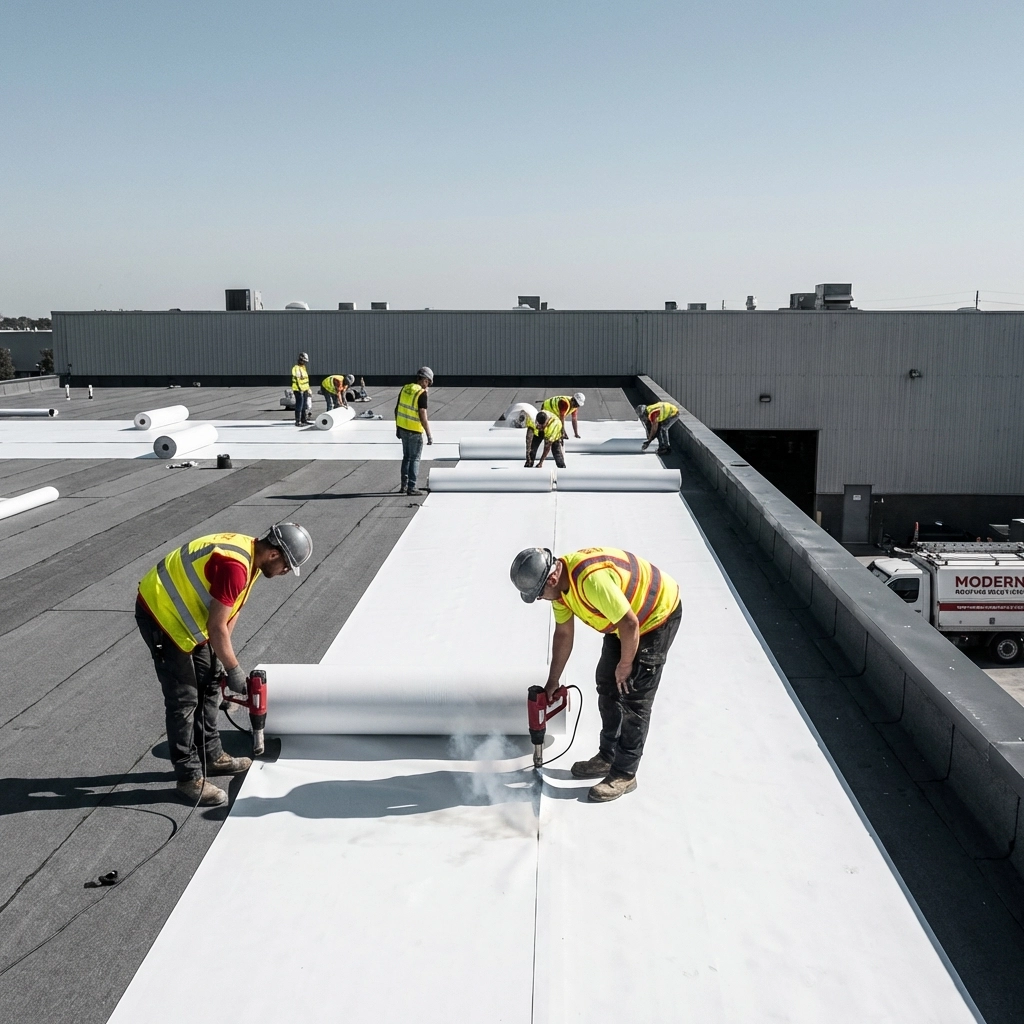
TPO is a single-ply roofing membrane. That means it's a single layer of synthetic material that gets rolled out across your roof and then heat-welded at the seams. Unlike traditional built-up roofing (the old "tar and gravel" approach), TPO is lighter, easier to install, and comes with some impressive performance benefits.
The membrane itself is made from a blend of polypropylene and ethylene-propylene rubber, which gives it flexibility, durability, and resistance to UV rays and chemical exposure. Most TPO roofs are white or light-colored, which plays a big role in their energy efficiency: but we'll get to that.
The Origins: From Auto Parts to Rooftops (1970s–1980s)
TPO didn't start out as a roofing material. It was originally developed in the 1970s for use in the automotive and industrial sectors. Manufacturers needed a material that was flexible, durable, and resistant to chemicals and weathering: qualities that made it perfect for things like car bumpers and pond liners.
But roofing professionals saw potential.
At the time, the two main single-ply roofing options were EPDM (a rubber membrane) and PVC (a plastic-based membrane). Both had their strengths, but also some notable drawbacks. EPDM couldn't be heat-welded, which meant seams had to be glued or taped: creating potential weak points. PVC contained liquid plasticizers that could degrade over time, causing the material to become brittle and prone to cracking.
Roofing manufacturers wanted something that combined the best of both worlds: the flexibility of rubber with the weldability of plastic, minus the long-term degradation issues.
Enter TPO.
The first TPO roofing membrane specifically formulated for the roofing market was installed in 1986 in Michigan by a company called Montell. It was an experiment: but it worked. And the industry took notice.
Market Expansion: TPO Takes Off (1990s–2000s)
By the early 1990s, TPO had officially entered the U.S. commercial roofing market as a cost-effective alternative to PVC and EPDM. Several major manufacturers jumped in:
Versico introduced VersiWeld in the late 1980s
JPS Elastomerics launched Hi Tuff EP in the early 1990s
Carlisle Syntec Systems entered the market in the mid-1990s
Firestone and GAF followed by the late 1990s
This wave of competition drove innovation. Manufacturers refined their formulas, improved UV resistance, and standardized production processes. In 2003, the industry established ASTM D6878: a formal standard that set specifications for TPO's physical properties and durability.
The result? A roofing material that was reliable, affordable, and easier to install than many traditional options.
By the late 1990s and into the 2000s, TPO sales were growing at double-digit annual rates: outpacing single-ply competitors, modified bitumen, built-up roofing, and even metal roofing systems. It wasn't just a trend. It was a shift in how commercial properties were being protected.
Why TPO Became the Go-To Choice
So what made TPO so popular, so fast? A few key factors:
1. Heat-Welded Seams
Unlike EPDM, TPO seams are heat-welded together using hot air. This creates a continuous, watertight bond that's actually stronger than the membrane itself. Fewer weak points means fewer leaks: and that's a big deal when you're protecting a 20,000-square-foot warehouse.
2. Energy Efficiency
Most TPO membranes are white or light-colored, which means they reflect sunlight rather than absorbing it. This can significantly reduce cooling costs during those hot Delmarva summers. In fact, TPO is often considered a "cool roof" material, helping buildings meet energy codes and even qualify for certain rebates or incentives.
3. Durability Without the Weight
TPO is lightweight compared to built-up roofing systems, which reduces stress on your building's structure. But don't let that fool you: it's tough. Quality TPO membranes resist punctures, tears, and impacts from debris, making them well-suited for commercial environments.
4. Chemical and UV Resistance
Businesses that deal with grease, oils, or other chemicals (think restaurants, auto shops, or manufacturing facilities) appreciate TPO's resistance to chemical exposure. And thanks to improvements in UV stabilizers, modern TPO holds up well against years of sun exposure without cracking or degrading.
5. Cost-Effectiveness
Let's be real: budget matters. TPO typically costs less than PVC while offering comparable performance. For commercial property owners looking to protect their investment without breaking the bank, that's a compelling argument.

TPO in Salisbury and the Delmarva Region
Here on the Eastern Shore, commercial property owners face a unique set of challenges. High humidity, intense summer heat, coastal storms, and the occasional nor'easter all take their toll on roofing systems.
TPO's combination of heat reflectivity, weather resistance, and durability makes it a natural fit for the region. Whether you're running a retail center in Salisbury, a processing facility in Seaford, or a warehouse near Ocean City, a well-installed TPO roof can handle the conditions while helping you manage energy costs.
And because TPO installation is relatively straightforward (compared to multi-layer systems), projects can often be completed faster: minimizing disruption to your business operations.
What to Look for in a TPO Installation
Of course, the best roofing material in the world won't perform if it's installed poorly. Here are a few things to keep in mind when considering TPO for your commercial property:
Membrane thickness matters. TPO comes in various thicknesses (commonly 45, 60, or 80 mil). Thicker membranes offer more durability and longer lifespans, so don't automatically go with the cheapest option.
Seam quality is everything. Heat-welded seams need to be done right. Make sure your contractor uses proper equipment and has experience with TPO installation.
Insulation and attachment. How the membrane is attached (mechanically fastened, fully adhered, or ballasted) and what's underneath it affects performance. A good contractor will help you choose the right system for your building.
Warranty coverage. Manufacturer warranties vary. Ask about coverage length, what's included, and whether the contractor is certified to install that brand.

Peninsula Roofing: Your Local TPO Experts
At Peninsula Roofing Company, Inc., we've been serving commercial and residential customers across Delmarva since 1947. That's more than 75 years of experience adapting to new materials, new techniques, and new challenges.
We've watched TPO evolve from an emerging technology to the industry standard: and we've installed our share of TPO systems on commercial properties throughout Salisbury, the Eastern Shore, and beyond. Our team knows what works in this region, and we're committed to doing the job right the first time.
If you're considering TPO for your commercial roof: or if you just want an honest assessment of your current roofing situation: we're here to help. Reach out to us for a consultation, and let's talk about what makes sense for your property.
The Bottom Line
TPO roofing didn't become popular by accident. It earned its reputation through decades of development, real-world performance, and continuous improvement. For commercial property owners in Salisbury and across Delmarva, it offers a smart combination of durability, energy efficiency, and value.
Understanding the history helps you appreciate why TPO works: and knowing the benefits helps you make an informed decision about your building's future.
Whether you're planning a new construction project or thinking about replacing an aging roof, TPO is worth a serious look. And when you're ready, Peninsula Roofing is ready too.
Comments