Flat Roof Blues? Why Your Porch or Sunroom Needs More Than Just Roll Roofing
- sean fahey
- Feb 11
- 7 min read

You love your screened porch. It's where you have your morning coffee, watch summer storms roll in, and host backyard barbecues. But here's the thing nobody tells you when you add that beautiful sunroom or covered porch to your Salisbury home: that "flat" roof above it is probably the most vulnerable spot on your entire property.
And if a roofer told you that simple roll roofing would be "good enough," you might be in for an expensive surprise in just a few years.
After 75+ years serving the Delmarva Peninsula, we've seen just about every flat roof disaster imaginable: and most of them start with the same well-intentioned but wrong decision: choosing the cheapest short-term fix instead of a real roofing system.
Let's talk about why your porch, sunroom, or lean-to addition deserves better than basic roll roofing, and what actually works for the long haul.
The Flat Roof Problem: Water Doesn't Roll Uphill
Here's the deal with flat roofs: they're never actually flat. They usually have a slight pitch: maybe a quarter-inch rise for every 12 inches of run. That's barely enough to call it a slope, and it's definitely not enough to shed water the way your main roof does.
When water sits on a roof for more than 48 hours after a rainstorm (what the industry calls "ponding"), bad things start happening. The water compresses insulation underneath, seeps into tiny cracks, and gradually spreads damage across wider and wider areas of the roof. In our Delmarva humidity and heat, that standing water becomes a breeding ground for all kinds of problems.
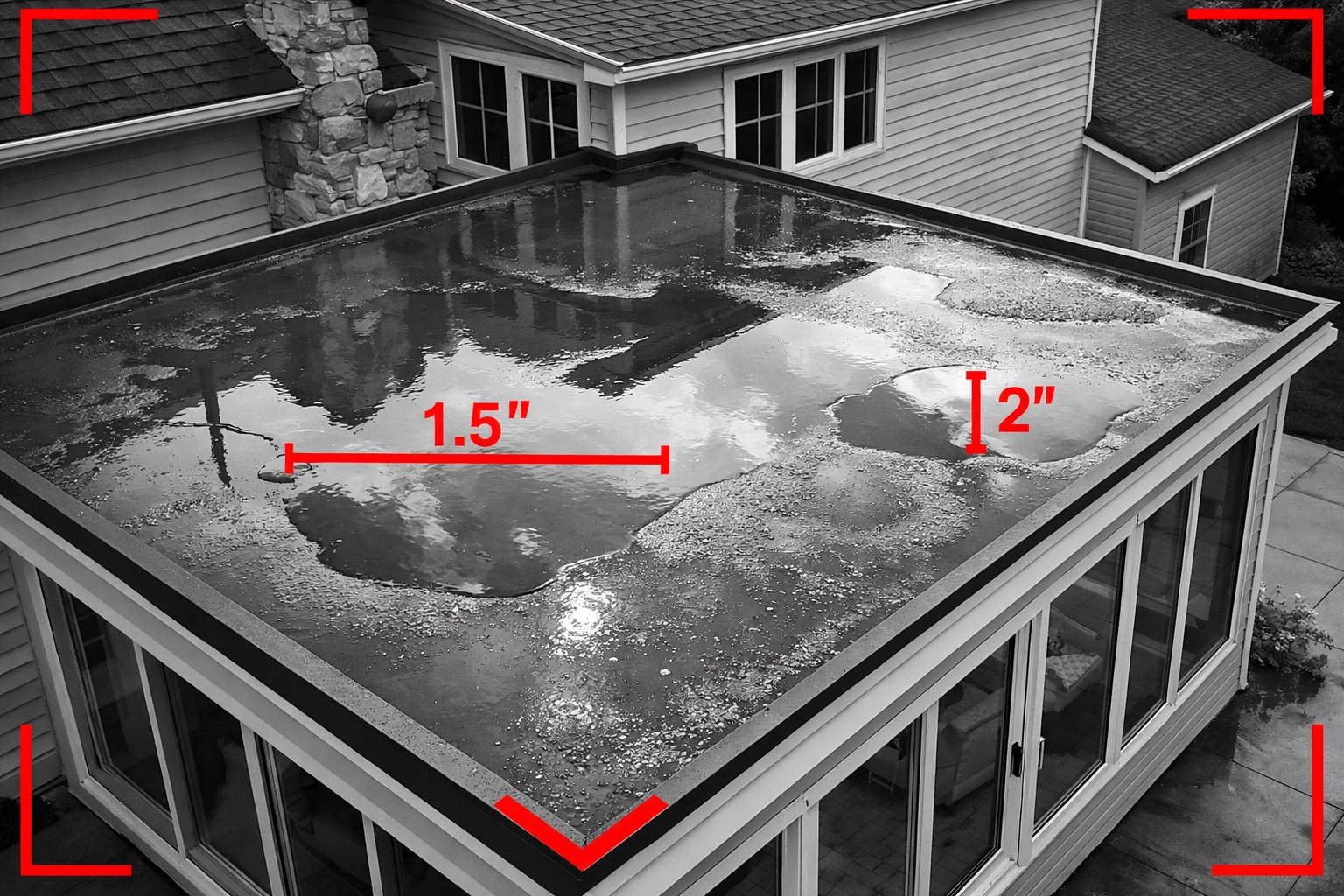
Add in the fact that these low-slope sections face constant thermal stress: expanding in our summer heat, contracting during winter cold snaps: and you've got a recipe for cracks, splits, and failures. UV radiation from our coastal sun beats down relentlessly, making materials brittle over time. It's a tough environment, and your roofing material needs to be up to the challenge.
Roll Roofing: The "Budget" Option That Costs You More
So what exactly is roll roofing, and why do some roofing companies in Salisbury MD still recommend it?
Roll roofing (also called MSR or Mineral Surfaced Roll) is basically one long, thin shingle that comes in a roll. Picture your regular asphalt shingle stretched out to 36 feet long. It's made of asphalt-saturated felt with mineral granules on top: the same basic ingredients as a shingle, just in a different format.
The installation is simple: You roll it out, nail it down, and seal the seams with "lap cement." Total job time? Maybe a few hours for a small porch. Total cost? Usually under $1,000 for a typical installation.
Sounds great, right?
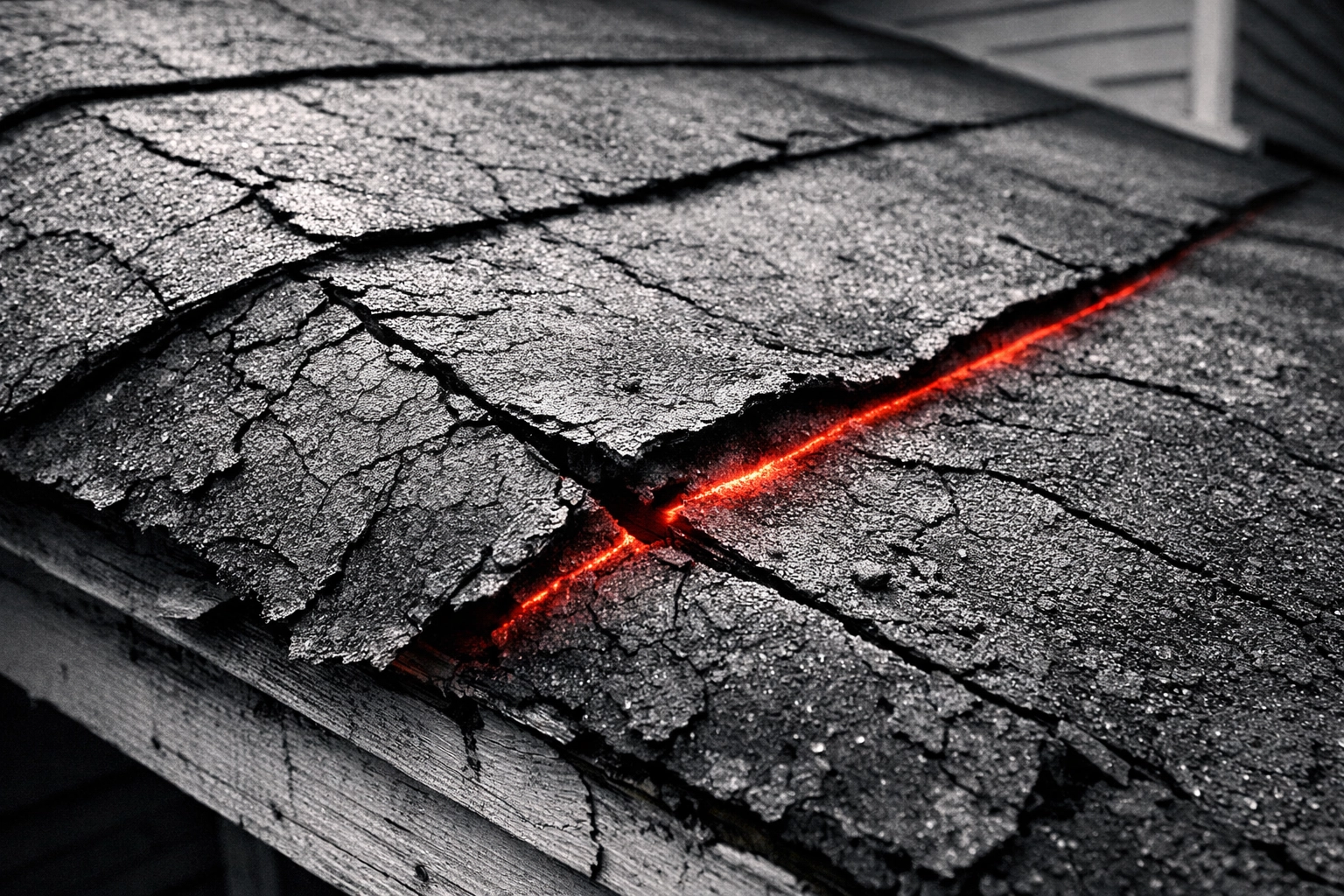
Here's the catch: those seams are your Achilles' heel. Within a couple of years, the lap cement starts to fail. UV rays cause it to shrink and pull away from the edges. Water finds its way underneath, and suddenly you're looking at leaks, rot, and interior damage.
The material itself gets brittle fast: especially in our Delmarva sun. You're looking at 5 to 10 years of lifespan if you're lucky. More often, we're getting calls about failed roll roofing after just 3 to 5 years.
Do the math: If you're replacing that porch roof every 5 years at $800 to $1,200 a pop, you're spending $2,400 to $3,600 over 15 years. And that's not counting the interior damage from leaks that happened between replacements.
We usually only recommend roll roofing for sheds, temporary structures, or emergency "get-me-by" repairs when a homeowner absolutely needs the cheapest possible short-term fix. It's not a real roofing system for any part of your home that you care about staying dry.
The Better Solution: 2-Ply Self-Adhesive Modified Bitumen
When experienced roofers in Salisbury MD talk about a proper flat roof system for residential applications, they're usually talking about modified bitumen: specifically, a 2-ply self-adhesive system.
This is a completely different animal from roll roofing.
Modified bitumen (we call it "Mod-Bit") is a two-layer system:
The Base Sheet: This is your first line of defense. It goes down smooth and creates a solid foundation for the entire system.
The Cap Sheet: This is the tough, UV-resistant top layer that faces the weather. The "modified" part means the asphalt is mixed with rubber or plastic polymers to make it flexible and durable.
Here's why it works so much better:
Flexibility: Those polymer modifiers make the material bend and flex with temperature changes instead of cracking. When your porch roof expands in July heat and contracts during January cold, a Mod-Bit system moves with it.
Monolithic Bond: Because it's self-adhesive (peel-and-stick), the layers create one continuous, waterproof membrane. There are no vulnerable seams sealed with cement that's going to fail in three years. The bond is chemical, not mechanical.
UV Resistance: The cap sheet is specifically designed to handle our coastal sun. The granules on top reflect heat and protect the membrane underneath from degradation.
Lifespan: Properly installed by qualified roofing companies Salisbury MD residents trust, you're looking at 15 to 20+ years of protection. Some systems we've installed are pushing 25 years and still going strong.
Why Self-Adhesive Beats Torch-Down
You might have heard of torch-down modified bitumen, where roofers use propane torches to heat and melt the material as they roll it out. It works, but it comes with risks: fire hazards, fumes, and the need for extremely experienced installers.
Self-adhesive systems eliminate those concerns. There's no open flame on your roof, no smell inside your house, and installation is safer and cleaner. For residential applications: especially near living spaces like sunrooms and porches: it's the clear winner.
Granule Colors That Match Your Shingles (So It Doesn’t Look “Commercial”)
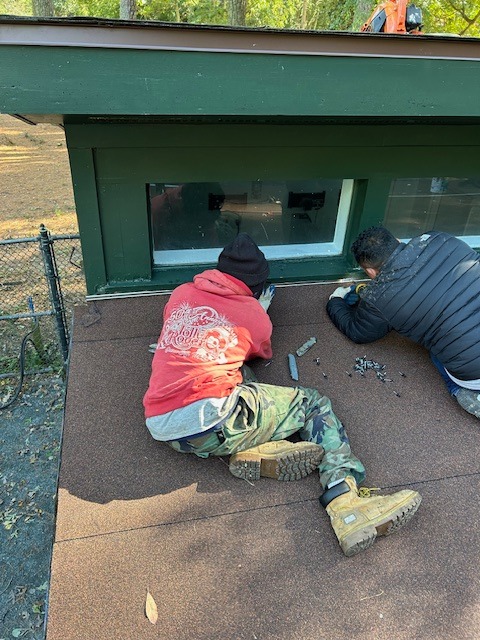
One concern we hear all the time on residential projects: “Will my porch or sunroom roof look out of place?”
If that small low-slope area is visible from the ground (like a front porch, sunroom bump-out, or entry canopy), appearance matters. The good news is 2-ply Mod-Bit cap sheets come in multiple granule colors, so we can often choose a finish that blends in with the color scheme of many popular shingle options. That way, your low-slope section doesn’t stick out like a black patch next to your architectural shingles: it can look clean, intentional, and “like it belongs” with the rest of the home.
The Real Cost Comparison
Let's be honest: Mod-Bit costs more upfront than roll roofing. A properly installed 2-ply modified bitumen system on a typical porch or sunroom might run $2,000 to $3,500 depending on size and complexity.
That's roughly double the cost of basic roll roofing.
But here's what you're getting for that investment:
3x to 4x the lifespan (20 years vs. 5 years)
Real waterproofing that handles ponding and heavy weather
Peace of mind during Nor'easters and tropical systems
No interior damage from failed seams
Better property value when you go to sell
Spread that cost over 20 years, and you're paying about $100 to $175 per year for a roof that actually works. Compare that to replacing cheap roll roofing every 5 years at $1,000+ per replacement, plus the cost of fixing water damage when those seams inevitably fail.
When you look at it that way, Mod-Bit isn't more expensive: it's the only option that makes financial sense.
Common Residential Flat Roof Applications
Where do we typically install modified bitumen systems in Salisbury and the surrounding Delmarva area? These are the most common scenarios:
Screened Porches: That roof above your screened porch is often the first place homeowners notice leaks, especially around the edges where it meets the house.
Sunrooms: Three-season and four-season sunrooms almost always have low-slope roofs that need professional waterproofing.
Mudrooms and Additions: Any addition with a roof below your second-story windows is a candidate for Mod-Bit.
Covered Patios: If you've enclosed or covered a patio area, chances are it has a flat or low-slope roof.
Lean-To Closets or Storage: Even small additions deserve proper waterproofing if they're attached to your house.
What to Look For in a Roofer
Not every roofer Salisbury homeowners call is equally qualified to install modified bitumen systems. Here's what to ask:
How many Mod-Bit systems have you installed? You want someone with specific experience, not someone who "read about it" or is "willing to try."
What's the warranty? A good installation should come with both manufacturer and workmanship warranties.
Can I see examples? Ask to see completed projects or talk to past customers.
What's your prep process? Proper deck inspection and preparation is crucial for long-term performance.
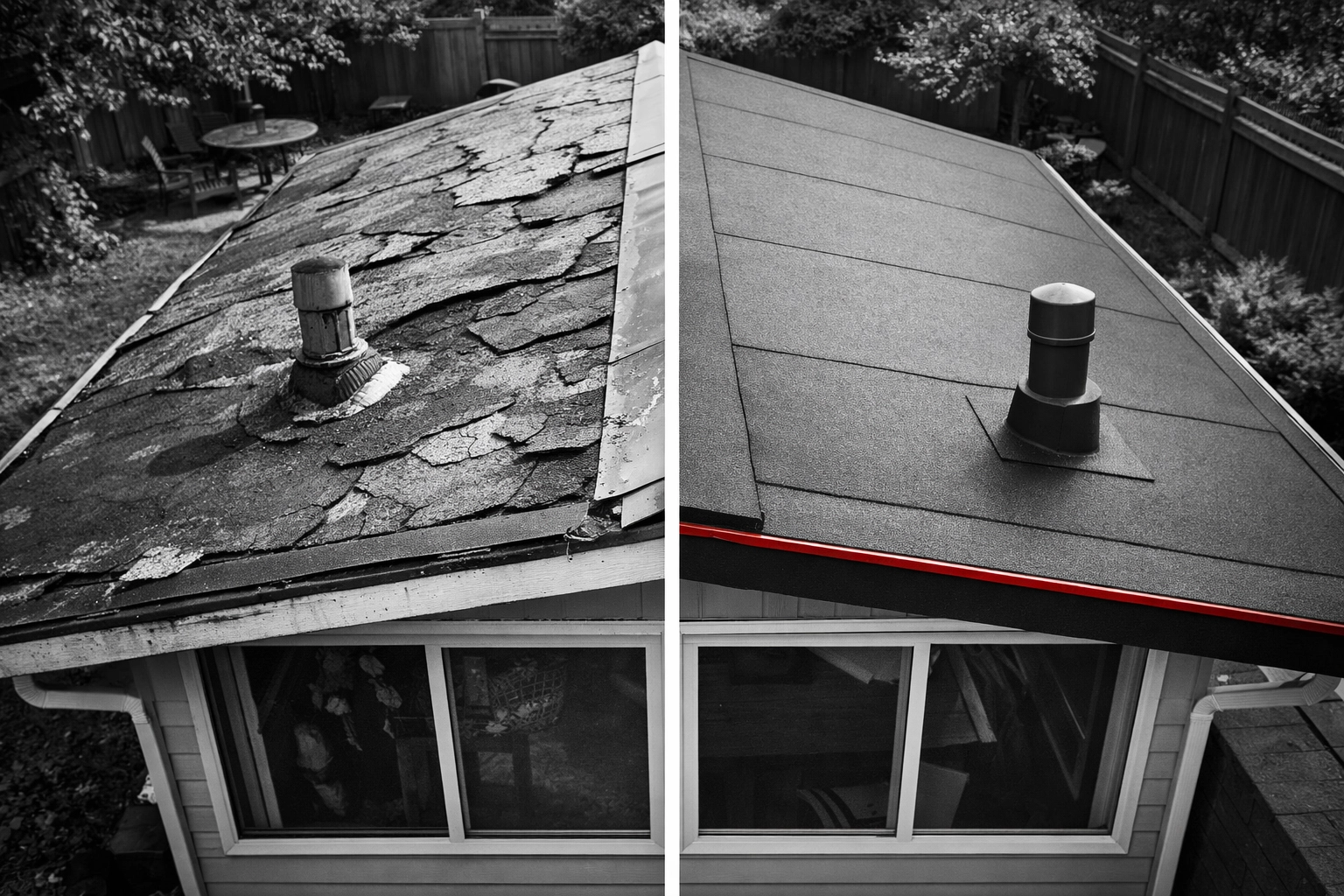
At Peninsula Roofing, we've been installing commercial and residential flat roof systems since 1947. Modified bitumen is something we do every week, not once in a while. Our crews know how to properly prepare the deck, ensure proper drainage, and create a watertight seal that lasts.
The Bottom Line
If you're building a new sunroom, replacing a failing porch roof, or addressing leaks in a low-slope addition, here's the simple truth: Roll roofing is a patch. 2-ply modified bitumen is a roof.
One will get you by for a few years. The other will protect your home for decades.
After three-quarters of a century in business serving Delmarva, we've learned that the cheapest option up front is rarely the best value over time. Quality roofing isn't just about keeping water out today: it's about protecting your investment for years to come.
Your porch or sunroom is where you make memories. It deserves a roof that works as hard as you do.
Want to know what the right solution is for your specific situation? Contact the team at Peninsula Roofing for a free assessment. We'll give you straight answers about what will work, what won't, and what it'll actually cost: no pressure, no games, just 75+ years of Delmarva roofing experience at your service.
After all, when you've been protecting homes on the Eastern Shore since 1947, you learn a thing or two about what actually lasts.
Comments