How Hot Is Too Hot? What Salisbury Roofers Need to Know About Working in Extreme Heat
- sean fahey
- Jul 2
- 5 min read

When the humidity hits the Delmarva Peninsula in July, it doesn’t just feel warm: it feels heavy. For those of us in the construction industry, particularly Salisbury roofers, a "hot day" isn't just about a high number on the thermometer. It’s about a complex calculation of humidity, direct sunlight, and physical exertion that can quickly turn a routine job into a life-threatening situation.
As the leading roofing company in Salisbury, MD, Peninsula Roofing Company, Inc. has been navigating these Maryland summers since 1947. With the recent updates to OSHA’s Heat National Emphasis Program (NEP) in April 2026, the standards for keeping crews safe have become even more rigorous.
Whether you’re a property owner wondering why your roofing crew is taking a break or a contractor looking to stay compliant, here is everything you need to know about working in extreme heat.
The Science of the "Wet Bulb": Why Humidity is the Real Enemy
You’ve likely heard weather forecasters talk about the "Heat Index," but OSHA and safety professionals increasingly look at Wet Bulb Globe Temperature (WBGT). Why? Because the heat index only considers temperature and humidity in the shade. On a roof, there is no shade, and the sun’s radiant heat is intense.
The WBGT is the "gold standard" for measuring heat stress because it weights three factors:
Wet Bulb (70%): This measures humidity and how effectively sweat can evaporate. When humidity is high, your sweat doesn’t evaporate, meaning your body’s primary cooling system is broken.
Globe Temperature (20%): This measures radiant heat: the heat coming directly from the sun and bouncing off dark shingles or metal roofing.
Dry Bulb (10%): The actual air temperature.
When 70% of the safety equation is based on humidity, you realize why a 90°F day in Salisbury can be far more dangerous than a 100°F day in a desert. For roofing companies in Salisbury, MD, monitoring these levels isn't just a recommendation; it’s a core part of our daily safety protocol.
OSHA Requirements: The 2026 Heat Standards
As of April 10, 2026, OSHA has stepped up enforcement for high-risk industries like roofing. They now conduct "drive-by" inspections on days with heat advisories, looking for specific safety triggers. At Peninsula Roofing, we’ve integrated these requirements into our standard operating procedures to ensure our team stays safe and your project stays on track.
The 80°F Initial Trigger
Once the heat index reaches 80°F, OSHA expects "Basic Heat Safety" measures to be in place:
Water: Employers must provide at least one quart of cool water per worker, per hour.
Shade: Shaded or climate-controlled rest areas must be available and located as close to the work area as possible.
Acclimatization: This is the most overlooked rule. New or returning workers cannot be thrown into a full day of heat immediately (more on this below).
Training: Every worker must be trained to recognize the signs of heat exhaustion and heat stroke.
The 90°F High Heat Trigger
When the heat index hits 90°F: a common occurrence for roofing Salisbury, MD in mid-summer: additional "High Heat" requirements kick in:
Mandatory Paid Breaks: Workers must take a minimum 15-minute rest break in the shade every two hours.
The Buddy System: No one works alone. Crews are paired up to monitor each other for signs of confusion, heavy sweating, or dizziness.
Daily Hazard Alerts: Supervisors must hold a safety briefing every morning to discuss the day's heat risks.
Regular Check-ins: Supervisors are required to check in with every worker at least every two hours to ensure they are hydrating and feeling okay.
The 20% Rule: Why Acclimatization Matters
One of the leading causes of heat-related fatalities in construction is a lack of "acclimatization": the process of the body physically adjusting to the heat over time. OSHA’s 2026 guidelines are very specific about how Salisbury roofers should be eased into the summer heat:
New Workers: Should only work 20% of their normal shift duration on Day 1, increasing by 20% each subsequent day. It takes a full week for a new worker to safely handle a 100% workload in extreme heat.
Returning Workers: If a roofer has been away for more than seven days (due to vacation or illness), they should start at 50% on Day 1 and gradually work back up.
At Peninsula Roofing, we take this seriously. We won't put a new hire on a steep-slope project in 95-degree weather on their first day. It’s about building endurance safely.
Practical Tips for Roofing Crews and Homeowners
Staying safe in the Salisbury sun requires a partnership between the roofer in Salisbury and the property owner.
For the Crews:
Hydrate Early: Don't wait until you're on the roof. Start drinking water the night before and during your commute.
Eat Light: Heavy meals slow you down and increase your internal body temperature.
Start Early: We often schedule our most physically demanding tasks: like tear-offs: for the earliest possible hour to beat the mid-day peak.
Know the Signs: If you stop sweating, feel nauseous, or get a throbbing headache, get off the roof immediately. These are signs of heat stroke, which is a medical emergency.
For the Homeowners:
If you’ve hired one of the roofing companies in Salisbury, MD to work on your home this summer, here is how you can help:
Respect the Breaks: If you see a crew sitting in the shade or in their trucks, remember that these are likely OSHA-mandated safety breaks. A rested crew is a safe, efficient crew.
Offer Water: While we provide plenty of water for our teams, an extra cold bottle from a homeowner is always appreciated on a 90-degree day.
Be Patient: High heat may mean we have to stop work earlier in the afternoon than usual. We do this to protect our workers' lives and to ensure the quality of your roof installation isn't compromised by heat-exhausted errors.
Why Experience Matters During a Heatwave
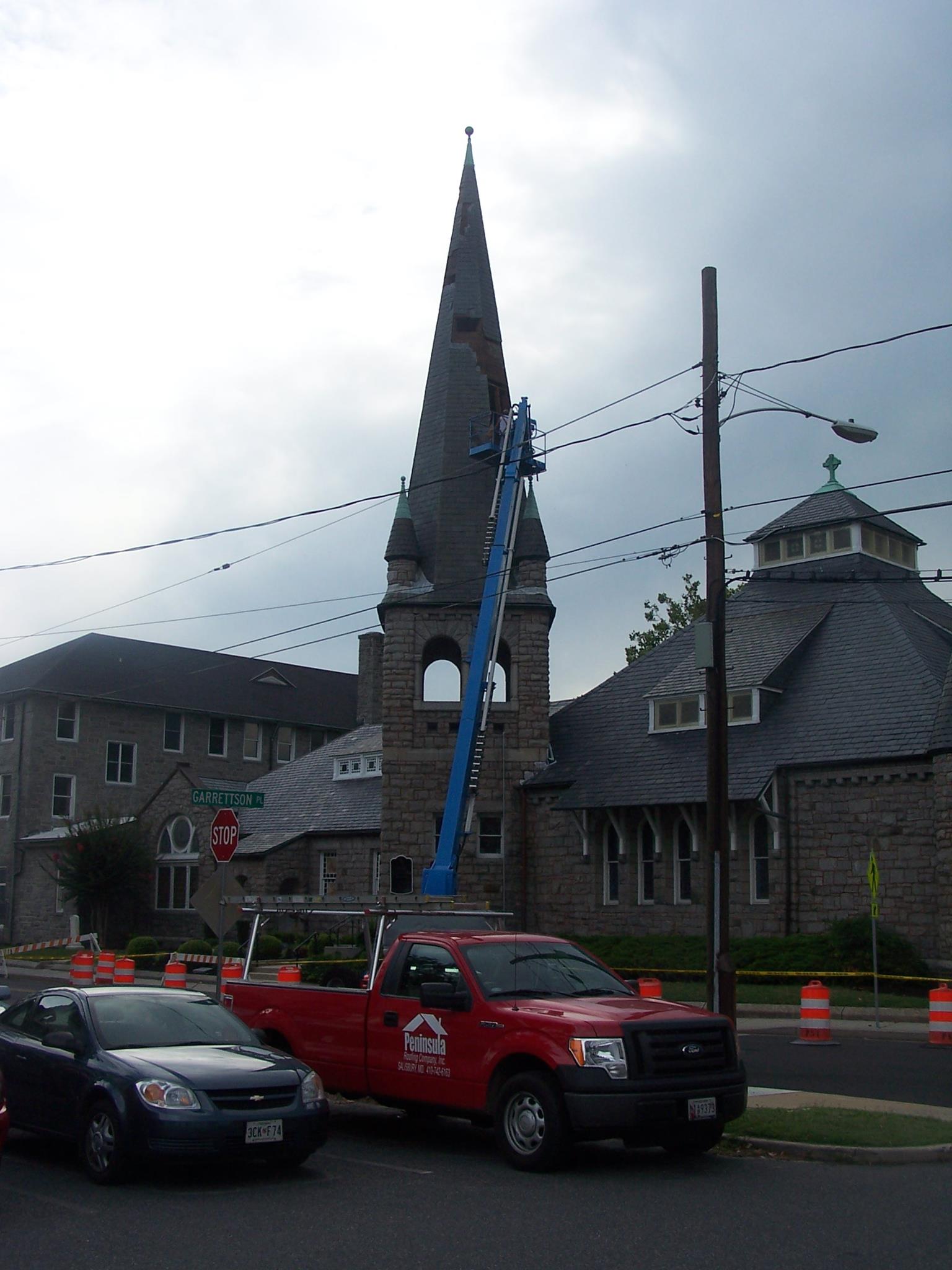
Working on a roof in Salisbury, MD is inherently difficult, but doing it in 95-degree weather with 80% humidity requires a level of expertise that only comes with decades of experience. Peninsula Roofing Company, Inc. has been serving the Delmarva area for over 75 years. We know the local climate, we understand the physics of how heat affects different roofing materials (like asphalt shingles vs. metal), and most importantly, we know how to protect our people.
When you choose roofers in Salisbury, MD who prioritize safety and compliance, you're not just getting a new roof: you're getting the peace of mind that the job is being done ethically and professionally.
If you’re concerned about your roof's condition or need an inspection before the next summer storm hits, don't wait for the temperature to climb even higher. Contact us today for a comprehensive inspection and a cost-effective solution tailored to your budget.

Final Thoughts
The "Wet Bulb" doesn't lie. When the humidity and temperature converge, the risks are real. By following OSHA’s updated 2026 guidelines and respecting the limits of the human body, we can continue to provide top-tier salisbury roofing services while keeping our community safe.
Stay cool, stay hydrated, and remember: when it comes to roofing in the Salisbury heat, safety is the first priority.
Comments