Ice Damming 101: What Salisbury Homeowners Need to Know (And How to Protect Your Roof)
- sean fahey
- Jan 16
- 6 min read

Winter on the Delmarva Peninsula can be unpredictable. One day it's mild, the next you're waking up to a blanket of snow and temperatures well below freezing. While we don't see the brutal winters that hit further north, our freeze-thaw cycles create the perfect conditions for a sneaky roof problem that catches many homeowners off guard: ice dams.
If you've never heard of ice damming, or you've seen those thick ridges of ice hanging off rooflines and wondered what the big deal is, this guide is for you. We'll break down exactly what ice dams are, why they form, what warning signs to watch for, and most importantly, how to protect your Salisbury home before damage strikes.
What Exactly Is an Ice Dam?
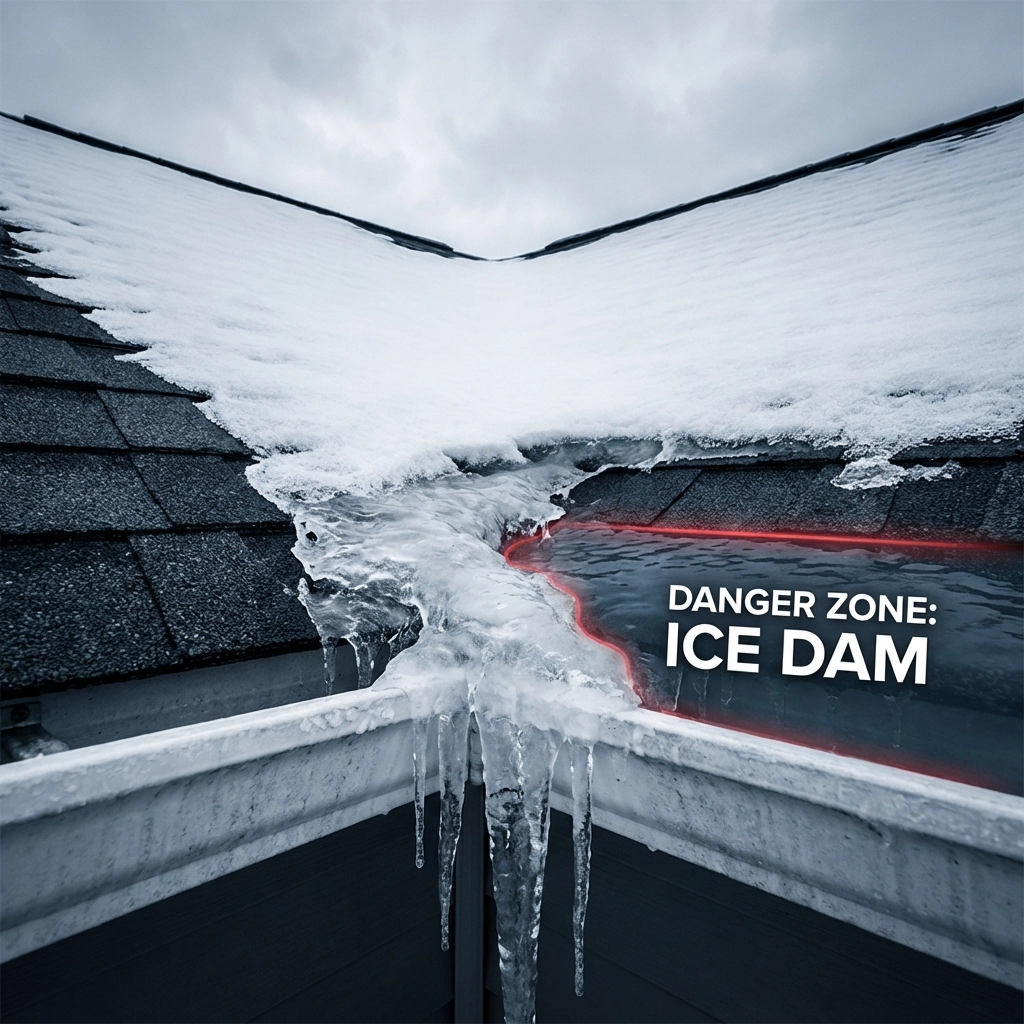
An ice dam is a ridge of ice that builds up along the edges of your roof, typically at the eaves (the lower edge that overhangs your walls). While it might look like just a normal winter occurrence, an ice dam is actually a barrier that prevents melting snow from draining off your roof properly.
Here's where things get problematic: when that meltwater has nowhere to go, it pools up behind the ice dam. That standing water then seeps under your shingles, into your roof decking, and eventually into your attic, walls, and ceilings.
In simple terms, an ice dam turns your roof into a leaky dam, and your home pays the price.
Why Do Ice Dams Form? (The Science Made Simple)
Ice dams don't just appear randomly. They require three specific conditions to form:
So what causes that temperature difference on your roof? The main culprit is heat escaping from inside your home.
When your attic isn't properly insulated or ventilated, heat from your living spaces rises and warms the upper section of your roof. The snow sitting on that warm area melts and trickles down toward the eaves. But the eaves extend past your exterior walls, they don't have warm living space beneath them, so they stay cold. When the water hits that cold zone, it freezes solid.
As this cycle repeats during our Delmarva freeze-thaw patterns, the ice dam grows thicker and heavier. More meltwater gets trapped. More water backs up under your shingles. And that's when the real trouble begins.
Warning Signs: How to Spot Ice Dam Problems
Catching ice dam issues early can save you thousands in repairs. Here's what to look for during and after winter weather:
Outside Your Home
Thick ridges of ice along the roof edges – Some icicles are normal, but a solid wall of ice at your eaves is a red flag.
Icicles forming behind gutters – This indicates water is backing up and freezing in places it shouldn't be.
Ice pushing through or behind your gutters – Gutters pulling away from the house or appearing bent/warped.
Snow melting unevenly on your roof – Patches of bare roof surrounded by snow can indicate heat loss problems.
Inside Your Home
Water stains on ceilings or walls – Especially near exterior walls or in upstairs rooms.
Peeling paint near the roofline – Moisture trapped in walls will cause paint to bubble and peel.
Damp spots in your attic – Check your attic after a freeze-thaw cycle for any signs of moisture.
Musty odors – Could indicate mold growth from trapped moisture.
The Real Risks: What Happens If You Ignore Ice Dams
Some homeowners see ice dams form and figure they'll deal with it in the spring. Unfortunately, waiting can turn a minor issue into a major headache. Here's what's at stake:
Roof and Structural Damage
When water backs up under your shingles, it soaks into your roof sheathing and decking. Over time, this leads to rot, warping, and deterioration that compromises your roof's integrity. In severe cases, the weight of large ice dams combined with water damage can contribute to sagging or even partial roof collapse.
Interior Water Damage
That backed-up water doesn't just stay in your attic. It travels, down through insulation, into wall cavities, and onto ceilings. You might notice water stains, warped drywall, sagging ceilings, or damaged flooring. These repairs add up fast.
Mold and Mildew Growth
Moisture trapped in dark, enclosed spaces like attics and wall cavities creates ideal conditions for mold growth. Beyond the structural damage, mold poses health risks, especially respiratory issues for you and your family.
Insulation Damage
Wet insulation loses its effectiveness. Once your attic insulation is compromised, your home becomes less energy efficient, your heating bills go up, and ironically, you're more likely to experience ice dams in the future. It's a vicious cycle.
Gutter Damage
The sheer weight of ice dams can bend, warp, or completely tear gutters and downspouts off your home. Plus, falling chunks of ice pose a safety hazard to anyone walking below.
How to Prevent Ice Dams: Practical Tips for Salisbury Homeowners
The good news? Ice dams are largely preventable with the right approach. Here's what we recommend based on our decades of experience serving Delmarva homeowners:
1. Improve Your Attic Insulation
Since heat loss through your roof is the primary cause of ice dams, beefing up your attic insulation is one of the most effective solutions. Proper insulation keeps warm air inside your living spaces where it belongs, not warming your roof and melting snow.
2. Ensure Proper Attic Ventilation
Good ventilation works hand-in-hand with insulation. A well-ventilated attic allows cold outside air to circulate, keeping your roof surface at a consistent temperature. This prevents the warm-upper/cold-lower roof scenario that causes ice dams in the first place.
3. Keep Your Gutters Clear
Clogged gutters filled with leaves and debris prevent proper drainage even in normal conditions. Before winter hits, make sure your gutters are clean and flowing freely. This won't prevent ice dams entirely, but it reduces the severity.
4. Remove Snow After Storms
Using a roof rake (a long-handled tool designed for this purpose), you can safely remove snow from the lower few feet of your roof after a storm. This eliminates the snow that would otherwise melt and contribute to ice dam formation. Just be careful not to damage your shingles in the process.
5. Consider an Ice Belt or Metal Roofing
For homes that are particularly prone to ice dams, installing a metal strip along the eaves (called an ice belt) can help. Metal roofing sheds snow more effectively than traditional shingles, reducing accumulation. If you're planning a roof replacement, this is worth discussing with your roofer.
6. Install Ice and Water Shield the Right Way During Roof Installation
If you’re replacing your roof or building new, a self-adhered ice and water shield is a critical safeguard against ice dam leaks. In colder climates like Delmarva, best practice is to install this membrane along the eaves and extend it up the slope so it reaches at least past the exterior wall line. That way, even if meltwater backs up under shingles at the eaves, it can’t travel into the heated part of your home.
What it does:
Creates a watertight seal around nail penetrations at the eaves and in high-risk areas.
Adds an extra layer of defense in valleys and around chimneys, skylights, and dormers.
Helps prevent leaks from ice damming and wind-driven rain during freeze-thaw cycles.
At Peninsula Roofing Company, our crews are trained to size and place ice and water shield correctly—starting at the eaves and continuing up-slope to (and past) the warm-side wall line, with additional coverage in valleys and around penetrations. Done right, this detail delivers lasting protection and peace of mind.
When to Call for Professional Help
If you spot signs of ice dam damage, or if a dam has already formed and you're worried about your roof, please don't try to remove it yourself. Climbing onto an icy roof is extremely dangerous, and improper removal techniques (like hacking at ice with tools) can cause serious damage to your shingles and roofing materials.
At Peninsula Roofing Company, we've been helping Delmarva homeowners protect their properties since 1947. If you're dealing with ice dam damage or want a professional assessment of your roof's vulnerability, our team is here to help.
Experiencing roof damage from ice dams? Don't wait for the problem to get worse. Contact us for emergency assistance or to schedule an inspection. We'll help you understand your options and get your roof back in shape before the next storm rolls through.
Stay safe out there, Salisbury: and keep an eye on those eaves this winter!
Comments