Is 12 Inches of Snow Too Much? Your Guide to Salisbury Roof Safety & Snow Removal
- sean fahey
- Feb 22
- 6 min read

When you wake up to a foot of snow blanketing your Salisbury home, the view might be beautiful: but it's natural to wonder if your roof is carrying more weight than it should. The answer isn't as simple as measuring the depth. Whether 12 inches of snow poses a problem depends on several factors, including the type of snow, your roof's design, and how long it's been accumulating.
At Peninsula Roofing Company, Inc., we've been protecting homes across Delmarva since 1947, and we've seen our share of winter weather. Here's everything you need to know about snow loads, warning signs, and safe removal techniques to keep your roof: and your family: safe this winter.
Understanding Snow Load: It's Not Just About Depth
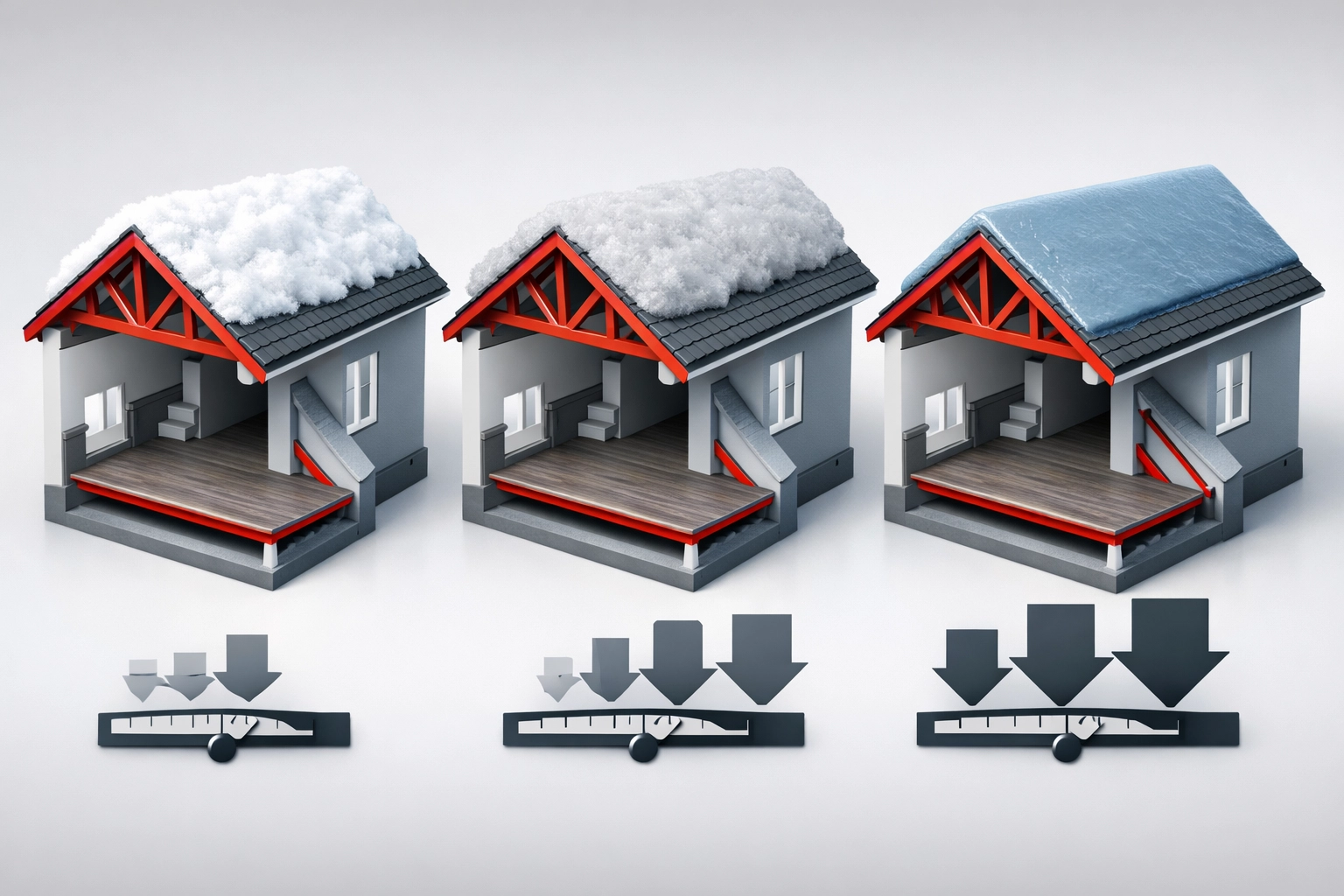
Most residential roofs in Salisbury are built to handle approximately 20-30 pounds per square foot of snow load. Our coastal location means we're designed for a ground snow load around 30 psf, which seems like plenty: until you realize that not all snow weighs the same.
Fresh, fluffy snow is the lightest variety. That 12 inches of powder that just fell? It's only adding about 5 pounds per square foot to your roof.
Wet, heavy snow is a different story: and it’s what we’re dealing with in Salisbury right now. Because it’s dense and moisture-laden (common in our coastal area), 12 inches of heavy, wet snow can easily exceed 15–20+ pounds per square foot, which can push many homes close to their typical design limits (20–30 lbs/sq ft) much faster than people expect. In other words, a “foot of snow” isn’t the same thing as a safe load when that snow is wet.
Packed or compacted snow happens when multiple storms hit back-to-back, or when snow sits on your roof for days and gets compressed. Just 3-5 inches of packed snow equals about one inch of water, adding roughly 5 pounds per square foot. If you've got multiple layers building up, you could be looking at a serious load.
The real danger? Ice. A single inch of ice weighs about the same as a foot of fresh snow. If rain falls on existing snow and then freezes, or if melting and refreezing occurs, you're suddenly dealing with a much heavier burden.
How to Tell If Your Roof Is Struggling
Your roof will tell you when it's had enough: you just need to know what to listen for. Here are the warning signs that roofing companies in Salisbury MD want every homeowner to recognize:
Exterior Warning Signs
Sagging or bowing: Walk around your property and look at your roofline. Does it appear straight, or do you notice any dips or sags? A sagging roofline is an emergency situation that requires immediate professional attention.
Drooping gutters: If your gutters are pulling away from the fascia board or sagging noticeably, they're carrying too much weight: and so is your roof.
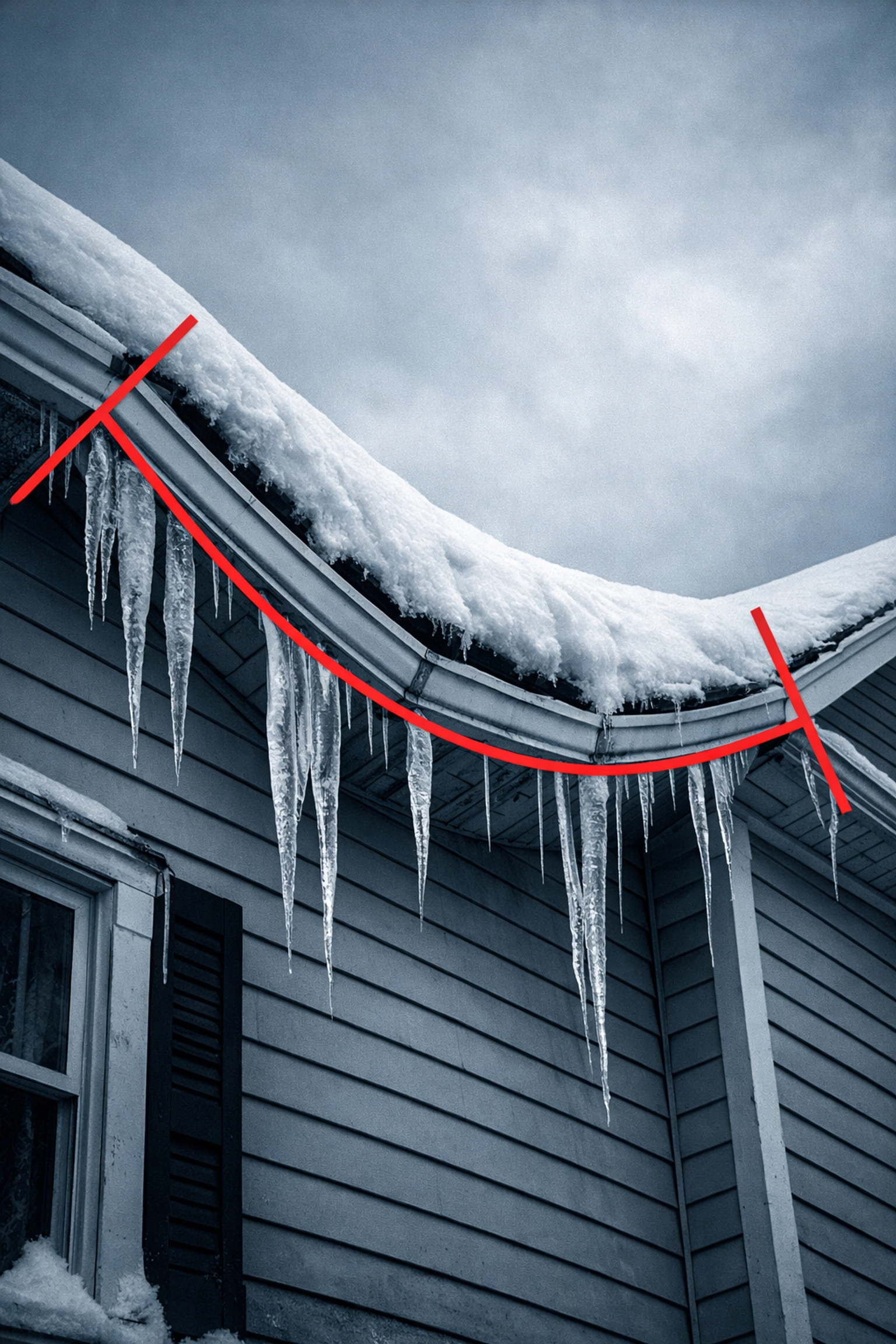
Icicles and ice dams: While a few icicles are normal, large icicle formations or visible ice dams along your eaves indicate that heat is escaping through your roof, melting snow that refreezes at the cold edges. This creates both weight and water infiltration risks.
Interior Warning Signs
Cracking sounds: Unusual creaking, popping, or cracking sounds coming from your ceiling joists or rafters are your home's way of protesting the load.
Ceiling cracks: New cracks appearing in drywall, especially around ceiling joints or near the center of rooms, can indicate structural stress.
Doors sticking: If interior doors suddenly won't close properly or are sticking in their frames, your house framing may be shifting under the weight of roof snow.
Water stains: Any water spots appearing on your ceiling during or after snow accumulation suggest that melting snow is finding its way through your roof system.
If you notice any of these signs, don't wait. Contact a roofer in Salisbury immediately. Peninsula Roofing offers 24/7 emergency storm response for situations just like this.
Safe Snow Removal: Do's and Don'ts for Salisbury Homeowners
When you've determined that snow removal is necessary, safety must be your first priority. Every winter, emergency rooms across the country treat thousands of injuries from roof-related falls. Here's how to remove snow safely: or when to call in the professionals.
The Right Tool: Roof Rakes
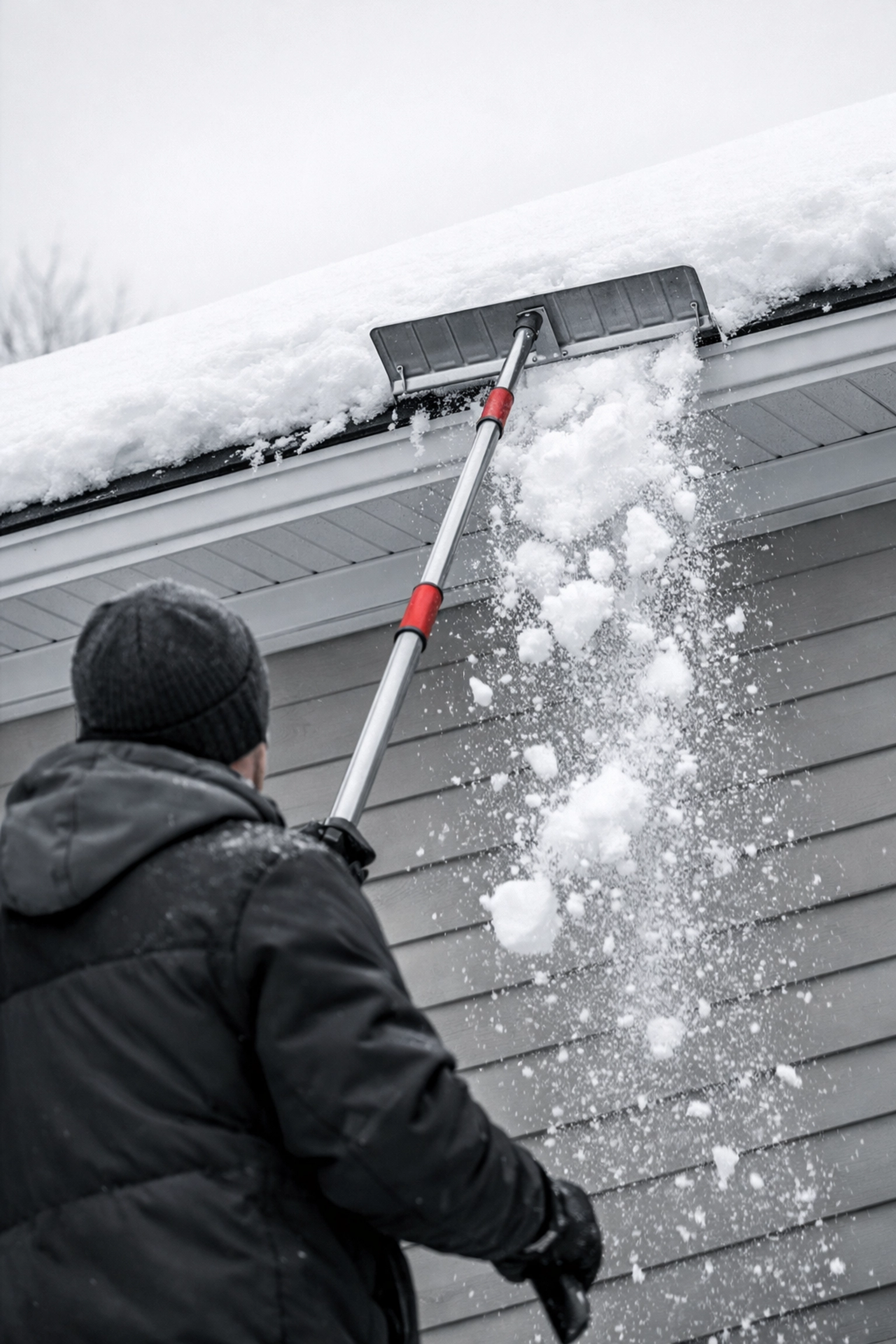
A roof rake with an extended handle is your best friend: especially with heavy, wet snow. These tools allow you to pull snow off your roof while standing safely on the ground, and with dense snow loads, reducing weight sooner (safely) can matter. They're specifically designed with a wide blade that slides under the snow and pulls it down without damaging your shingles.
How to use a roof rake effectively:
What NOT to Do
Don't climb on your roof: A snow-covered roof is essentially an icy slide. Even experienced roofers in Salisbury MD avoid working on snowy roofs unless it's an absolute emergency with proper safety equipment.
Don't use salt or ice melt: Rock salt and calcium chloride will damage your shingles, strip away protective granules, and can harm your landscaping when the runoff melts. They're also largely ineffective on a roof.
Don't use sharp tools: Shovels, ice picks, and other sharp implements can puncture your roof membrane or crack shingles. Roof rakes are specifically designed with blunt edges.
Don't remove all the snow at once: If you have significant accumulation, removing it gradually in stages prevents sudden load shifts that could stress your roof structure.
When Multiple Storms Strike
The real challenge comes when we get hit with back-to-back winter storms. A single 12-inch snowfall might not be a problem, but when you add another 8 inches on top of it before the first layer melts, then maybe some freezing rain, you're stacking weight that compounds quickly.
This is when monitoring becomes critical. After each storm, do a visual inspection of your property. Look for the warning signs we discussed earlier. If you're approaching 18-24 inches of total accumulation, or if you've had any mixed precipitation that created ice layers, it's time to take action.
For commercial properties or buildings with flat or low-slope roofs, the threshold is even lower. These roofs don't shed snow naturally like pitched residential roofs do, so accumulation happens faster. If you own commercial property in Salisbury, regular snow removal should be part of your winter maintenance plan.
The Ice Dam Problem
One of the most common issues we see at Peninsula Roofing isn't from the weight of the snow itself, but from ice dams that form when snow melts and refreezes. Here's what happens:
Heat escaping through your roof melts the bottom layer of snow. That meltwater runs down to your cold eaves and refreezes, creating a dam of ice. As more snow melts, the water backs up behind this ice dam and has nowhere to go but under your shingles and into your home.
Preventing ice dams:
Ensure proper attic insulation to minimize heat loss
Maintain adequate attic ventilation
Remove snow from the lower 3-4 feet of your roof after significant snowfall
Keep gutters clean so melting snow can drain properly
If you already have an ice dam forming, don't try to chip it away yourself. The risk of damaging your roof is high, and the work is dangerous. Professional roofing companies in Salisbury MD have specialized equipment like steam machines that can safely remove ice dams without harming your roof.
Know When to Call the Professionals
Some situations require professional intervention. Contact Peninsula Roofing Company, Inc. if:
You notice any of the structural warning signs mentioned earlier
Your roof has significant ice dam formation
You have a flat or low-slope roof with heavy accumulation
You're uncomfortable or unable to safely use a roof rake
Your roof is older or in questionable condition
You have multiple levels or complex rooflines that are hard to reach
With over 75 years of experience serving the Delmarva Peninsula, our team knows exactly how to handle winter weather challenges. Our 24/7 emergency response means we're available when you need us most.
Prevention for Next Winter
Once this snow melts and spring arrives, it's the perfect time to prepare for next winter. A pre-winter roof inspection can identify potential weak points before they become problems under snow load.
Peninsula Roofing offers comprehensive roof inspections and maintenance programs for both residential and commercial properties. We'll check your roof structure, evaluate your attic insulation and ventilation, assess your drainage systems, and recommend any improvements that will help your roof handle whatever winter throws at it.
Final Thoughts
So, is 12 inches of snow too much for your Salisbury roof? If it’s light, powdery snow, a foot of accumulation often isn’t a crisis for a roof in good condition. But with the dense, wet, heavy snow Salisbury is getting right now, 12 inches can be a much bigger deal: it can easily exceed 15–20+ lbs/sq ft and start pushing many roofs closer to that 20–30 lbs/sq ft range. That’s why it’s smart to take it seriously and prioritize safe removal with a roof rake (from the ground), especially along the lower edge where load and ice dam risk stack up.
Trust your observations. If your roof looks bowed, if you're hearing unusual sounds, or if you see water stains appearing, take action. When in doubt, a quick call to experienced roofing professionals can give you peace of mind.
Remember, your roof is designed to protect you and your family. With proper monitoring, safe snow removal practices, and professional help when needed, it will continue doing that job through whatever winter weather comes our way.
For emergency roof concerns or to schedule a post-winter roof inspection, contact Peninsula Roofing Company, Inc. at our contact page or learn more about our services. We've been serving Salisbury and the surrounding areas since 1947, and we're here to help keep your roof over your head( safely.)
Comments