Salisbury Roofers Reveal: 10 Storm Damage Signs Most Homeowners Miss (Free Inspection Guide)
- sean fahey
- Dec 30, 2025
- 5 min read

After a big storm rolls through Salisbury, most homeowners do what seems logical – they step outside, look up at their roof, and if they don't see any obvious missing shingles or gaping holes, they figure everything's fine. But here's the thing: storm damage is sneaky. Really sneaky.
In our 75+ years of roofing experience here on the Eastern Shore, we've seen countless cases where homeowners missed significant storm damage simply because they didn't know what to look for. That "minor" hail storm or those "just strong winds" can cause thousands of dollars in damage that won't show up until months later when you're dealing with leaks, mold, or structural problems.
The good news? Once you know what to look for, spotting storm damage becomes much easier. Let's walk through the 10 most commonly missed signs that could save you major headaches (and money) down the road.
Why Storm Damage Goes Unnoticed
Before we dive into the specific signs, it's worth understanding why storm damage often flies under the radar. Unlike a tree falling on your roof – which is pretty obvious – most storm damage is subtle. Hail might dent your shingles without breaking them. Wind might lift shingle edges just enough to compromise their seal. These issues don't scream for attention, but they quietly let water and weather into places they shouldn't be.
Plus, most homeowners (understandably) don't spend much time examining their roof up close. From ground level, even significant damage can look like normal wear and tear.
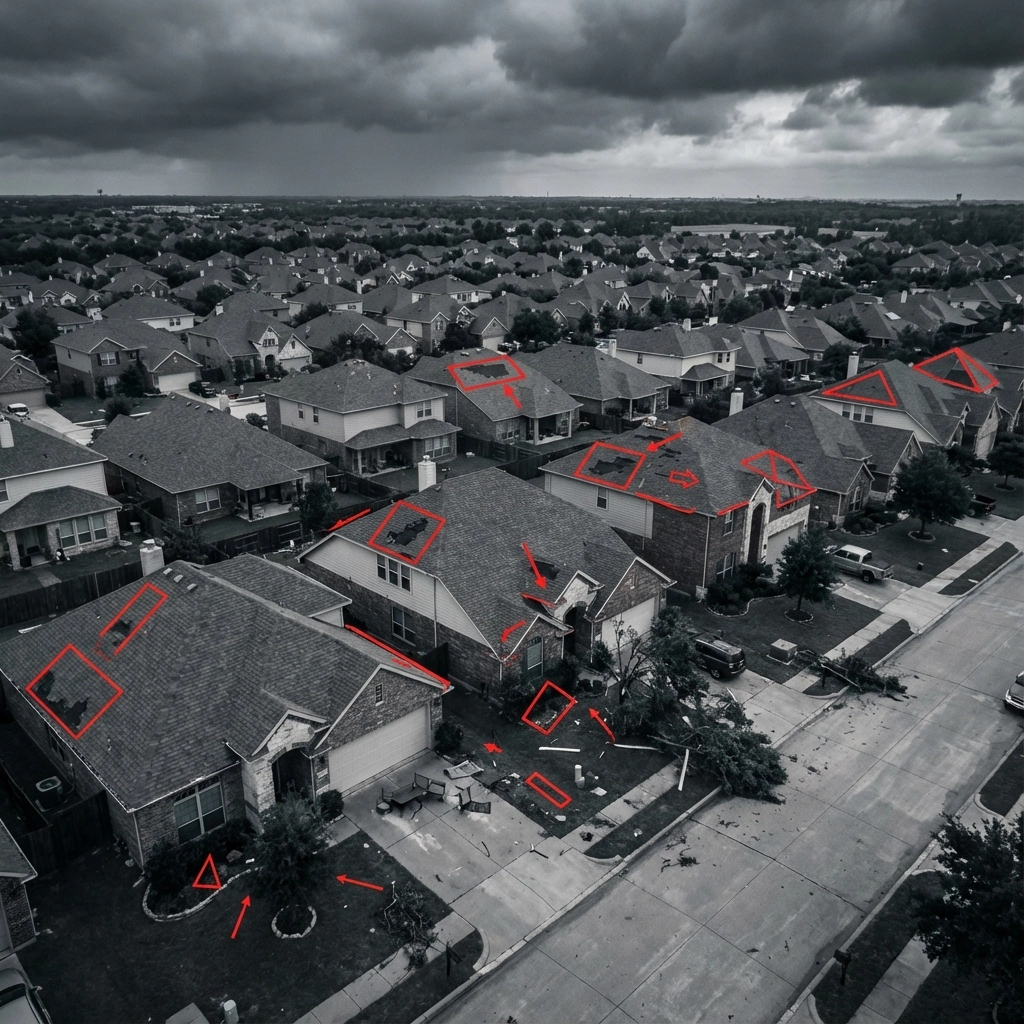
The 10 Storm Damage Signs Most Homeowners Miss
1. Granule Loss in Your Gutters
This is probably the most overlooked sign of hail damage. Those little rock-like granules on your shingles aren't just for show – they protect your roof from UV rays and help water flow off properly. After a hailstorm, check your gutters and downspouts. If you see excessive granules (more than just the normal small amount), your shingles took a beating.
What to look for: Piles of granules in gutters, around downspout outlets, or scattered around your foundation.
2. Lifted or Loose Shingles
Wind damage doesn't always rip shingles completely off. Often, it just lifts the edges or breaks the seal between shingle layers. From the ground, these might look fine, but they're compromised and will eventually lead to leaks.
What to look for: Shingles with curled, raised, or wavy edges. They might look slightly "ruffled" compared to undamaged areas.
3. Bent or Damaged Flashing
Flashing is that metal stuff around chimneys, skylights, vents, and roof joints. It's your roof's first line of defense against water infiltration, and it's particularly vulnerable to storm damage. Unfortunately, it's also easy to miss from ground level.
What to look for: Bent, cracked, or displaced metal around roof penetrations. Sometimes you'll notice rust stains or loose pieces.
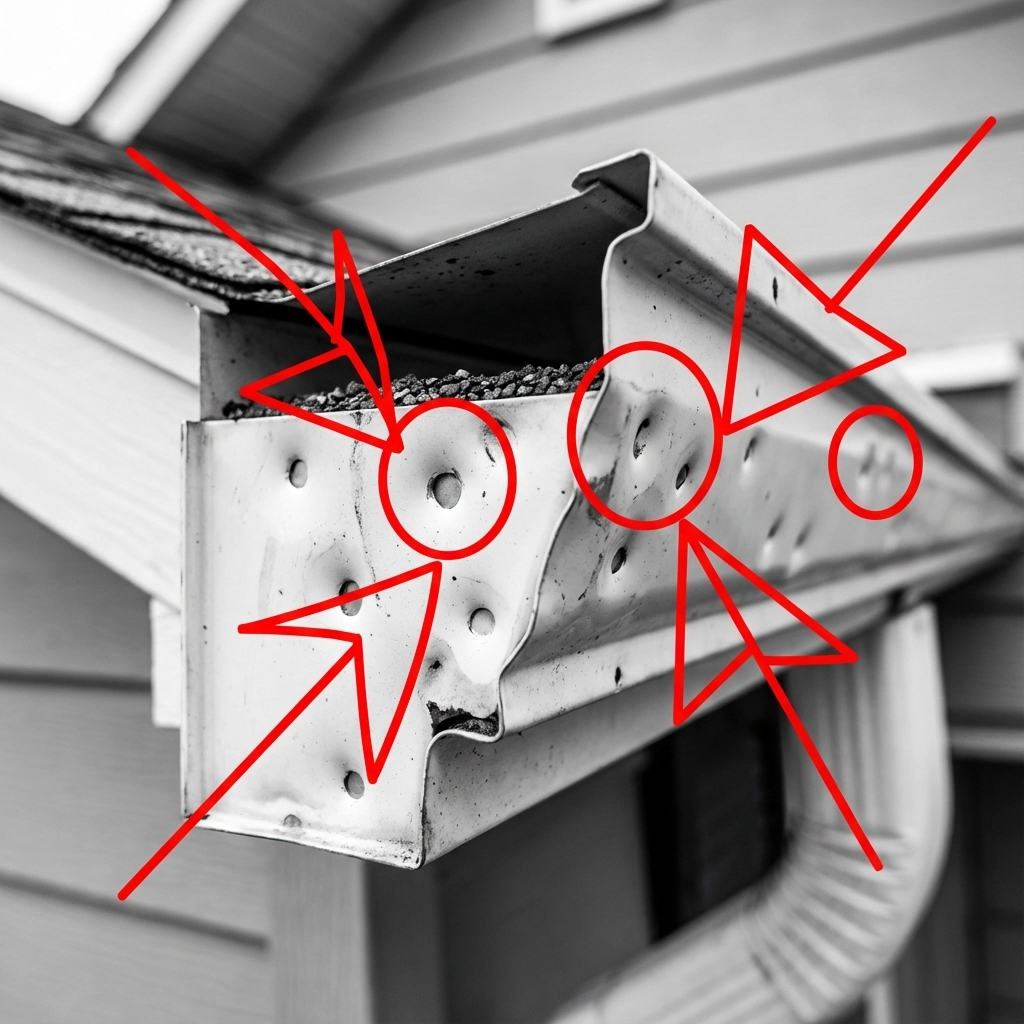
4. Dented Gutters and Metal Components
Here's a pro tip: soft metals show hail damage first. If your gutters, downspouts, or other metal components have dents, there's a good chance your roof does too.
What to look for: Dents on gutters, air conditioning units, mailboxes, or any exposed metal around your home.
5. Damage to Secondary Structures
Your roof isn't the only thing that gets hit during storms. Check your deck railings, patio furniture, outdoor AC units, and sheds. If these items show impact damage, your roof likely does too.
What to look for: Chipped paint, dents in outdoor equipment, or damage to anything that would have been exposed to the same weather that hit your roof.
6. Punctures or Tears in Roofing Materials
Large hailstones or flying debris can actually puncture shingles, creating immediate leak risks. These holes might be small and hard to spot from ground level.
What to look for: Any visible holes, tears, or spots where underlayment is showing through.
7. Exposed Underlying Layers
Sometimes hail hits so hard it knocks chunks of shingles clean off, exposing the felt paper or decking underneath. This is serious damage that needs immediate attention.
What to look for: Areas where you can see different colored material (usually black felt or light-colored wood) showing through.
8. Water Stains or Dark Streaks on Your Roof
These often indicate that water is already getting where it shouldn't be. Dark streaks might mean shingles are missing or compromised, allowing moisture to penetrate and create staining.
What to look for: Any discoloration, dark streaks, or staining patterns on your roof surface.
9. Cracked or Dislodged Vents and Ridge Caps
Roof vents, ridge caps, and other roof features take a beating during storms. These components are crucial for keeping your home sealed but are often overlooked during damage assessments.
What to look for: Cracks, dents, or missing pieces on any roof protrusions or along the roof's peak.
10. Impact Marks on Surrounding Surfaces
Sometimes the easiest way to confirm hail damage is to look at the evidence it left behind. Chipped paint on your deck, dents in your car, or damage to outdoor furniture all indicate the same storm energy hit your roof.
What to look for: Any impact damage on surfaces that were exposed during the storm.
Your DIY Safety Inspection Checklist
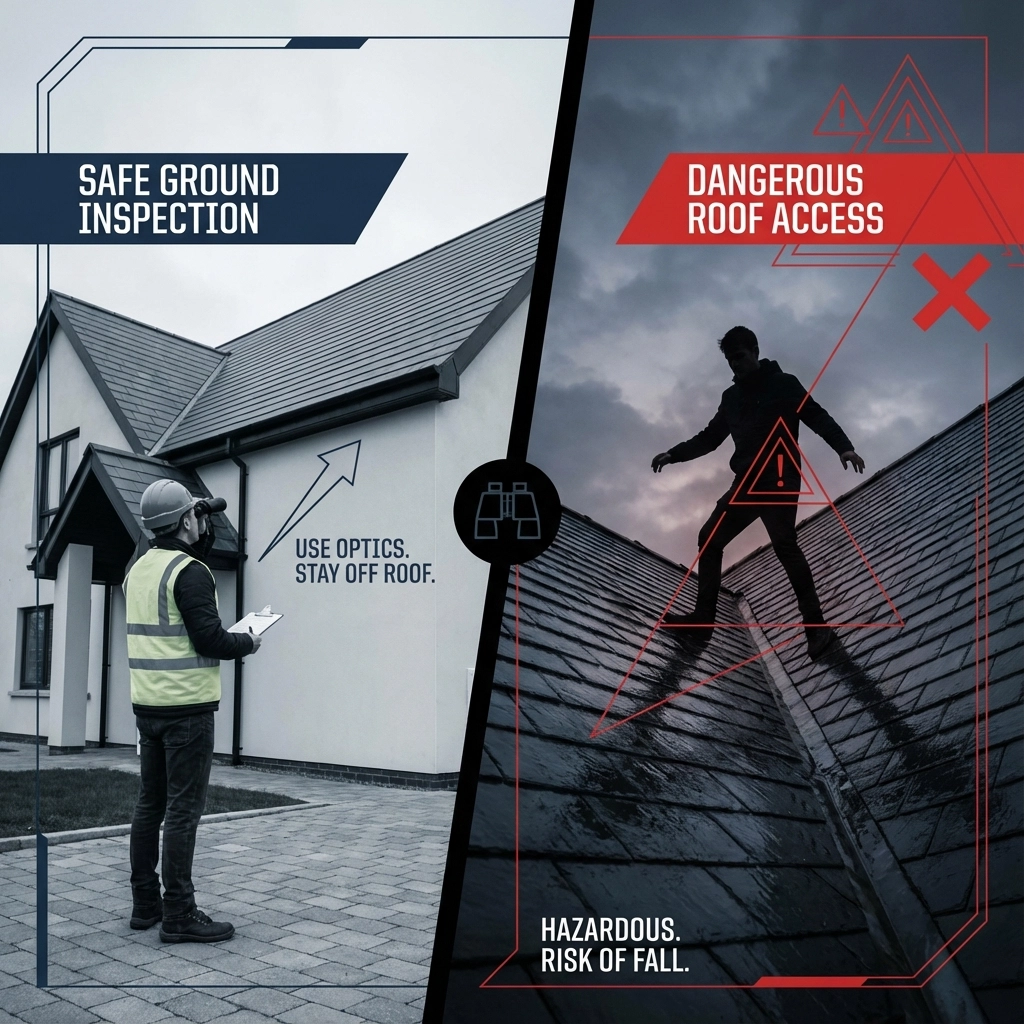
While we always recommend professional inspection, here's what you can safely check from the ground:
From the ground level:
Walk around your entire house and examine the roof from all angles
Check gutters for granule buildup
Look for obvious missing or damaged shingles
Inspect all visible flashing around chimneys and vents
Examine outdoor equipment and structures for damage
Check for debris accumulation along rooflines
Inside your home:
Look for new water stains on ceilings
Check attic spaces for signs of water infiltration
Notice any new drafts or temperature changes
What NOT to do:
Don't climb onto your roof
Don't remove debris yourself if it requires ladder work
Don't attempt repairs if you're not experienced
When to Call the Professionals
Here's the truth: while this guide helps you identify potential issues, proper storm damage assessment requires professional expertise. Insurance companies typically require professional documentation for claims, and safety should always be your first priority.
You should call a professional roofer when:
You spot any of the signs mentioned above
You're uncomfortable or unable to safely inspect from the ground
You need documentation for insurance purposes
It's been more than a few days since the storm (time matters for claims)
At Peninsula Roofing Company, we've been helping Salisbury homeowners navigate storm damage for over 75 years. We understand local weather patterns, insurance requirements, and what kind of damage is common in our area.
The Value of Professional Inspection
Professional roofers use systematic approaches that homeowners simply can't replicate. For hail damage, we use a "test square" method – examining a 10-foot by 10-foot section and counting impact hits. Insurance companies typically require at least 8 hits in this area to consider damage claim-worthy.
We also have the safety equipment and experience to thoroughly examine your roof without risk. Plus, professional documentation is often required for insurance claims, so having a qualified contractor assess your damage can save you time and hassle later.
Don't Wait – Storm Damage Gets Worse
Here's what many homeowners don't realize: storm damage is progressive. That small leak or slightly lifted shingle will get worse over time. Water infiltration leads to rot, mold, and structural damage. What might be a manageable repair today could become a major replacement project if left unchecked.
The best time to address storm damage is immediately after you discover it. Not only does this prevent additional damage, but insurance companies often have time limits on when claims can be filed.
Your Next Step
If you've identified any of these warning signs around your Salisbury home, don't ignore them. A professional inspection can give you peace of mind and ensure your home stays protected.
At Peninsula Roofing Company, we offer free storm damage inspections to help local homeowners understand exactly what they're dealing with. Our experienced team can identify damage you might miss and provide the documentation you need for insurance purposes.
Ready to protect your investment? Contact us today to schedule your free inspection. Because when it comes to your roof, what you don't know really can hurt you.
Comments