Snow Alert: How to Prep Your Roof Before the Big One Hits Salisbury
- sean fahey
- Jan 19
- 5 min read

You've seen the forecast. That little snowflake icon just showed up on your weather app, and suddenly everyone in Salisbury is making a run on bread and milk. But while you're stocking up the pantry, there's something else that deserves your attention: the roof over your head.
Here's the thing, snow might look light and fluffy, but it's deceptively heavy. A foot of wet snow on an average-sized roof can add tens of thousands of pounds of weight. Add in some ice, clogged gutters, and compromised seals, and you've got a recipe for leaks, ice dams, or worse.
The good news? A little prep work now can save you a lot of headaches (and repair bills) later. Let's walk through what you need to do before the big one hits.
Clear Off the Debris Before Snow Adds to the Load
This one's easy to overlook, but it matters more than you might think. All those leaves, branches, and random debris that have accumulated on your roof over the fall? They're just sitting up there, adding unnecessary weight.
Now imagine dumping several inches of heavy, wet snow on top of that pile. Your roof's structural load just increased significantly, and it didn't need to.
Here's what to do:
Inspect your roof from the ground using binoculars, or safely from a ladder if you're comfortable doing so. Look for visible piles of leaves, especially in valleys and around dormers.
Use a roof rake or leaf blower to clear what you can reach safely. If you've got a single-story home, a long-handled roof rake can work wonders.
Pay special attention to low-slope areas where debris tends to collect. These spots are also where snow will pile up the most.
Trim back overhanging branches that might dump more debris (or break off under ice weight and damage your roof).
If your roof is steep, high, or you're just not comfortable up there, this is a great time to call in Salisbury roofers who can handle the job safely. It's not worth a fall.
Make Sure Your Gutters and Drains Are Crystal Clear
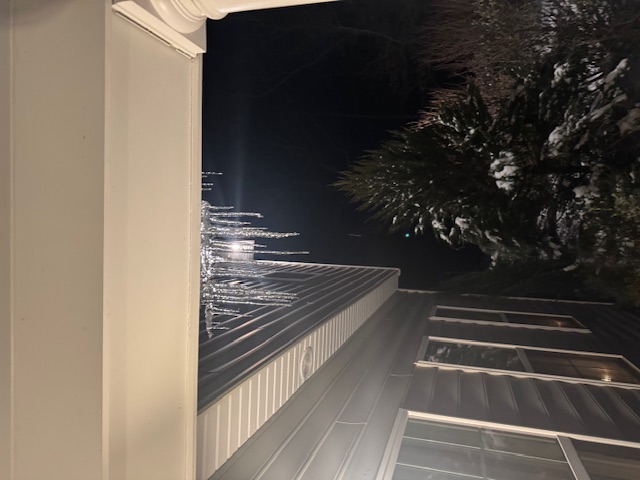
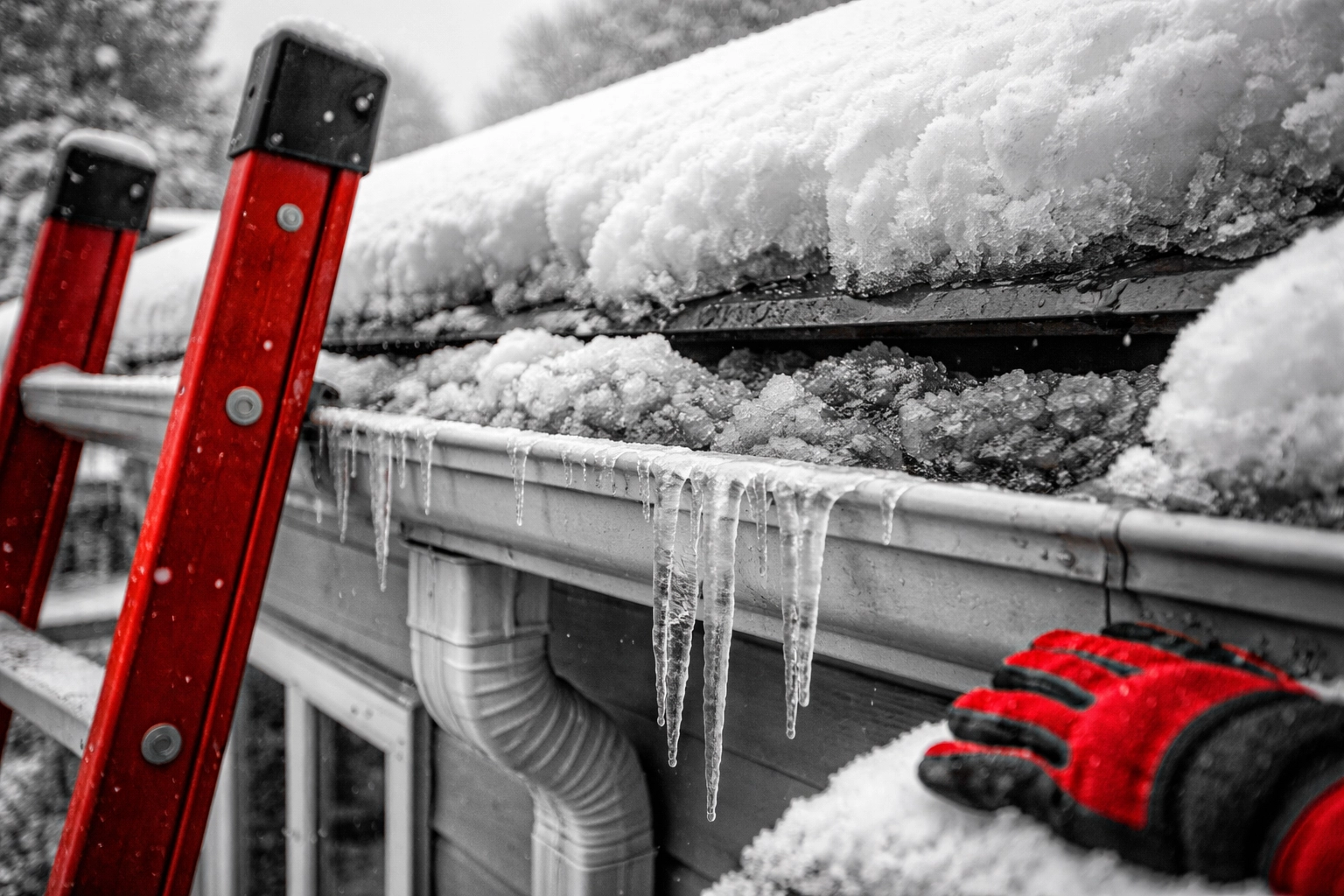
Clogged gutters are one of the biggest culprits behind ice dams: those thick ridges of ice that form at the edge of your roof and prevent melting snow from draining properly. When water backs up behind an ice dam, it can seep under your shingles and into your home. Not fun.
The solution starts with making sure water has somewhere to go.
Your gutter checklist:
Remove leaves, twigs, and gunk from all gutters and downspouts. A gutter scoop and a garden hose work well for this.
Check that downspouts are directing water away from your foundation: at least 4 to 6 feet out is ideal.
Inspect for sagging sections where water might pool instead of flowing toward downspouts.
Consider gutter guards if you're tired of cleaning them out every season. They're not perfect, but they help.
For flat or low-slope commercial roofs, the stakes are even higher. Make sure your roof drains are completely clear and functioning. A blocked drain on a flat roof means standing water, and standing water plus freezing temperatures equals serious problems.
If you're not sure whether your drainage system is up to the task, a quick inspection from a roofing Salisbury MD professional can give you peace of mind before the snow flies.
Inspect and Seal Vent Pipes and Flashings
Here's where things get a little more technical: but stick with me, because this step is crucial.
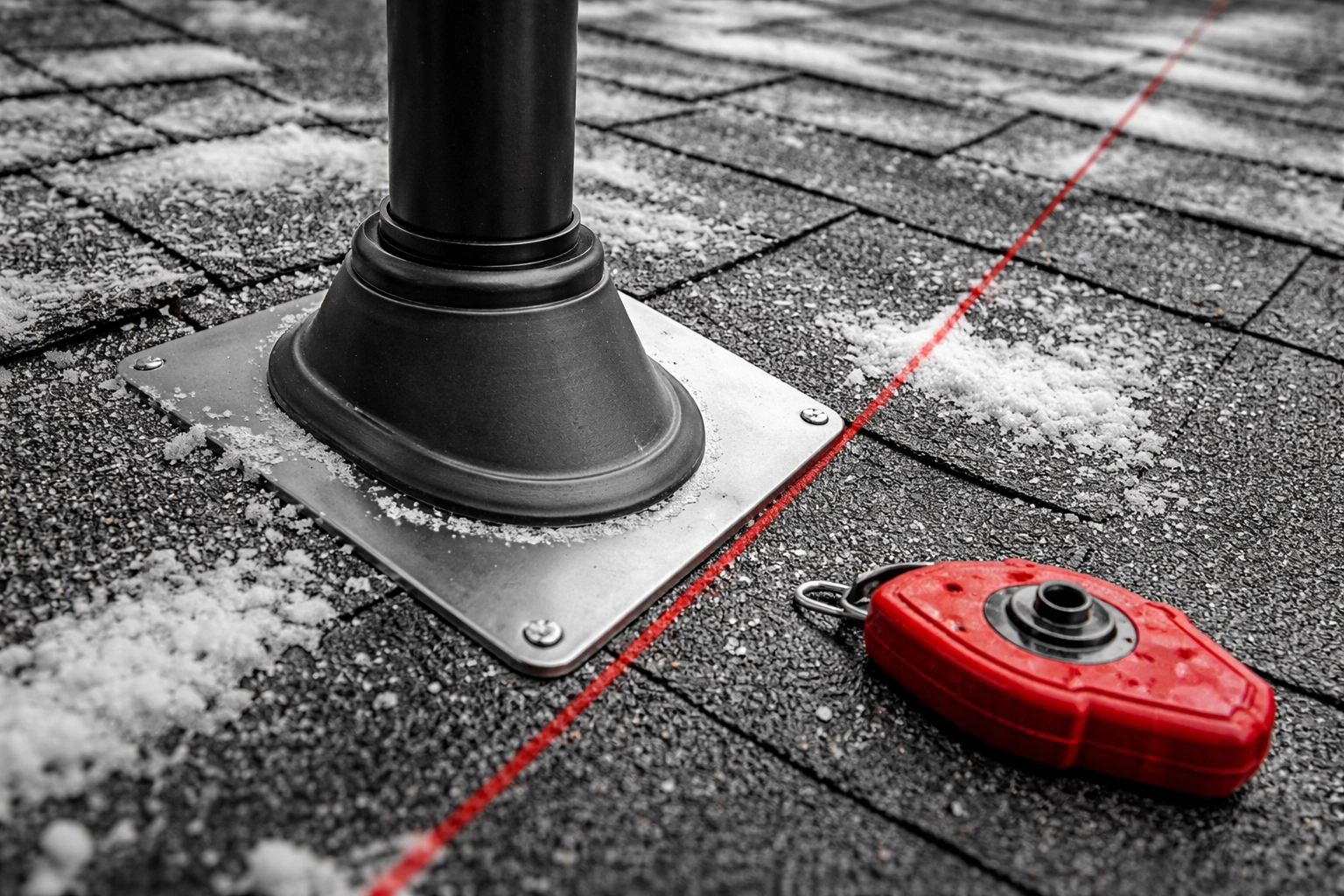
Your roof has several penetrations: vent pipes, exhaust fans, chimneys, skylights. Each one is surrounded by flashing (metal pieces that direct water away) and often sealed with caulk or rubber boots. Over time, these seals can crack, shrink, or pull away, especially after the temperature swings we get here on the Delmarva Peninsula.
When snow melts during the day and refreezes at night, water finds every little gap. If your flashing seals are compromised, that water's coming inside.
What to check:
Vent pipe boots: These rubber or neoprene collars can crack after a few years of UV exposure. If they're brittle or split, they need replacing.
Step flashing around chimneys and walls: Look for rust, gaps, or sections that have pulled away from the surface.
Chimney cap and crown: Cracks here let water in, which then freezes and causes more damage.
Skylight seals: Check for dried-out caulk or visible gaps around the frame.
If you spot issues, it's best to address them before the storm: not after. A little sealant now can prevent a leak later. For anything beyond basic caulking, we'd recommend having a professional take a look. Flashing repairs done incorrectly can actually make leaks worse.
Know the Warning Signs of Roof Stress
Even with the best prep, heavy snow can still put stress on your roof. Here's what to watch for during and after a major storm:
Sagging or visible deformation in the roofline: this is a red flag that the structure is under too much load.
New cracks in interior walls or ceilings, especially near the top floor.
Doors that suddenly won't close properly: this can indicate structural shifting.
Popping or cracking sounds coming from the attic or roof area.
Water stains or drips appearing on ceilings after snowmelt begins.
If you notice any of these signs, don't wait. Get everyone to a safe area away from the affected part of the house and call a professional immediately.
When to Call in the Pros
Look, we get it: not everyone wants to climb up on their roof in January. And honestly? That's often the smart call.
Some tasks, like sealing flashing, replacing vent boots, or clearing debris from a steep or multi-story roof, are best left to professionals who have the right equipment and safety training. Roofing in cold weather comes with its own set of challenges (we wrote a whole post about that), and the last thing you want is an injury on top of a roofing problem.
At Peninsula Roofing Company, we've been serving the Salisbury area since 1947. We've seen every kind of winter weather Delmarva can throw at us, and we know how to keep roofs: and homeowners: safe through it all.
Here's what we can help with:
Pre-storm inspections to identify vulnerable areas
Debris removal and gutter cleaning
Flashing repairs and seal replacements
Emergency tarping and leak response
And speaking of emergencies: we offer 24/7 emergency response when things go sideways during a storm. If a tree comes through your roof at 2 AM or you wake up to water dripping on your bed, give us a call. We'll be there.

A Quick Pre-Snow Checklist
Before we wrap up, here's everything in one easy list you can reference:
Clear leaves, branches, and debris from the roof surface
Clean out all gutters and downspouts
Verify downspouts direct water away from the foundation
Inspect vent pipe boots for cracks or deterioration
Check flashing around chimneys, skylights, and walls
Look for gaps or dried caulk around roof penetrations
Trim back overhanging tree branches
Know who to call if something goes wrong (hint: that's us)
Don't Wait for the Snow to Find the Problems
The best time to prep your roof for winter was last fall. The second-best time? Right now: before that forecast turns into reality.
A couple of hours of inspection and cleanup can be the difference between a cozy snow day inside and a frantic call to your insurance company. And if you'd rather leave it to the experts, that's what we're here for.
If you have questions about your roof's readiness or want to schedule a pre-winter inspection, reach out to us. We've been protecting Delmarva homes for over 75 years, and we're not about to let a little snow slow us down.
Stay warm out there, Salisbury.
Comments