Snow Emergency in Salisbury: Is Your Roof and HVAC Unit Safe?
- sean fahey
- Feb 24
- 6 min read

Tuesday, February 24, 2026 , If you're reading this by flashlight because the power's out, you're not alone. Salisbury just got slammed with 12 inches of heavy, wet snow, and half the city is sitting in the dark right now.
But here's the thing nobody's talking about: while you're worrying about when the lights come back on, there's a ticking time bomb on your roof. And no, we're not being dramatic, we've been doing this since 1947, and we've seen what happens when property owners wait too long to check things out after a storm like this.
So let's cut to the chase: Is your roof okay? Are those HVAC units up there in danger? The short answers are "maybe" and "absolutely yes."
Your Rooftop HVAC Units Are Sitting Ducks Right Now
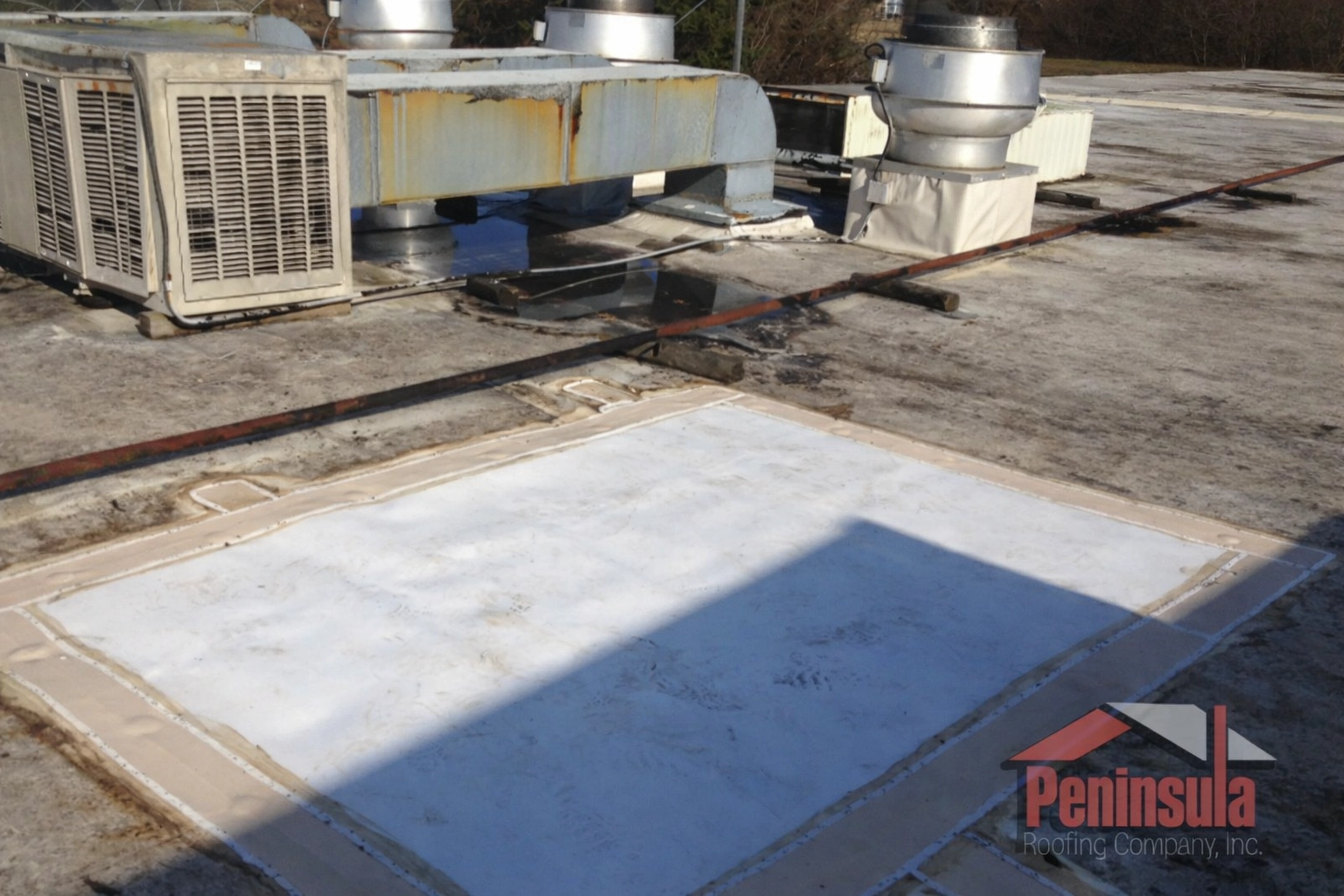
If you've got HVAC equipment on your roof (and most commercial buildings in Salisbury do), you need to understand what's happening up there right now.
The Suffocation Problem
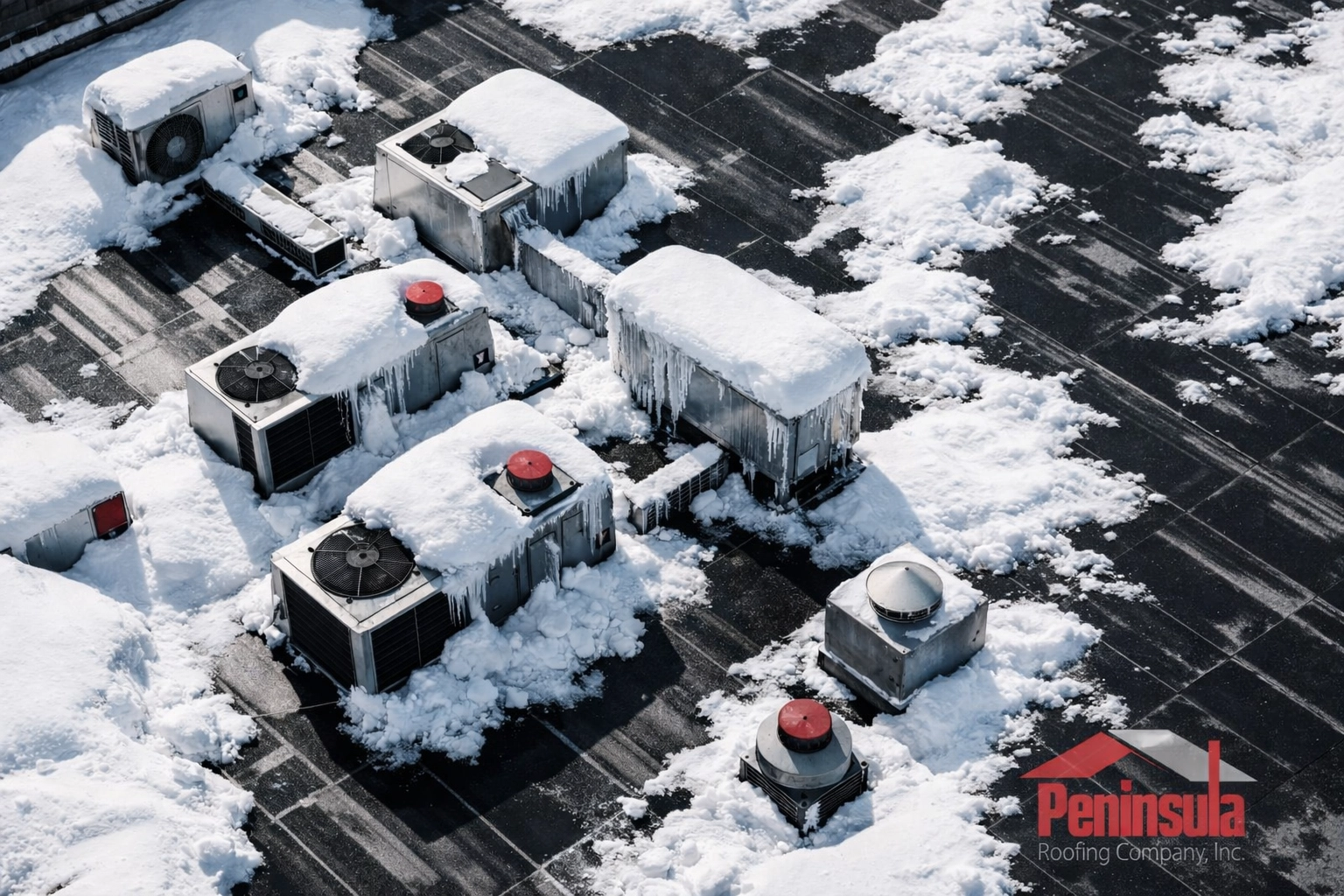
Heavy, wet snow doesn't just sit there looking pretty. It actively blocks air intake and exhaust vents on your HVAC system. Think of it like putting a plastic bag over someone's head, the system literally can't breathe.
When the power comes back on and your HVAC tries to fire up, one of two things happens:
High-pressure shutdown: The system detects it can't move air and automatically shuts down (the best-case scenario)
Carbon monoxide backup: Exhaust gases can't escape, creating a serious safety hazard inside your building
The Ice Missile Threat
Here's something most people don't think about: when snow starts sliding off the upper sections of your roof, it doesn't gently float down. It comes down like concrete. We call these "ice bombs," and they're absolute murder on HVAC equipment.
One good ice slide can:
Crush fan guards
Snap refrigerant lines
Destroy control boxes
Bend condenser fins beyond repair
And here's the kicker, most commercial property insurance policies won't cover this kind of damage if they determine you were negligent in clearing the snow. Fun times, right?
Warning Signs Your Roof Is Saying "Help Me"
Twelve inches of wet snow weighs approximately 7.5 pounds per square foot. If you've got a 2,000-square-foot roof, that's 15,000 pounds sitting up there. That's like parking seven cars on your building.
Here's how to tell if your roof is handling it... or not.
Listen to Your Building
With the power out, your building is actually easier to "hear." Walk around and listen for:
Popping or cracking sounds: That's your roof structure complaining about the weight
Groaning noises: Structural members flexing under load
Dripping where it shouldn't be: Water finding its way through compromised areas
These aren't "maybe check it out tomorrow" sounds. These are "call a roofer RIGHT NOW" sounds.
The Interior Door Test
This one sounds weird, but it works. Go around and try opening and closing all your interior doors, especially doors in the center of the building.
If doors that normally opened fine are now:
Sticking at the top
Hard to latch
Rubbing against the frame
That means the snow load is actually compressing your building's frame. The roof is pushing down, the walls are bowing in, and your door frames are telling you about it.
Check Your Ceilings
Grab a flashlight and do a ceiling walk-through. Look for:
New cracks in drywall (especially in the center of rooms)
Sagging or bowing (even slight dips that weren't there yesterday)
Water stains or discoloration (that heavy snow is already melting at the contact points)
Ceiling tiles that have dropped (in commercial spaces with drop ceilings)
If you see any of these, you need professional eyes on your roof immediately. Not tomorrow. Not "when the weather clears." Now.
Ice Dams: The Quiet Disaster Building Right Now
While everyone's focused on the weight of the snow, there's another villain forming: ice dams.
Here's what's happening: even with the power out, heat escaping from your building is melting the bottom layer of snow. That water runs down your roof until it hits the cold overhang, where it refreezes. Over time, this creates a literal dam of ice that blocks proper drainage.
Why Ice Dams Are Worse Than You Think
Once that ice dam forms, melting snow has nowhere to go. Water starts pooling behind the dam, and when water sits on a roof, it finds a way in. It always does.
Water will:
Seep under shingles
Find microscopic cracks in membranes
Work its way into seams and flashings
Freeze overnight, expanding and making everything worse
By the time you see water stains on your ceiling, that water has been there for a while, doing damage you can't see yet.
Flat Roof Special Alert
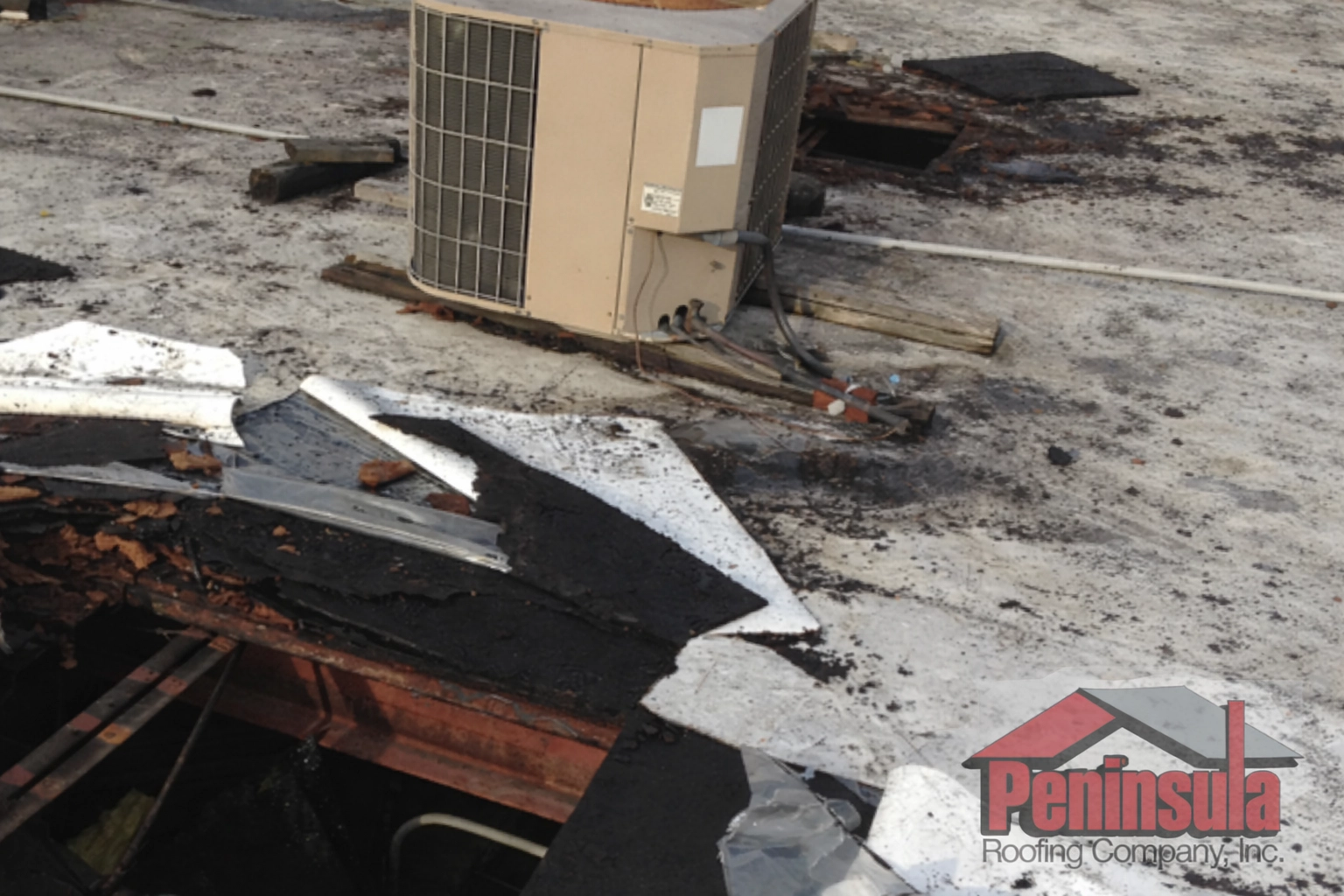
If you've got a flat or low-slope commercial roof, you're in an even trickier situation. Those roofs have drains and scuppers designed to move water off quickly. But when those drains get blocked by snow and ice? You're basically creating a swimming pool on top of your building.
Commercial flat roofs aren't designed to hold standing water for extended periods. The longer water sits up there, the more likely you are to have:
Membrane degradation
Seam separation
Drain damage
Structural overload from the combined weight of snow AND water
The Number One Rule: DO NOT Go Up There
Look, we get it. You're a hands-on person. You want to fix the problem yourself. You're thinking, "I'll just grab a shovel and clear off those HVAC units real quick."
Please don't.
Here's why roofing companies in Salisbury MD like us won't even send our own crews up in these conditions without proper equipment and safety protocols:
That snow is slicker than it looks. Wet snow on a pitched roof is basically an ice rink.
You can't see what's under the snow. Skylights, vents, weak spots, they're all hidden land mines.
The edges are death traps. Snow and ice build up at the edges, creating overhangs that break off without warning.
Your roof might already be compromised. The last thing a stressed roof needs is 200+ pounds of human wandering around.
Every winter, we hear about property owners getting seriously hurt or killed trying to clear their own roofs. Don't become a statistic.
What You Should Do Right Now
Okay, so you can't go up there. What CAN you do?
Document Everything
Grab your phone and take photos/videos of:
Any visible damage from the ground
Interior warning signs (cracks, sagging, sticking doors)
The current snow accumulation
Any icicles or ice dam formation you can see
Your insurance company will want this documentation, and having it timestamped to the actual storm helps your claim significantly.
Clear Ground-Level Hazards
If you have gutters or downspouts you can safely reach from the ground, clear the snow and ice away from them. This helps drainage once things start melting.
Monitor Interior Conditions
Keep checking those warning signs we mentioned. If things get worse (louder noises, new cracks, more sagging), that's your signal to evacuate and call for emergency help.
Call the Professionals
This is where Peninsula Roofing Company, Inc. comes in. We're available 24/7 for exactly these emergencies. We've got:
Proper safety equipment for working in hazardous winter conditions
75 years of experience dealing with Salisbury storms
Emergency response protocols to prioritize buildings in immediate danger
Insurance documentation expertise to help protect your claim
We're not going to upsell you on a full roof replacement if you just need emergency snow removal and a temporary patch. We'll tell you the truth about what needs to happen now versus what can wait.
The Bottom Line
Your roof and HVAC units are under serious stress right now. The combination of weight, moisture, ice formation, and potential structural compromise creates a perfect storm of problems, literally.
The good news? Most of these issues are preventable or fixable if you catch them early. The bad news? "Early" means right now, not next week when the weather's nicer.
If you're experiencing any of the warning signs we've discussed, or if you just want peace of mind that your building is safe, give us a call at Peninsula Roofing Company, Inc. We've been serving as trusted roofers in Salisbury MD since 1947, and we're standing by to help.
Don't wait until you're standing in your office with a bucket catching water from the ceiling. By then, the damage is already done.
Stay safe out there, Salisbury. And keep your feet on the ground: leave the roof stuff to us.
Need emergency roof assessment or snow removal? Contact Peninsula Roofing Company, Inc. : Available 24/7 for emergencies
Peninsula Roofing Company, Inc. has been serving Salisbury and the Delmarva Peninsula since 1947, providing expert roofing services for residential and commercial properties. Learn more about our services or read more about our 75-year commitment to the community.
Comments