The Details That Matter: Moisture Vents and Leak-Proof Flashing
- sean fahey
- Apr 16
- 6 min read

When you look at a roof, it’s easy to focus on the broad strokes: the color of the shingles, the clean lines of a new TPO membrane, or the overall curb appeal. But as we often say at Peninsula Roofing Company, Inc., the longevity of your investment isn't found in the field of the roof; it’s found in the details.
For over 75 years, we’ve served the Delmarva Peninsula, and if there is one thing we’ve learned as a leading roofer in Salisbury, it’s that water is patient. It doesn't need a massive hole to cause thousands of dollars in damage. It just needs a tiny oversight in a flashing sequence or a build-up of vapor pressure that hasn't been properly vented.
In this guide, we’re going to look at two of the most misunderstood aspects of modern roofing: moisture relief vents in single-ply systems and the "down-and-out" principle of wall and window flashing. Whether you are managing a commercial facility or protecting your family home, understanding these technical details can save you from a "emergency repair" call down the road.
The Science of Moisture Relief Vents in Single-Ply Roofing
Single-ply roofing systems, such as TPO, PVC, and EPDM, are fantastic for commercial buildings in Salisbury, MD. They are durable, reflective, and relatively quick to install. However, because these membranes create a nearly airtight seal, they can trap air and moisture underneath them.
What are Moisture Relief Vents?
Moisture relief vents (often called breather vents) are small, specialized pipes installed through the roofing membrane. Their primary job is to release vapor pressure that builds up between the roof deck and the new membrane.
When sun hits a dark roof (or even a white one on a hot Delmarva afternoon), any moisture trapped in the old roof assembly or the structural deck begins to evaporate. This creates gas pressure. Without a way to escape, this pressure pushes against the bottom of your new single-ply membrane, creating "blisters" or bubbles. Over time, these blisters can stretch the material, weaken the seams, and eventually lead to a premature failure of the entire system.
When Should They Be Used?
Not every flat roof needs moisture relief vents, but they are critical in two specific scenarios:
Reroofing Over Existing Systems: If you are installing a new single-ply membrane over an existing roof (a "recover"), there is almost certainly some residual moisture in the old insulation or felt. Moisture relief vents allow that old system to "breathe" out that moisture over time rather than trapping it against the new membrane.
Concrete Decks: New concrete decks hold a massive amount of water. Even if the concrete looks dry on the surface, it can take months or even years for that moisture to fully hydrate and release. If you seal a concrete deck too early without moisture relief vents, you are asking for a massive blistering problem.
1-Way vs. 2-Way Vents
As a specialized roofer in Salisbury, we help clients choose between two types of venting:
One-Way Vents: These are designed to let moisture vapor escape but prevent outside air from entering. These are excellent for preventing condensation in colder months while still relieving pressure.
Two-Way Vents: These allow air to move more freely in both directions. They are typically used when there is a significant amount of moisture that needs to be moved out quickly, or in specific assemblies where equalizing air pressure is more important than preventing air infiltration.
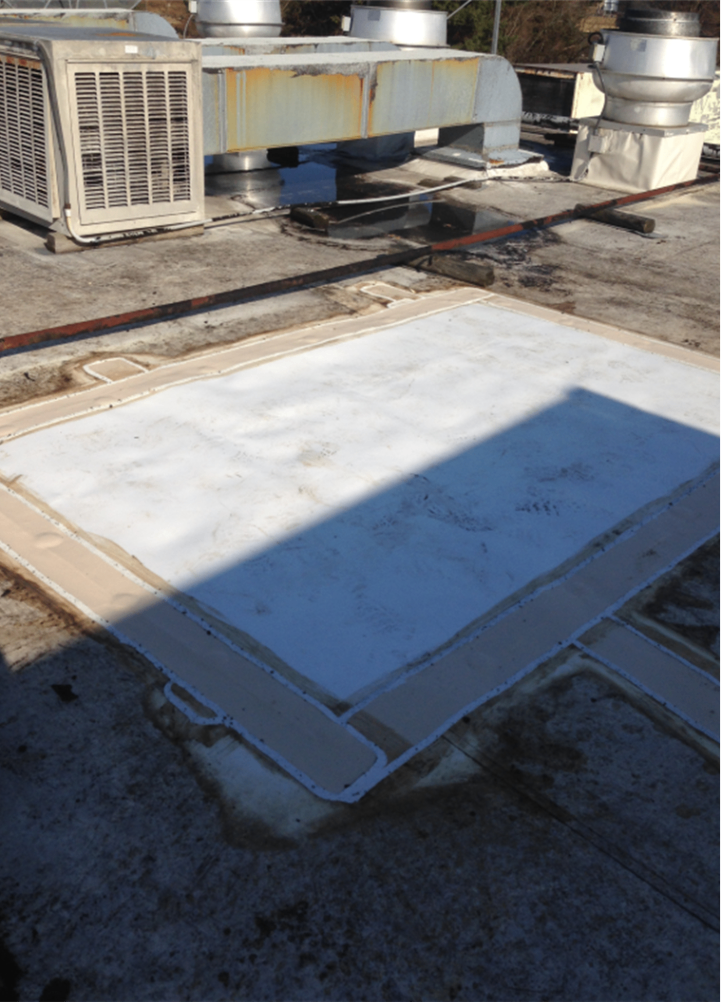
Flashing: The "Down-and-Out" Philosophy
If you ask any of the experienced roofing companies in Salisbury, MD, what the number one cause of leaks is, they won’t say "bad shingles." They will say "bad flashing."
Flashing is the transition material (usually metal or a reinforced membrane) used to bridge the gap between the roof and another surface, like a wall, a chimney, or a window. At Peninsula Roofing, we follow the "down-and-out" principle. This means every layer of material must overlap the layer below it in a way that gravity naturally carries water down the surface and out away from the structure.
Window and Wall Flashing Details
Windows are essentially giant holes in your building’s envelope. To keep them dry, the flashing must be sequenced perfectly. If you install the top flashing before the side flashing, water will run behind the side metal and into your wall.
The Importance of the Sill Pan
One of the most critical details we see missed by less experienced contractors is the sill pan. A sill pan is a piece of flashing that sits directly under the window frame.
The Back Dam: A proper sill pan has a "back dam": a small upturned lip on the interior side. This ensures that if any water does get past the window frame, it hits that lip and is forced to drain back out toward the exterior rather than soaking into your subfloor or drywall.
The Sequencing: Bottom to Top
To achieve a leak-proof seal, we follow a strict sequence:
The Sill: The bottom flashing goes in first.
The Sides (Jambs): These are installed next, overlapping the sill flashing.
The Head: The top flashing is installed last, overlapping the side pieces.
Integration: The head flashing must be tucked behind the building’s water-resistive barrier (like Tyvek) to ensure water running down the wall stays on the outside of the metal.
Don't Block Weep Holes or Drains
This is another detail that gets missed when flashing transitions at masonry, EIFS, or metal panel walls. These wall systems are designed with weep holes, drainage paths, or small openings that allow water to escape after it gets forced into the assembly by wind-driven rain or forms inside the system through condensation.
When flashing is installed over those openings, the wall can no longer drain the way it was designed to. Instead of letting incidental moisture work its way out, the assembly traps it behind the surface. Over time, that trapped moisture can saturate materials, corrode components, deteriorate sheathing, and contribute to rot, staining, mold, or even structural damage.
Good flashing should direct water out, not seal in moisture that needs a path to escape. Whether we’re tying into brick veneer, EIFS, or a metal panel wall, we make sure those drainage points stay open and functional.
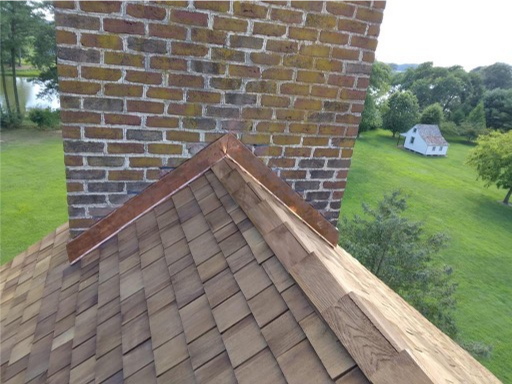
Kick-Out Flashing: The Unsung Hero
At Peninsula Roofing Company, Inc., we often perform repairs on homes where the siding is rotting right where a roof line meets a vertical wall. This is almost always caused by the absence of kick-out flashing.
When water runs down a roof valley or along a sidewall, it gains momentum. If that water reaches the end of the roof and there isn't a "kick-out" (a piece of metal angled away from the wall), the water will simply dump directly into the siding or behind the trim board. Over a few seasons, this leads to mold, wood rot, and structural damage that can cost five times as much as the original roofing job.
Adding a kick-out diverter is a simple technical detail, but it’s one that separates a professional roofing job from a "good enough" job. When searching for roofing in Salisbury, MD, always ask your contractor if they include kick-out flashing at every roof-to-wall intersection.

Why These Details Matter for Delmarva Property Owners
The Delmarva Peninsula presents a unique challenge for roofing. We deal with high humidity, heavy salt air near the coast, and the occasional intense Nor'easter or tropical storm. In this environment, "standard" isn't good enough.
Many roofing companies in Salisbury, MD, might offer a lower price by skipping moisture relief vents on a commercial reroof or by using "caulk-only" flashing methods instead of proper metal sequencing. At Peninsula Roofing, our "repair first" mindset means we look at why a system failed in the first place. Often, it wasn't the age of the roof; it was a detail that wasn't right from day one.
75 Years of Doing It Right
Since 1947, Peninsula Roofing Company, Inc. has built a reputation on getting the technical stuff right. We understand that a roof is a system, not just a surface. Whether it’s ensuring your single-ply commercial roof doesn't blister or making sure your home’s windows are flashed to survive a hurricane, we bring decades of expertise to every project.
If you are concerned about moisture in your roof or suspect your flashing might be failing, don’t wait for a ceiling stain to appear. Contact us for a professional assessment. We take pride in our maintenance and repair programs, designed to extend the life of your roof by catching these small details before they become big problems.

Ready to protect your property with the experts? Visit our services page to see how we can help, or contact us today for an inspection. Whether you need a full replacement or a precision repair, we’re here to make sure the details are handled right.
Comments