The Gravity Tax: Why Your Steep Roof Costs More Than Your Neighbor’s Rancher
- sean fahey
- May 20
- 5 min read


You’re standing in your driveway in Salisbury, MD, looking at two houses. On the left is your neighbor’s classic 1970s rancher: flat, simple, and low to the ground. On the right is your beautiful Victorian or modern craftsman, boasting those dramatic, soaring peaks that make the neighbors jealous.
Then the estimate comes in.
You both have the same footprint. You both live on the same street. Yet, your roof replacement quote looks like it has a few extra zeros compared to the rancher next door. Is your roofer in Salisbury just charging you a "beauty tax"?
Not quite. In the industry, we call it the "Gravity Tax." While those steep pitches look incredible and shed snow like a dream, they introduce a level of complexity that changes the math of a roofing project. As one of the leading roofing companies in Salisbury, MD, we believe in total transparency.
Here is exactly why that steep slope hits your wallet harder than a flat one.
1. The Mathematics of the "Hidden" Squares
Let’s start with the most basic factor: geometry. When you look at a house from a bird's-eye view (like on Google Maps), a rancher and a steep-pitched Victorian might cover the exact same amount of ground.
However, shingles don't lay on the ground; they lay on the slope.
Think of a piece of paper. If it’s flat on the table, it covers a certain area. If you fold it into a tent shape, it still covers the same "footprint" on the table, but you need a much larger piece of paper to reach the same height.
In roofing, we measure by "squares" (a 10x10 foot area). A standard 4:12 pitch roof (the kind you see on a typical rancher) has a "pitch multiplier" of about 1.05. If your home's footprint is 2,000 square feet, you need roughly 21 squares of shingles.
Now, take a steep 12:12 pitch roof (a 45-degree angle). That multiplier jumps to 1.41. Suddenly, that same 2,000-square-foot footprint requires over 28 squares of shingles. You are literally buying 30% more material just because of the angle.
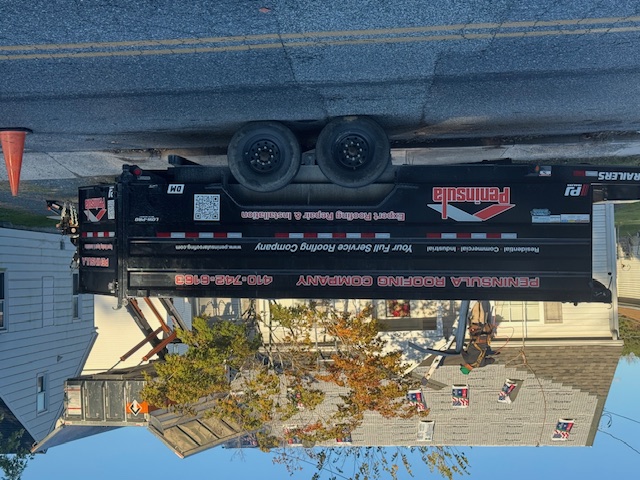
Even on walkable roofs, our crews at Peninsula Roofing Company, Inc. focus on precision, but the ease of movement significantly impacts the timeline.
2. The "Walkability" Factor (or lack thereof)
If you can stand on a roof without sliding off, it’s considered "walkable." On a rancher, our crew can move around freely, carry bundles of shingles on their shoulders, and nail them down with a rhythmic speed that would make a drummer proud.
Once a roof hits a certain pitch (usually around a 7:12 or higher), it becomes "non-walkable." Gravity starts winning.
To work on these roofs, our team can’t just walk. They have to "rig." This involves:
Roof Jacks: Temporary metal brackets nailed into the roof to hold wooden planks (staging).
Constant Re-positioning: Every few feet, those planks and jacks have to be moved, which takes time.
The "Harness Shuffle": While we always prioritize safety, a steep roof requires every worker to be tied off to an anchor point at all times. Managing those ropes while trying to install shingles is a slow, methodical process.
What takes four hours on a rancher might take twelve hours on a steep roof simply because the crew is fighting gravity every step of the way. When searching for roofers in Salisbury, MD, you want a team that understands these safety protocols, as they protect both the workers and your property.
3. Specialized Equipment Costs
You can’t just throw a ladder against a steep Victorian and call it a day. Complex, steep roofs often require specialized equipment to get materials up to those high peaks safely.
At Peninsula Roofing, we often utilize specialized lifts or booms for high-access work. Whether it's a historic church steeple or a three-story residential home with a 12:12 pitch, the equipment overhead is significantly higher than what's needed for a single-story rancher.
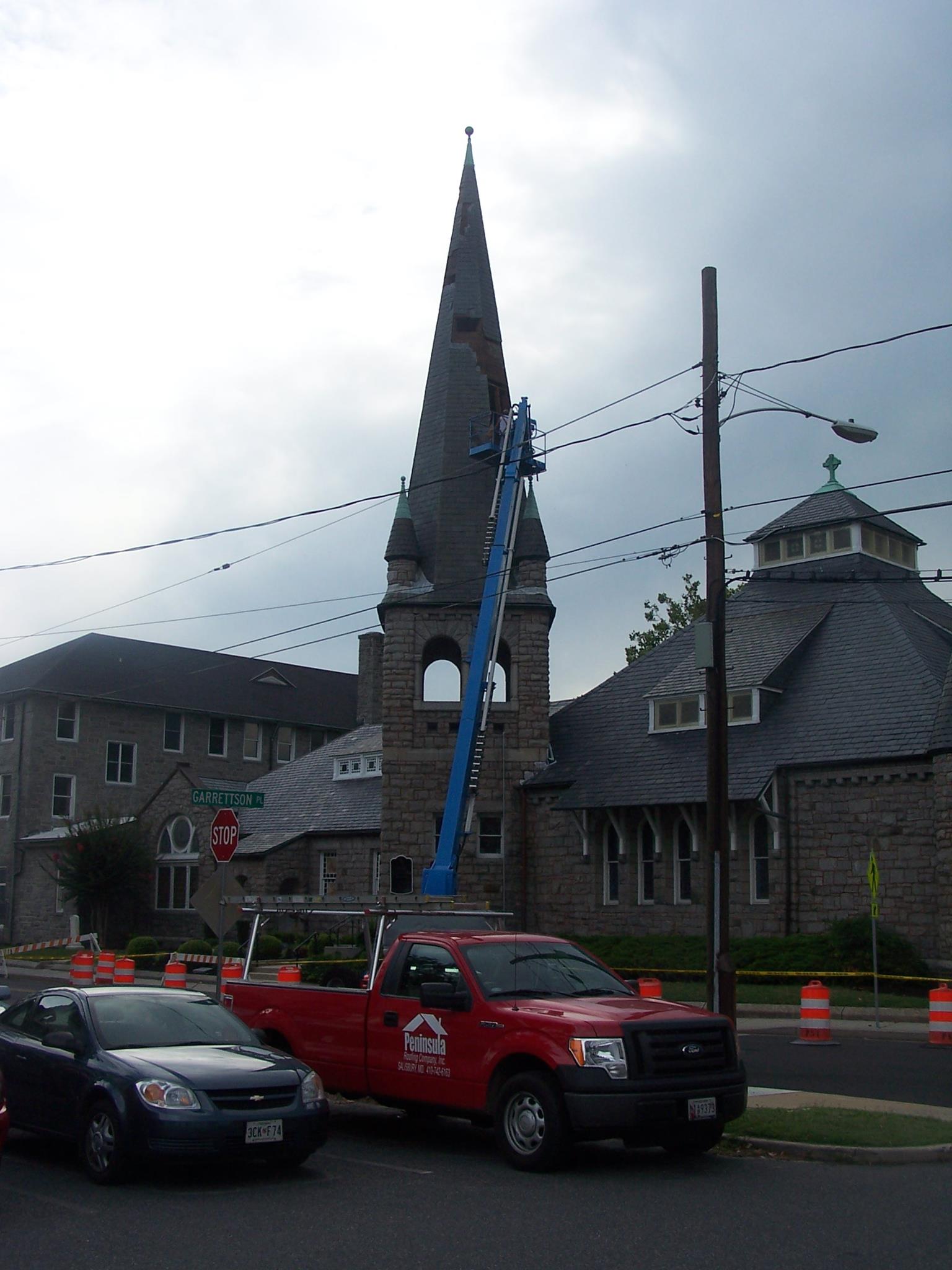
For steeper slopes and high-access points, specialized lifts are essential for both safety and efficiency.
4. The Material Waste Factor
A rancher is usually a series of large, simple rectangles. It’s like a giant game of Tetris where every piece fits perfectly.
Steep roofs are rarely that simple. They usually come hand-in-hand with dormers, valleys, hips, and complex architectural flourishes. Every time a roof plane hits another at an angle, shingles have to be cut.
Complex Cuts: Each cut creates waste.
Valley Linings: More valleys mean more expensive underlayments and flashing.
Dormers: These tiny "doghouses" on your roof look great, but they require intricate flashing work to ensure they don't leak.
A standard roof might have a 5% waste factor. A steep, complex roof can easily hit 15% to 20% waste. You’re paying for shingles that end up in the scrap bin because the geometry of your roof demands it.
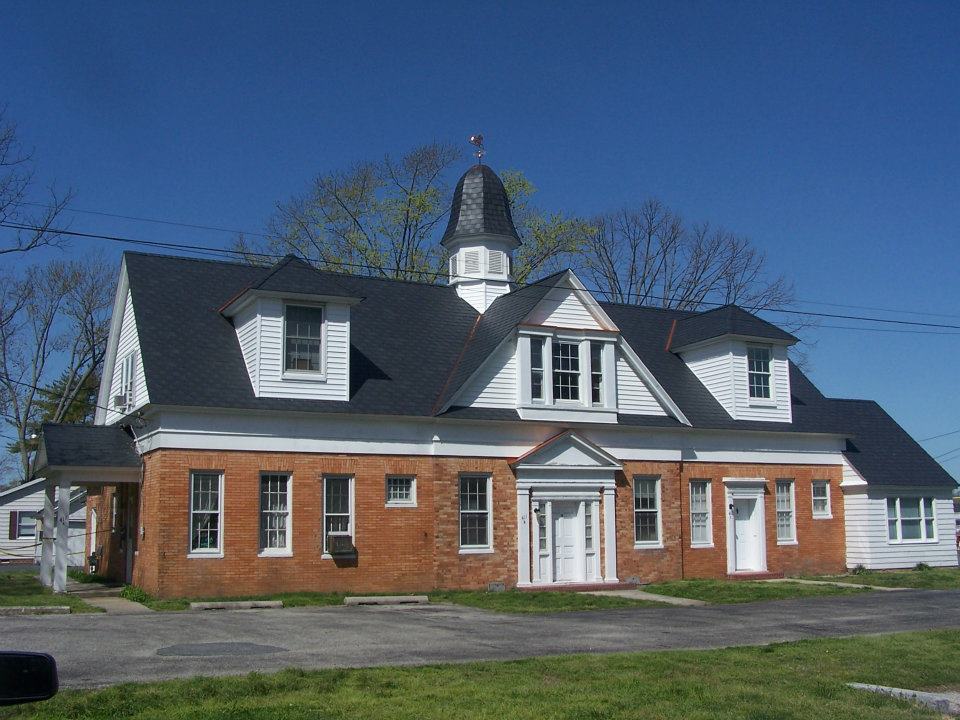
Beautiful architectural details like these dormers add character, but they also increase the complexity and material requirements of a roofing project.
5. Safety Overhead and Insurance
Let’s be real: roofing is dangerous work. Steep roofing is even more so. Because of the increased risk of falls, insurance premiums for roofing in Salisbury, MD are scaled based on the type of work being performed.
Furthermore, the time spent setting up fall protection systems is a significant portion of the labor cost. On a steep roof, we don't just "start roofing." We spend the first part of the day securing anchors, checking harnesses, and ensuring the staging is rock solid. It’s an invisible cost, but it’s the most important one. We don't take shortcuts when it comes to the safety of our crew or the integrity of your home.
The Peninsula Roofing Difference
Whether you have a 2:12 rancher or a 14:12 Victorian "steeple," Peninsula Roofing Company, Inc. has the experience to handle it. We’ve been serving Salisbury and the surrounding Delmarva area since 1947.
We don't believe in "one size fits all" pricing. When we come out for an estimate, we aren't just measuring square footage; we are measuring the "difficulty curve." We’ll explain exactly why your roof costs what it does, showing you the math and the logistical challenges involved.
We pride ourselves on finding cost-effective solutions. Sometimes, a steep roof doesn't need a full replacement: a targeted repair or maintenance plan might buy you another five years. Our goal isn't to sell you the most expensive roof; it's to provide the right solution for your specific slope.
High-quality ridge cap work and attention to detail are what set a professional roof apart, regardless of the pitch.
Ready for a transparent quote?
If you’re looking for a roofer in Salisbury who will give you the straight talk on your steep roof, give us a call. We offer 24/7 emergency services and comprehensive financing options to make sure your "Gravity Tax" doesn't break the bank.
Comments