The Sponge Effect: Why Rain on Snow is a Recipe for Roof Leaks in Delmarva
- sean fahey
- Jan 23
- 6 min read

If you've lived on the Eastern Shore for any length of time, you know our winters can be unpredictable. One day it's 50 degrees and sunny, the next we're dealing with a blanket of snow. But here's the weather pattern that really keeps roofing contractors like us busy: rain falling on top of existing snow.
It sounds harmless enough, right? After all, rain is just water, and snow is just frozen water. But when these two meet on your roof, something called the "Sponge Effect" kicks in: and it can turn a perfectly good roof into a leaky mess practically overnight.
Let's break down exactly what's happening up there and why property owners across Salisbury and the greater Delmarva region need to pay attention when this weather pattern rolls through.
What Exactly is the Sponge Effect?
Picture a kitchen sponge sitting in your sink. When it's dry, it's light and compact. But drop some water on it, and suddenly that sponge is heavy, saturated, and holding onto every drop it can.
Snow on your roof behaves the same way.
Fresh, fluffy snow is actually pretty light: roughly 3 to 5 pounds per square foot for a typical Delmarva snowfall. Your roof can handle that without breaking a sweat. But when rain falls on top of that snow, everything changes. Instead of running off like it normally would, the rainwater gets trapped in the snow layer. The snow acts like a giant sponge, soaking up and holding that moisture in place.
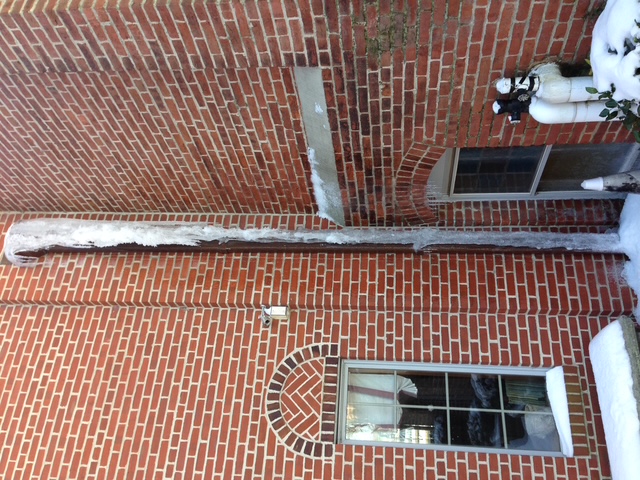
Now that same layer of snow can weigh 20 pounds per square foot or more. We're talking about potentially thousands of extra pounds sitting on your roof: weight it was never designed to carry for extended periods.
But weight is only part of the problem.
The Real Danger: Water That Won't Move
Here's something most folks don't realize about their roof: it's designed to shed moving water, not standing water.
Your shingles, your membrane, your flashing: all of it is engineered with one assumption in mind: water hits the roof and flows downhill toward the gutters or drains. When everything works as designed, gravity does the heavy lifting and water never sits in one place long enough to cause problems.
Rain on snow breaks that assumption completely.
When rainwater gets trapped in that snow layer, it's not flowing anywhere. It's sitting. Pooling. And water that sits on a roof will always find a way inside: through nail holes, under shingle edges, around flashing, through seams. Spots that have never leaked in ten years of normal rainstorms will suddenly start dripping because they were never meant to resist standing water.
This is what we call hydrostatic pressure. When water pools and has nowhere to go, it starts pushing. It pushes into gaps. It pushes under materials. It finds every tiny imperfection in your roofing system and exploits it.
Ice Dams: The Residential Nightmare
For homeowners with shingle roofs, rain on snow often leads to a classic Delmarva winter problem: ice dams.
Here's how it happens. You've got snow on your roof. Rain falls on that snow, saturating it. Then temperatures drop overnight (as they love to do around here), and that saturated snow freezes into a solid mass of ice: particularly along your roof edges and in your gutters.
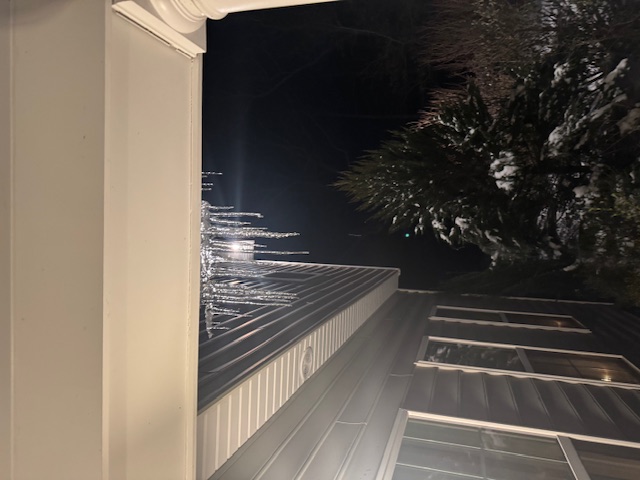
Now you've got a dam. When the next round of melting happens: whether from more rain, sunshine, or heat escaping from your attic: the water has nowhere to go. It backs up behind that ice dam, pools on your roof, and starts working its way under your shingles.
The result? Water stains on your ceiling. Wet insulation in your attic. Damaged drywall. And sometimes, if it goes unnoticed long enough, mold growth that turns a roof leak into a health hazard.
Those beautiful icicles hanging from your gutters? They might look like a winter wonderland, but they're actually warning signs. Big icicles typically mean water is freezing where it shouldn't be, which means drainage is blocked, which means you're a candidate for interior leaks.
Commercial Flat Roofs: A Different Problem, Same Principle
If you own a commercial building in Salisbury or anywhere on the Shore, you might think you're immune to ice damming. After all, your flat roof doesn't have shingles or dramatic slopes.
But flat roofs face their own version of the Sponge Effect: and in some ways, it's even more dangerous.
Commercial flat roofs rely on drains, scuppers, and gutters to move water off the surface. When snow accumulates and then gets saturated with rain, those drainage points can get blocked with ice and debris. Suddenly, your roof has no way to shed water at all.
Now you've got ponding water sitting on a membrane that: just like residential shingles: was designed for water to move across it, not sit on it. Every seam, every penetration, every patch becomes a potential entry point. And because commercial buildings often have more complex roof systems with HVAC units, vents, and other equipment, there are a lot more potential entry points than on a typical house.
Add in the weight factor, and you've got a real structural concern. Commercial roof decks are engineered to handle certain loads. Thousands of pounds of rain-saturated snow can push those limits, especially on older buildings that may not have been built to modern codes.
What Can You Do About It?
The good news is that the Sponge Effect doesn't have to catch you off guard. Here's what smart property owners in Delmarva do to protect themselves:
Before the Storm
Get a roof inspection. If your roof has existing vulnerabilities: cracked flashing, missing shingles, deteriorated membrane seams: rain on snow will find them. A professional inspection can identify weak spots before they become leaks. Contact us to schedule one before winter weather hits.
Clear your gutters and drains. Leaves, debris, and old granules from shingles can clog drainage paths. Clean gutters and drains can handle water; clogged ones create dams.
Check your attic insulation and ventilation. On residential roofs, heat escaping from your living space contributes to ice dam formation. Proper insulation and ventilation keep your roof deck cold, which means snow melts more evenly and drains properly.
During the Event
Don't panic, but do pay attention. Keep an eye on interior ceilings and walls for water stains or drips. If you see something, put a bucket under it and call a professional.
Avoid the temptation to get up on an icy roof yourself. We see well-meaning property owners get hurt every winter trying to shovel snow off their roofs. It's dangerous, and improper snow removal can actually damage your roofing materials.
After the Thaw
Document any damage. Take photos of water stains, ice dam locations, and any visible roof damage. This documentation is crucial if you need to file an insurance claim.
Schedule a post-winter inspection. Even if you didn't notice any leaks, rain-on-snow events can cause hidden damage that shows up later. A professional can spot issues before they become expensive problems.
Why Delmarva is Particularly Vulnerable
Our location on the Eastern Shore puts us in a tricky spot weather-wise. We're far enough south that we don't get consistent, cold winters: which means our snow frequently gets rained on rather than just melting gradually. We're also close enough to the coast that we get those wet, heavy nor'easters that dump rain and snow in the same storm system.
This freeze-thaw-freeze cycle is harder on roofs than either consistent cold or consistent warmth. Your roof materials expand and contract, ice forms and melts repeatedly, and water has multiple opportunities to work its way into places it doesn't belong.
The Bottom Line
Rain on snow isn't just a weather inconvenience: it's a specific threat to your roof that requires specific awareness. The Sponge Effect turns a manageable snow load into a heavy, wet mess that blocks drainage and creates standing water where your roof was never designed to handle it.
Whether you own a home in Salisbury or a commercial building anywhere on the Delmarva Peninsula, understanding this phenomenon helps you protect your investment. Keep your drainage clear, address existing roof issues before winter, and know when to call in professionals.
At Peninsula Roofing Company, we've been helping Eastern Shore property owners navigate winter weather challenges for years. If you're concerned about your roof's ability to handle what this winter throws at it, reach out to us. We'd rather inspect your roof now than repair water damage later.
Comments