The Sticky Truth: Why the Roofing World Swapped Coal Tar for Asphalt (And Why They Can't Be Friends)
- sean fahey
- Feb 16
- 5 min read

When you've been in business since 1947 like we have at Peninsula Roofing Company, you see a lot of things change in the roofing industry. But one of the biggest shifts? The move from coal tar pitch to asphalt for commercial flat roofs. And let me tell you, it wasn't because asphalt was better at keeping water out.
If you've got an older commercial building on the Eastern Shore, say, built between the 1950s and 1980s, there's a decent chance you're sitting on a coal tar roof. And if you're thinking about re-roofing, you need to know why these two materials absolutely cannot play nice together.
What's the Difference Between Pitch and Asphalt?
Let's start with the basics, because most property owners don't realize these are completely different animals.
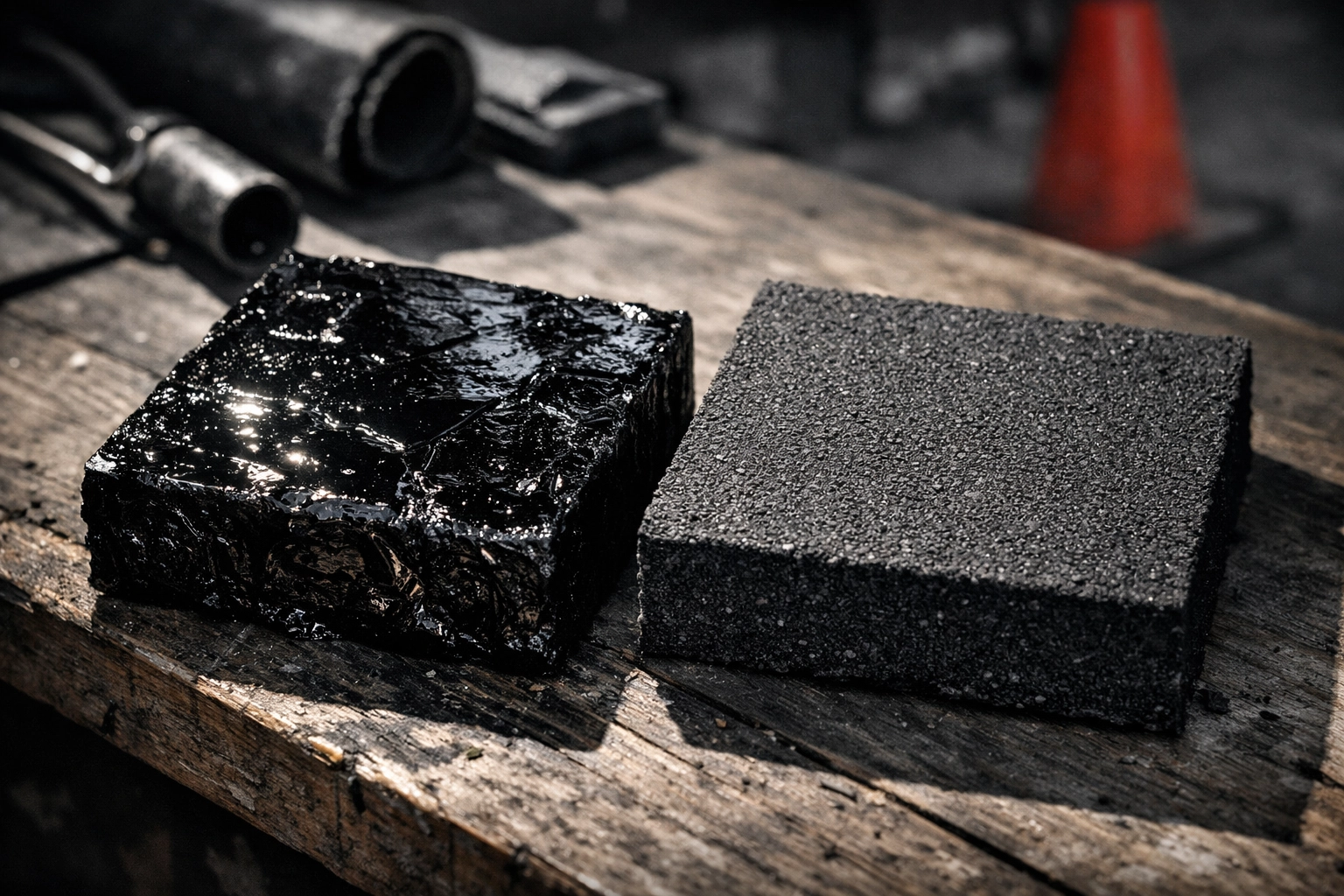
Coal Tar Pitch comes from, you guessed it, coal. Specifically, it's a byproduct from making coke for the steel industry. Think of those old smokestacks and industrial plants. When they processed coal, they got this incredibly sticky, dark, tar-like substance that turned out to be fantastic for roofing.
The magic of coal tar? It's "self-healing." On a hot summer day, this stuff literally melts and flows back into any hairline cracks that form. It's like the roof fixes itself. That's why you'll find 50, 60, even 70-year-old coal tar roofs still hanging in there on dead-level flat roofs across Salisbury and the Delmarva Peninsula.
Asphalt, on the other hand, is a petroleum byproduct. It comes from refining crude oil, the same stuff that becomes gasoline and diesel. Asphalt is more dimensionally stable across temperature swings and doesn't have that same "creeping" quality that pitch has.
Why Did the Roofing World Break Up With Coal Tar?
Here's the thing: coal tar was actually better at waterproofing than asphalt, especially for those flat roofs that hold standing water. So why did the entire industry abandon it?
Health and Safety Concerns
Coal tar is nasty stuff to work with. Like, legitimately dangerous. It's a known carcinogen, and prolonged exposure to the fumes isn't doing anyone any favors. But here's the really wild part: coal tar causes something called "pitch burns."
When roofers work with hot coal tar, the fumes make their skin hyper-sensitive to UV light. We're talking about guys getting what feels like a third-degree sunburn after just an hour in the sun, even days after working with the material. Your skin literally becomes photosensitive. That's not just uncomfortable, it's a serious occupational hazard that roofing companies in Salisbury MD and everywhere else had to take seriously.
That Smell
If you've ever driven past an active coal tar roofing job, you know the smell. It's acrid, heavy, and sticks in your throat. It's not like the smell of fresh asphalt (which smells like a road crew), it's much more intense and unpleasant. Neighbors complain. Building tenants complain. Even walking past the building weeks later, you can still catch a whiff.
Asphalt? Sure, it smells when it's hot, but it's tolerable and dissipates quickly.
Availability and Economics
As the steel industry changed and coal gasification plants became less common, coal tar got harder to source. Meanwhile, petroleum refineries were cranking out asphalt by the truckload. Simple supply and demand made asphalt the more economical choice for most projects.
The environmental regulations started tightening up, too. Coal tar contains significantly higher concentrations of polycyclic aromatic hydrocarbons (PAHs), toxic compounds that are bad news for groundwater and the environment. Asphalt emulsion has virtually zero PAH content, making it the more environmentally responsible choice going forward.
The Chemical Divorce: Why They Can't Be Friends
Now here's where things get sticky, literally.
Let's say you've got an old coal tar roof on your commercial building, and it's time for a re-roof. You might think, "Can't we just put a new asphalt-based system right over the old roof and call it a day?"
Absolutely not.
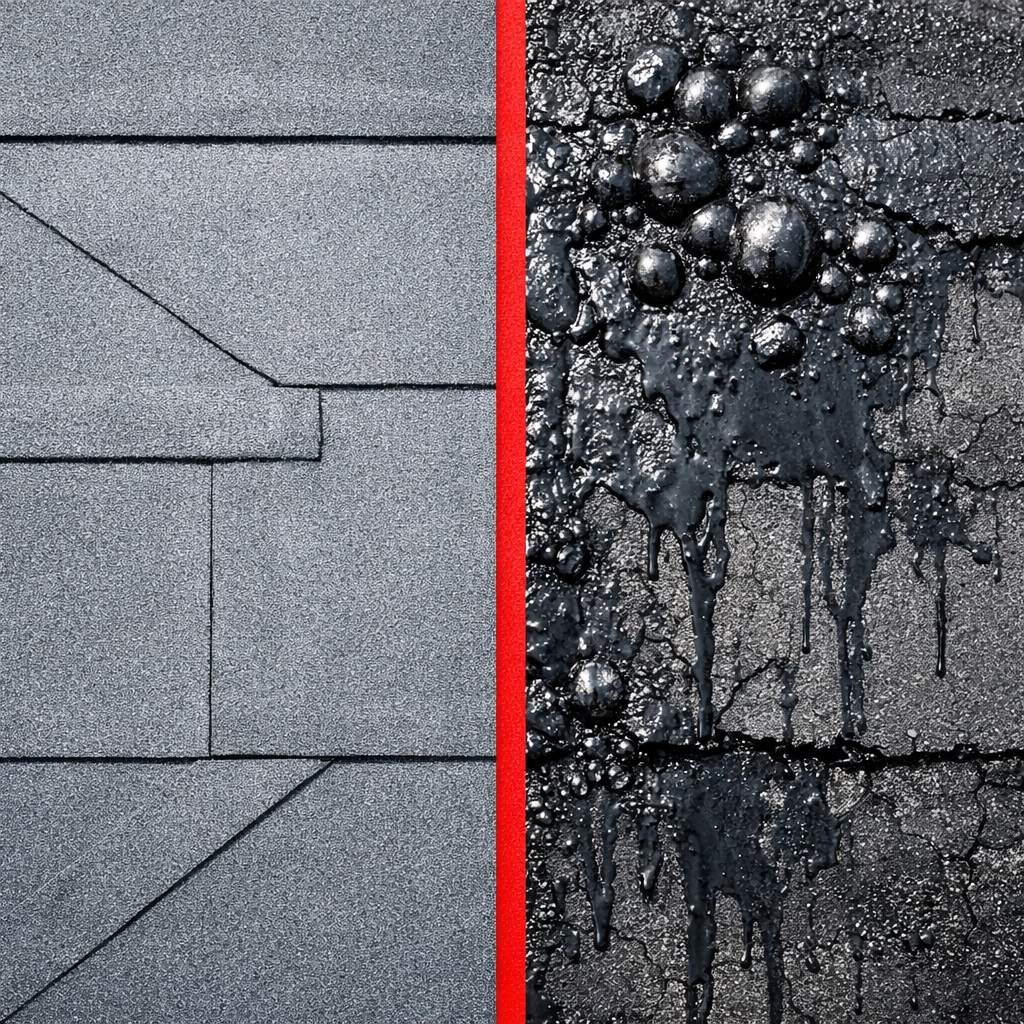
Coal tar (coal-based) and asphalt (oil-based) are chemically incompatible. When you put hot asphalt directly onto coal tar, you get a chemical reaction called exudation. Basically, the coal tar "eats" the asphalt.
Instead of curing into a solid, waterproof membrane, the asphalt turns into a permanent oily mess. It never hardens. It stays soft, sticky, and eventually just slides right off or breaks down completely. You've essentially created a roof that's designed to fail.
This isn't just theory, we've seen it happen. As one of the established Salisbury roofing companies with decades of experience, we've been called out to more than a few "mystery leak" situations where someone tried to patch an old pitch roof with modern asphalt materials. It doesn't work.
The Alligator Problem
Old coal tar roofs also develop something called alligatoring, and yes, it looks exactly like you'd imagine. The surface develops a distinctive pattern of cracking that resembles alligator scales. This happens because of oxidation and the loss of volatile oils over time.
When a coal tar roof starts alligatoring, it's telling you something: the roof is degrading. But even in this degraded state, it's still chemically active enough to react with new asphalt materials. That's why proper separation is critical.
So What's the Solution?
If you're dealing with an aging coal tar roof on your commercial property, you've got two main options:
Option 1: Complete Tear-Off
This is the most straightforward approach. We remove the entire old coal tar system down to the deck, inspect and repair any structural issues, and install a completely new roof system. It's more labor-intensive and creates more waste, but it gives you a clean slate.
Option 2: Install a Separator Layer
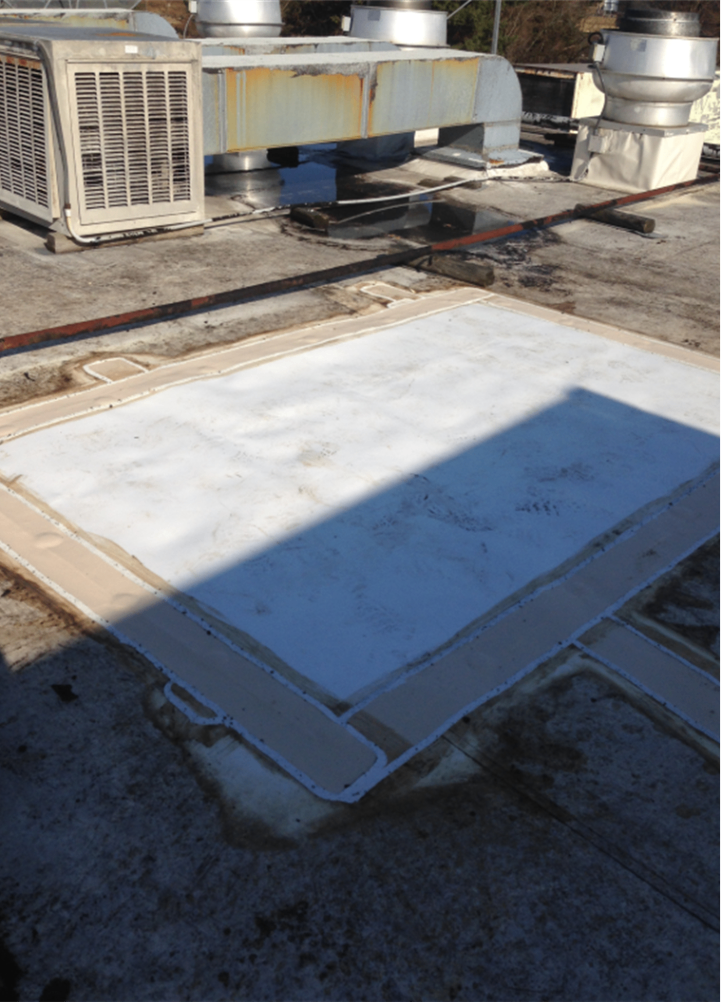
If the existing coal tar roof is in decent shape structurally, we can install an isolation layer: something like DensDeck or a specialized base sheet: over the coal tar. This creates a physical barrier that prevents the chemical reaction. Then we mechanically attach (not adhesively bond) the new roofing system to avoid any contact between the incompatible materials.
The key is: these materials can't touch. Period.
Why This Matters for Eastern Shore Property Owners
A lot of commercial buildings in our area were built during the coal tar era. Warehouses, manufacturing facilities, older shopping centers: they're all candidates for having that old pitch roof underneath whatever's been patched over the years.
When you're getting quotes for commercial roofing work, any reputable contractor needs to know what they're working over. If someone gives you a bid without investigating what's already up there, that's a red flag. The last thing you want is to invest in a new roof that's chemically programmed to fail because of what's underneath.
The Bottom Line
The shift from coal tar to asphalt wasn't about performance: coal tar was arguably better at waterproofing. It was about health, safety, environmental responsibility, and practicality. But the legacy of those old coal tar roofs is still with us, and understanding the chemistry matters when it's time to re-roof.
At Peninsula Roofing Company, we've been navigating these transitions since 1947. We've torn off coal tar roofs, installed separator systems, and yes: we've also been called in to fix the disasters that happen when someone tries to take shortcuts.
If you're dealing with an aging commercial roof and you're not sure what's up there, give us a call. We'll do a proper inspection, let you know what you're working with, and give you options that'll actually last. Because in roofing, chemistry matters: and coal tar and asphalt? They're never getting back together.
Comments