The Vanishing Gravel: What Happened to Ballasted Roofs on Delmarva?
- sean fahey
- Feb 4
- 6 min read

If you've been around the Delmarva Peninsula long enough, you've probably noticed something: those flat commercial roofs covered in river rock are becoming as rare as a quiet weekend in Ocean City. Walk through Salisbury, drive through downtown Salisbury or Cambridge, and you'll spot plenty of white TPO roofs reflecting sunlight, but the gravel? It's practically extinct.
So what happened? Did we collectively decide that rocks on roofs were a bad idea, or is there more to the story? Spoiler alert: there's definitely more to the story, and it involves everything from Delmarva's notorious winds to the simple fact that finding a leak under 50 tons of gravel is nobody's idea of a good time.
What Even IS a Ballasted Roof?
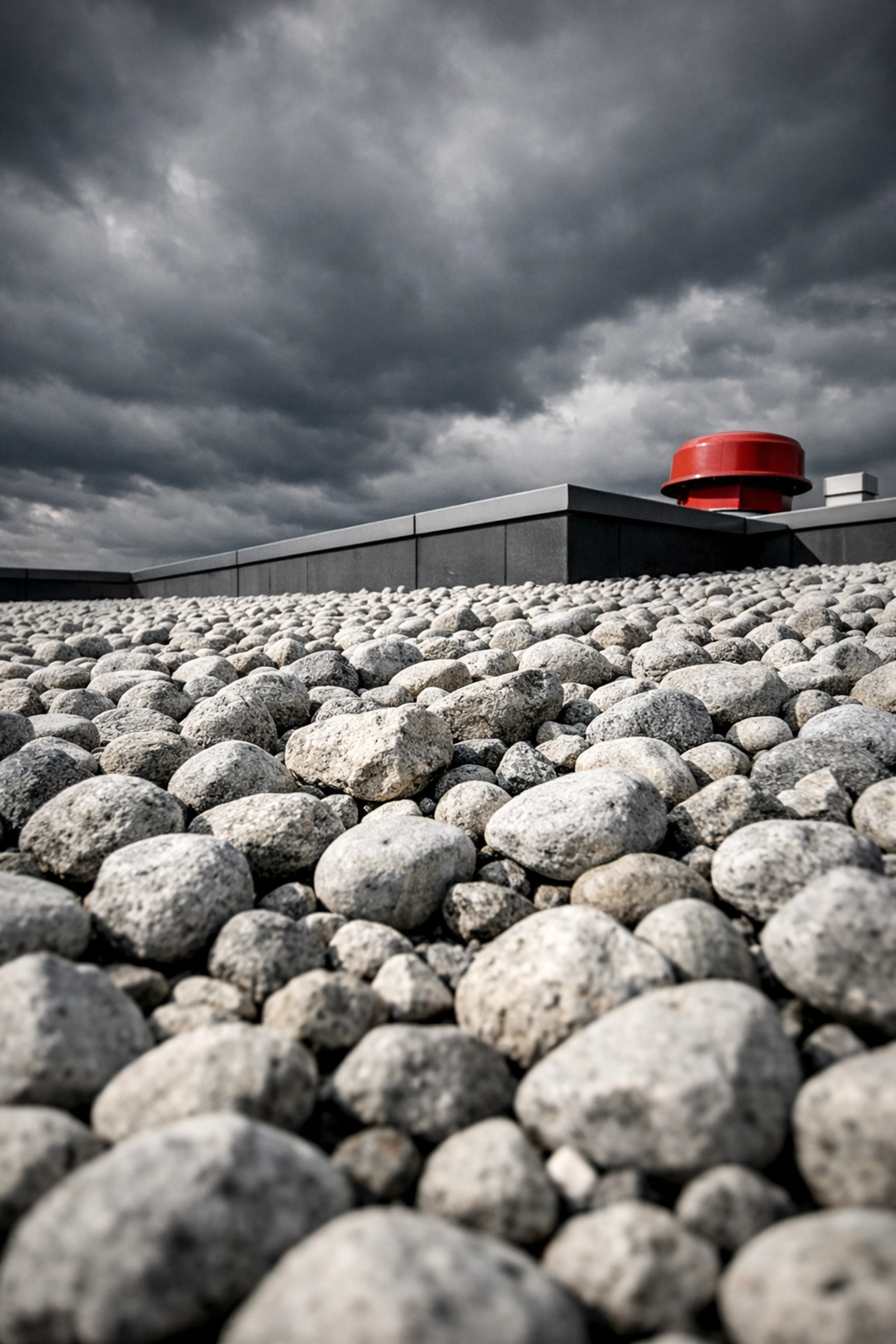
Let's back up for a second. If you're not in the roofing business, you might be wondering what a "ballasted roof" actually is. Picture this: instead of mechanically attaching your roof membrane to the deck with screws or gluing it down with adhesive, you just... lay it there. Then you dump a bunch of heavy river rock or gravel on top to hold it in place.
Sounds simple, right? The weight of the stone (typically 10-12 pounds per square foot) keeps the membrane from blowing away, protects it from UV damage, and theoretically gives you a low-maintenance roof system. For decades, this was a popular choice for flat commercial roofs across North America, including right here on the Eastern Shore.
The membrane underneath was usually EPDM (that black rubber material) or sometimes a modified bitumen system. The gravel acted as ballast, hence the name, and everything just sat there peacefully.
At least, that was the theory.
Welcome to Delmarva: Where the Wind Never Takes a Day Off
Here's the thing about our little slice of the Mid-Atlantic: we're basically a wind tunnel with crab cakes. Sitting between the Chesapeake Bay and the Atlantic Ocean, the Delmarva Peninsula catches wind from every direction. Nor'easters in winter, tropical remnants in summer, and those random Wednesday gusts that make you question your decision to wear a hat.
When you've got a roof covered in loose gravel, that wind becomes a serious problem.
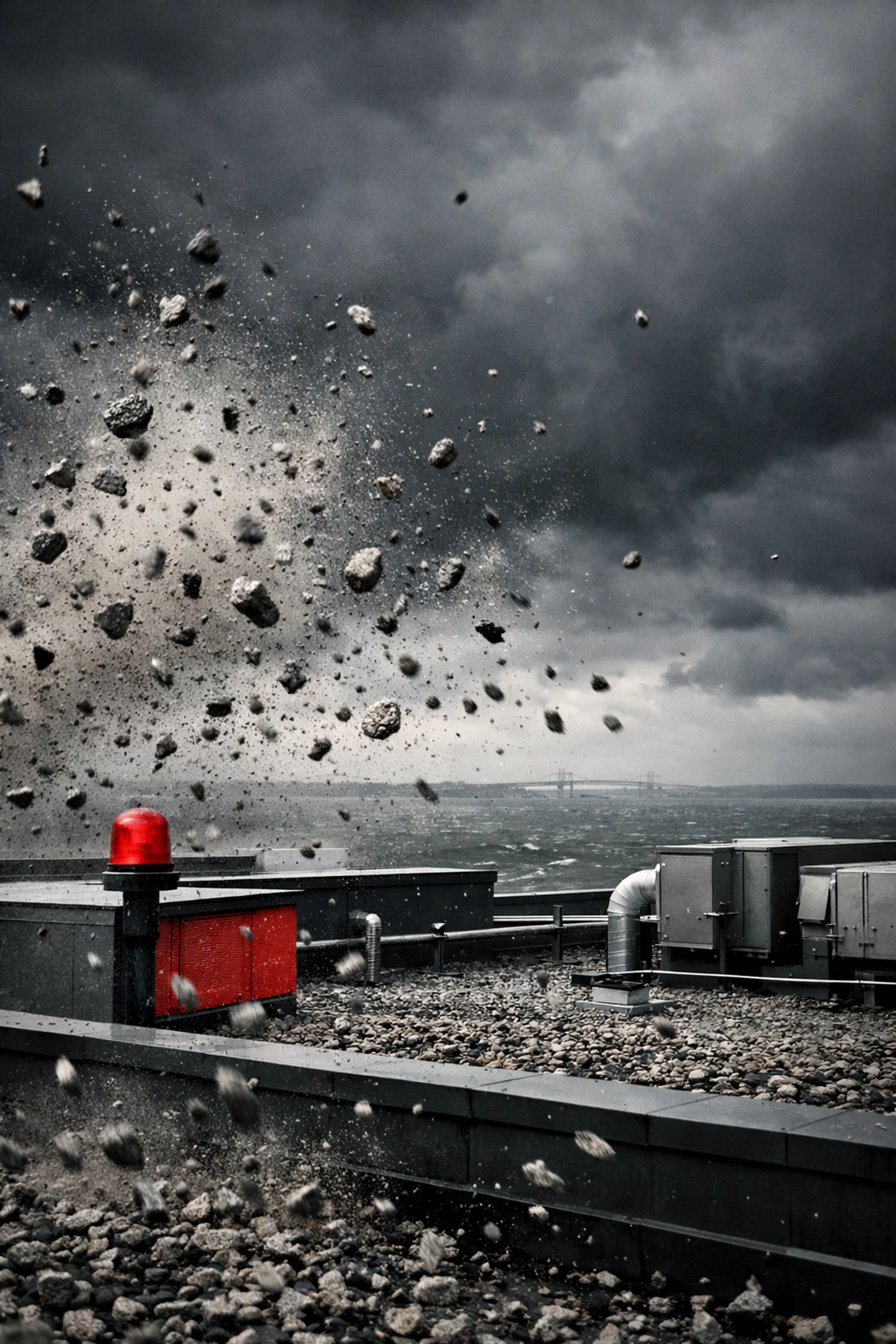
Wind scouring is the technical term, but "rocks flying off your roof like tiny missiles" is the more accurate description. High winds don't just blow straight across a flat roof, they create uplift at the edges and corners, generating enough force to actually pick up and move those stones. We're talking about the same river rock that weighs 10-12 pounds per square foot suddenly becoming airborne debris.
I've seen ballasted roofs after major storms where entire sections of gravel have been pushed into corners or blown completely off the building. And when that happens, the unprotected membrane underneath is now exposed to UV damage and wind uplift. It defeats the entire purpose of the system.
Even worse? When that gravel starts moving around, it can puncture the very membrane it's supposed to be protecting. Imagine dragging thousands of pounds of stone across a rubber sheet every time the wind picks up. Yeah, not ideal.
For a peninsula that sees its fair share of coastal weather events, ballasted roofs became a liability rather than an asset pretty quickly.
The Leak Detection Nightmare
Let's say you've got a ballasted roof, and one day you notice water staining on your ceiling tiles. Time to find that leak, right?
Good luck.
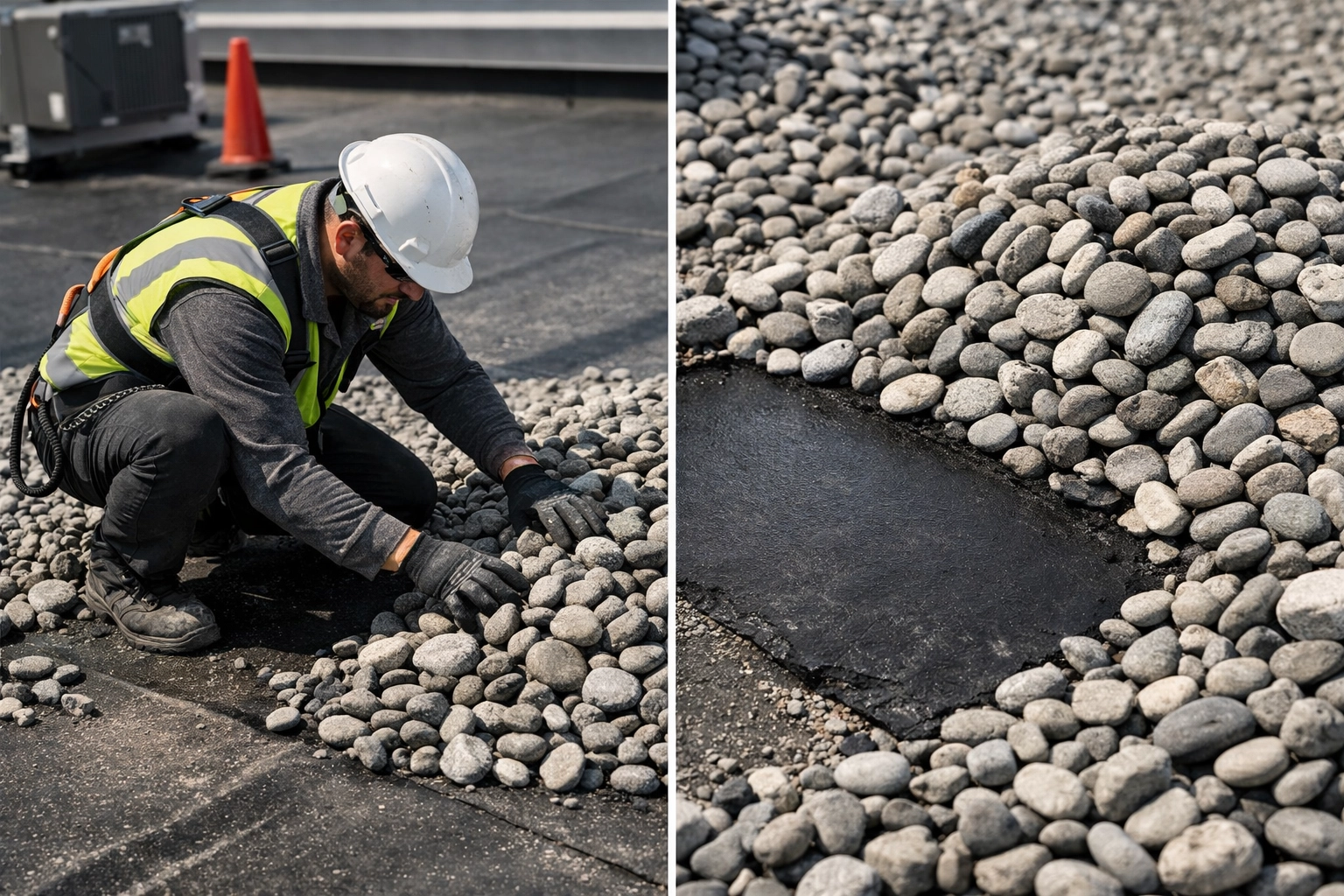
With a traditional mechanically-attached or fully-adhered roof system, we can use infrared cameras, conduct moisture surveys, and visually inspect the membrane to track down the problem. But with a ballasted roof? First, you've got to move literal tons of stone just to see the membrane underneath.
We're not talking about raking a zen garden here. This is backbreaking, time-consuming work that adds hours (sometimes days) to a repair job. And here's the kicker: once you find and fix the leak, you've got to put all that gravel back. Hope you remembered exactly where everything went.
This makes routine maintenance nearly impossible. You can't easily inspect the seams, can't check for early signs of deterioration, and can't catch small problems before they become big ones. For building owners, this meant higher repair costs, longer downtime, and a whole lot of frustration.
For roofing companies in Salisbury MD like us, it meant spending more time moving rocks than actually fixing roofs. There had to be a better way.
The Weight Problem Nobody Talked About
Here's something most building owners didn't think about when ballasted roofs were popular: that gravel is heavy. Like, really heavy.
At 10-12 pounds per square foot, a typical 10,000-square-foot roof could be carrying over 100,000 pounds of stone. That's 50 tons sitting on top of your building, 24/7, for decades.
Older commercial buildings were often designed to handle this load, but as building codes evolved and construction methods changed, engineers started questioning whether all that dead weight was really necessary. Modern structural designs favor lighter roof systems that put less stress on the building frame, especially important for retrofits or buildings not originally designed for ballasted systems.
Add in the fact that gravel-covered roofs couldn't support rooftop equipment as easily (try running HVAC lines through three inches of river rock), and the structural argument against ballasted systems became pretty compelling.
Then TPO Changed Everything
If ballasted roofs were slowly losing favor throughout the 1990s and early 2000s, the rise of TPO (thermoplastic polyolefin) and PVC membranes basically drove a stake through their heart.
White, reflective, heat-welded TPO offered everything ballasted systems couldn't:
Energy Efficiency: That bright white surface reflects sunlight instead of absorbing it, significantly reducing cooling costs. On the Delmarva Peninsula, where summer heat can be brutal, this matters.
Wind Resistance: Mechanically-attached or fully-adhered TPO systems can be engineered to withstand hurricane-force winds. No loose gravel, no wind scouring, no flying debris.
Easy Maintenance: You can actually see the membrane. Leaks are easier to find, repairs are faster, and routine inspections don't require moving mountains of stone.
Lighter Weight: TPO systems weigh a fraction of what ballasted roofs do, making them suitable for a wider range of buildings.
Longevity: Modern TPO membranes with proper installation routinely last 20-30 years with minimal maintenance. The heat-welded seams create watertight bonds that simply weren't possible with older systems.
For roofer Salisbury operations like Peninsula Roofing, TPO became the obvious choice for flat commercial roofs. It addressed every major complaint about ballasted systems while offering better performance and lower lifecycle costs.
By the mid-2000s, when we were doing commercial roof replacements, the conversation wasn't "should we switch from ballasted to TPO?", it was "when can you start?"
What We're Seeing Today
Drive around Salisbury, Fruitland, or any commercial district on Delmarva today, and you'll still spot some older ballasted roofs. They're usually on buildings from the '80s and '90s that haven't needed a replacement yet. But they're a dying breed.
At Peninsula Roofing Company, when we inspect an older ballasted roof for a client, the conversation almost always leads to the same recommendation: it's time to upgrade. Not because we're trying to upsell (though hey, we do like staying in business), but because the technology has simply evolved past the point where ballasted systems make sense.
The conversion process is straightforward: remove the gravel and old membrane, inspect and repair the deck if needed, then install a modern TPO or PVC system that's mechanically attached or fully adhered. The building immediately benefits from better wind resistance, easier maintenance, improved energy efficiency, and often a longer warranty.
Some building owners worry about the cost of conversion, but when you factor in the reduced maintenance headaches, better insurance rates (some carriers charge more for ballasted roofs now), and energy savings, it usually pays for itself faster than you'd think.
The Bottom Line
Ballasted roofs weren't a bad idea when they were introduced. For their time, they made sense: simple installation, good UV protection, and effective performance in stable climates. But the Delmarva Peninsula isn't a stable climate. We've got wind, weather, and enough coastal storms to make ballasted systems more trouble than they're worth.
Add in the maintenance nightmares, the structural weight concerns, and the emergence of superior alternatives like TPO, and it's no wonder these gravel-covered roofs have become an endangered species.
If you're still managing a building with a ballasted roof, you're not in crisis mode, yet. But when it comes time for that next roof replacement, do yourself a favor: make the switch. Your maintenance crew, your insurance company, and your air conditioning bill will all thank you.
And if you need someone to help you make that transition? Well, we've been doing this since 1947. We've seen roofing trends come and go, and we're pretty good at spotting which ones are built to last: and which ones are destined to disappear like gravel in a nor'easter.
Comments