Too Hot to Handle? How Record Salisbury Heat and New OSHA Guidelines Change the Way We Roof
- sean fahey
- May 18
- 5 min read

If you have lived in Salisbury, MD, for any length of time, you know that the humidity on the Eastern Shore doesn’t just make you sweat: it makes the air feel heavy enough to swim in. While the record high in Salisbury sits at a blistering 106°F, recent summers have shown us that extreme heat isn't just a "once-in-a-decade" event anymore. It is our new summer reality.
For a roofer in Salisbury, heat is more than just an inconvenience; it is a fundamental shift in how we handle safety, material integrity, and scheduling. As of April 2026, the landscape has changed even further with the implementation of OSHA’s new Heat National Emphasis Program (NEP). This federal initiative specifically targets roofing as a high-risk industry, and for good reason.
At Peninsula Roofing Company, Inc., we’ve been serving Delmarva since 1947. We’ve seen a lot of hot summers, but the intersection of record-breaking temperatures and new safety regulations means we have to be smarter than ever. Here is how the heat is changing the way we protect our crews and your property.
The 80°F Threshold: OSHA’s New "Heat Priority Day"
The most significant change in the industry recently is the OSHA Heat NEP. This program isn't just a set of suggestions; it’s a rigorous enforcement strategy. Under these guidelines, any day where the temperature is forecast to hit 80°F or higher is officially designated as a "heat priority day."
Why 80°F? While that might sound like a pleasant spring day to someone at a backyard BBQ, it’s a different story on a roof. A roof surface can easily be 40°F to 60°F hotter than the ambient air temperature. When the thermometer reads 80°F, the shingles our guys are standing on can hit 130°F.
On these heat priority days, OSHA inspectors are authorized to conduct proactive inspections of worksites. They are looking for specific safety protocols that go beyond just having a cooler of water on the truck. As one of the leading roofing companies in Salisbury, MD, we’ve integrated these standards into our daily operations to ensure every project stays compliant and every worker stays safe.
Protecting the Crew: Water, Rest, Shade, and Acclimatization
Safety isn't just about avoiding falls; in a Salisbury summer, it’s about avoiding heat stroke. We follow a strict protocol often summarized by OSHA as "Water. Rest. Shade."
1. Hydration
It sounds simple, but it’s a science. We ensure our crews have access to cool water throughout the day. However, hydration actually starts the night before. We educate our team on the importance of maintaining electrolyte balance, as drinking plain water alone during a 10-hour shift in 90-degree heat can lead to hyponatremia (dangerously low sodium levels).
2. The "Rest and Shade" Mandate
Under the new guidelines, rest breaks must be taken in a "cooling area." This could be a shaded spot under a pop-up canopy, a nearby air-conditioned vehicle, or a designated indoor space. These breaks aren't "optional" when the heat index climbs; they are scheduled and mandatory.
3. Acclimatization: The 20% Rule
One of the most critical parts of the new OSHA guidelines is the "acclimatization" period. Statistically, most heat-related fatalities in construction happen within a worker’s first few days on the job. Their bodies aren't used to the thermal load. We follow the 20% rule: new or returning workers are only exposed to 20% of the normal duration of work in the heat on their first day, increasing by 20% each subsequent day. This gradual build-up allows the body to physically adapt to the Salisbury humidity.
The Technical Impact: What Heat Does to Your Roof Materials
Most homeowners think about how heat affects the people on the roof, but it also has a massive impact on the materials themselves. This is where the expertise of a professional roofer in Salisbury really matters.
Soft Shingles and Scuffing
Asphalt shingles are designed to be flexible, but extreme heat turns them into something closer to modeling clay. When a shingle reaches 140°F, the asphalt becomes "tacky." If a worker walks across a roof in that state without extreme care, their boots can scuff the granules right off the shingle or even tear the mat. This ruins the aesthetic and shortens the lifespan of the roof.
To combat this, we often shift our work hours. You might see our trucks rolling through Salisbury at 4:30 AM. By starting at daybreak, we can get the bulk of the walking and heavy installation done before the sun turns the shingles soft.
The Sealant Struggle
There is a delicate balance when it comes to heat and installation. Asphalt shingles have a "seal strip" that requires heat to bond properly to the shingle below it. If you install a roof in the dead of winter, it might not seal until spring. However, in the Salisbury summer, that seal happens almost instantly.
The risk is that if the shingles are too hot during installation, the sealant can become overly aggressive, making it nearly impossible to reposition a shingle if it’s slightly off. Furthermore, adhesives and foams used in commercial services can cure too quickly in high heat, potentially leading to a weaker bond if not handled by an experienced professional.

Shifting Hours: Why We Start Before the Sun
If you’ve hired us for a project during a July heatwave, you might notice our schedule looks a little different. Beating the peak sun is the only way to maintain quality and safety.
Early Starts: We aim to be on-site as soon as local noise ordinances allow. Getting the "tear-off" portion of the job done in the cool morning hours is essential.
The Midday Pause: On days where the heat index enters the "extreme" category (usually 105°F+), we may actually pull our crews off the roof entirely between 1:00 PM and 4:00 PM.
Split Shifts: In some cases, we may work early morning, break for the afternoon, and return for a few hours in the evening as the sun begins to dip.
We know this can be a bit disruptive to your morning coffee, but it ensures that the people working on your home are alert, safe, and not accidentally damaging your new shingles by walking on them when they are too soft.
Why "Cool Roofs" Are No Longer Optional
The increasing heat in Salisbury, MD, has also changed the products we recommend. We are seeing a major shift toward "Cool Roof" technology. This includes:
High-Reflectivity Shingles: These use specially engineered granules that reflect solar energy back into the atmosphere rather than absorbing it into your attic.
Enhanced Ventilation: A roof is a system. If your attic isn't venting that 140°F air properly, your AC is going to work overtime, and your shingles will "bake" from both sides.
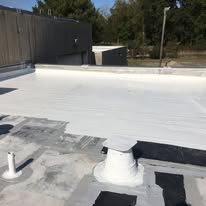
White Coatings for Commercial Projects: For flat roofs, a white silicone or acrylic coating can drop the surface temperature by a staggering 50°F or more. You can see how these options compare on our roof coating chart.
Choosing a Responsible Roofer in Salisbury
When you are looking for roofing companies in Salisbury, MD, it’s easy to just look at the bottom line. But in today’s climate, you need to ask about their heat safety protocols. A company that ignores OSHA’s NEP is not only putting their workers at risk: they are putting your project at risk of being shut down by an inspector or having your materials damaged by heat-stressed labor.
At Peninsula Roofing Company, Inc., we take pride in our "Safety First" culture. Whether it’s a residential shingle job or a complex commercial steeple repair, we plan every project around the forecast.
If you are worried about how the summer sun is affecting your current roof, or if you want to discuss high-temp materials that can stand up to the Salisbury heat, don't hesitate to reach out. We’ve been here since 1947, and we plan to be here for many more summers to come.
For a professional inspection or to learn more about our heat-resistant roofing options, visit our contact page or stop by our office on N. Salisbury Blvd.

Comments