TPO Roof Recovers: The "Secret" to Protecting Your Commercial Warranty
- sean fahey
- Feb 25
- 6 min read

If you own or manage a commercial building in the Delmarva area, you already know that the roof is one of your biggest capital expenses. When that old roof starts to show its age, your first instinct might be to panic at the thought of a full tear-off. It’s loud, it’s messy, and it’s expensive.
That’s where a TPO (Thermoplastic Polyolefin) roof recover comes in. It’s a popular, cost-effective way to get a "new" roof without the headache of a total replacement. But here is the thing: if it isn’t done exactly right, you aren't just risking a few leaks: you’re likely voiding your manufacturer’s warranty before the glue even dries.
At Peninsula Roofing Company, Inc., we’ve been the roofing salisbury md has trusted since 1947. I’m R. Sean Fahey, and I’ve seen plenty of "budget" roofers cut corners on recovers that end up costing the building owner double in the long run. Let’s talk about how to do a TPO recover the right way, so your investment is actually protected.
The "Sandpaper" Effect: Why TPO and BUR Don’t Mix
One of the most common mistakes we see among less experienced roofing companies in salisbury md is the attempt to lay TPO directly over a mineral-surfaced built-up roof (BUR). On the surface, it seems like a great way to save money on materials. In reality, it’s a recipe for what I like to call a "roofing divorce."
There are two major reasons why this is a disaster:
1. Chemical Degradation (The Asphalt Bleed)
TPO is a modern, high-tech membrane, but it has a biological enemy: asphalt. When TPO comes into direct contact with the oils in an old asphalt-based roof, a process called "plasticizer migration" can occur. While TPO doesn't rely on plasticizers as much as PVC does, the volatile oils in the asphalt can still cause the TPO to become brittle, discolor, and degrade prematurely. You won't see a giant black stain overnight, but the chemical bond of the TPO will weaken, leading to cracks and failures within just a few years.
2. The Sandpaper Effect
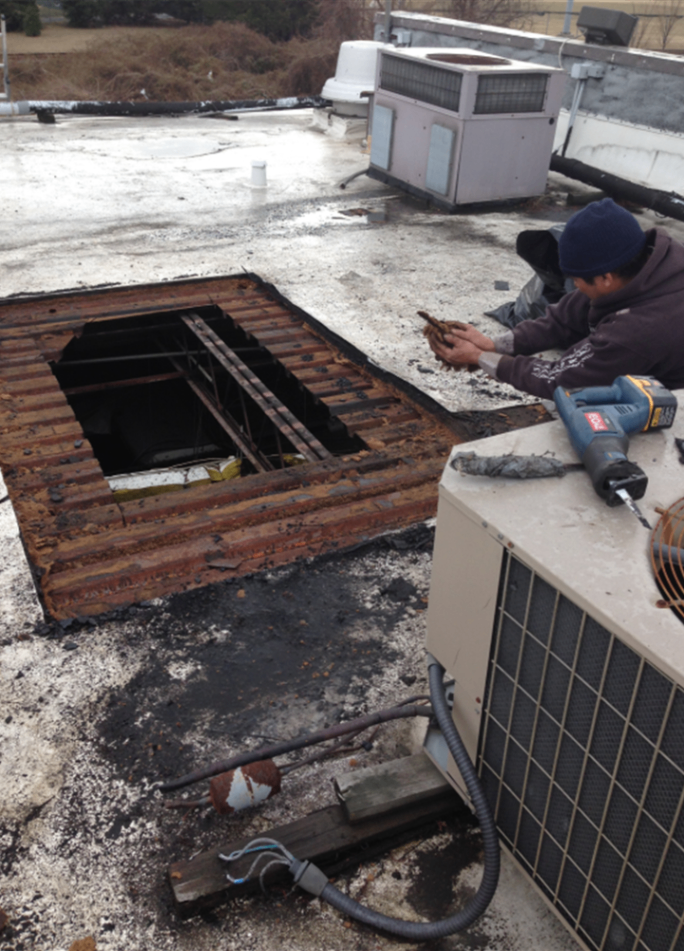
Mineral-surfaced roofs are covered in tiny, abrasive granules. These granules are designed to protect the asphalt from UV rays, but to a flexible TPO membrane, they are essentially giant sheets of sandpaper.
Because buildings are constantly moving: expanding in the heat of a Maryland summer and contracting in the winter: the TPO membrane is always shifting slightly. If it’s sitting directly on those minerals, the underside of the membrane gets ground down day after day. Eventually, you’ll end up with "pinhole leaks" that are nearly impossible to find until the insulation underneath is completely saturated.
The "Separator Rule": The Peace Treaty Your Warranty Demands
To solve the issues of chemical degradation and abrasion, manufacturers require a "peace treaty" between the old roof and the new TPO. This is the Separator Rule.
In almost every scenario where you are recovering an existing roof, the manufacturer’s warranty will require either a separator sheet or, more commonly, a cover board. This board (often high-density wood fiber, gypsum, or polyisocyanurate) provides several benefits:
It creates a smooth, flat surface for the TPO.
It acts as a chemical barrier against old asphalt oils.
It adds a layer of puncture resistance.
It is the only way to get a 20-year or 30-year NDL (No Dollar Limit) warranty.
If a roofer salisbury tells you that you don't need a cover board over a BUR, ask them for a copy of the manufacturer’s warranty specification. Chances are, they can’t provide one that covers that specific installation.
The One Major Exception: TPO Over TPO or EPDM
Now, there is one "secret" exception where you can often skip the expensive separator sheet: when you are recovering an existing TPO or EPDM (rubber) roof with a new layer of TPO. Since these materials are chemically compatible, you don't have to worry about the oils eating the new membrane.
However: and this is a big "however": there is a critical step that most roofers in salisbury md overlook: Slitting the old membrane.
Why You Must Slit the Old Roof
If you lay a new TPO roof directly over an old one, you are creating a "double vapor barrier." If any moisture is trapped in the old system (and there is almost always some moisture), it will have nowhere to go. It can’t go down through the deck, and it can’t go up through the new TPO.
This trapped moisture turns into a vapor that can cause the new roof to blister, rot the deck below, or even cause the adhesive to fail.
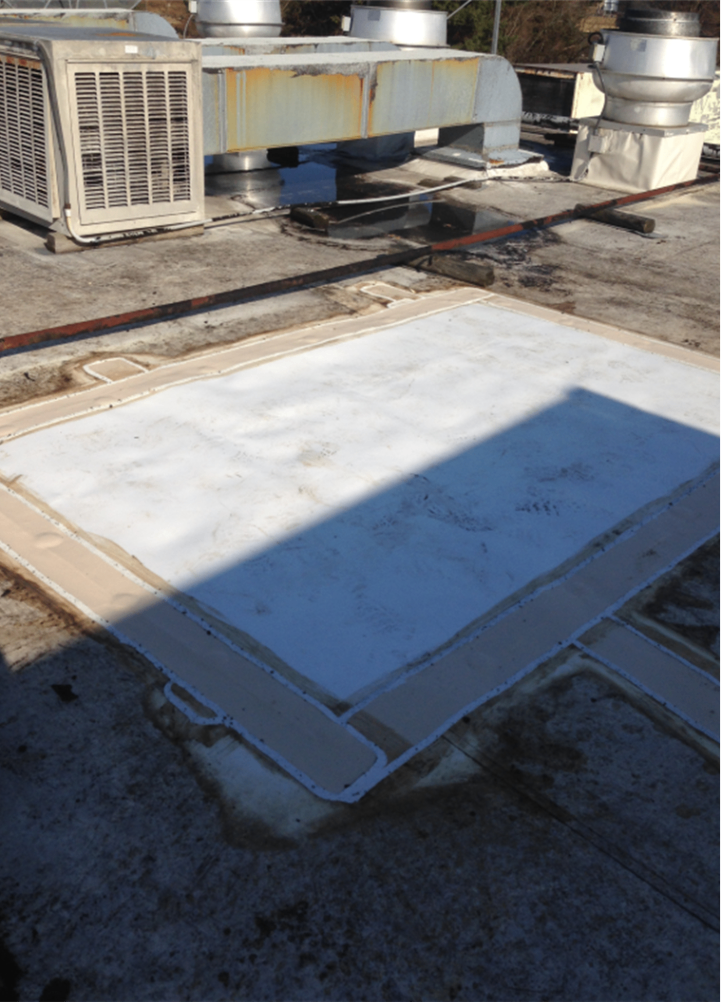
To prevent this, we "slit" the old membrane. We cut long, strategic slices in the old TPO or EPDM. This allows the roof to "breathe" and prevents the old layer from acting as a secondary vapor barrier. It’s a simple step that takes a bit of extra labor, but it’s the difference between a roof that lasts 20 years and one that fails in five.
Fully Adhered vs. Mechanically Attached: Which is Right for Salisbury?
When you’re doing a recover, you have two main options for how the TPO is secured: Fully Adhered or Mechanically Attached. As salisbury roofers, we evaluate this based on your building's height and its proximity to the wind-prone coastal areas.
Fully Adhered (The Premium Choice)
In this system, the TPO is glued down to the cover board using specialized adhesives.
The Pros: It offers the highest wind uplift rating. Because the entire sheet is bonded, there is no "fluttering" or "billowing" in high winds. It’s also aesthetically the cleanest looking option.
The Cons: It’s more labor-intensive and the materials (the glue) are more expensive. You also have to worry about "flash-off" times and temperature constraints during installation.
Mechanically Attached (The Budget-Friendly Choice)
In this system, we use heavy-duty screws and plates to fasten the TPO into the deck through the seams.
The Pros: It’s faster to install and generally more affordable. It can also be installed in a wider range of temperatures.
The Cons: During a high-wind event: which we get plenty of on the Delmarva Peninsula: the membrane can "billow" like a sail. This creates stress on the fastener points and can lead to noise inside the building.
For most of our commercial clients in Salisbury, we recommend a fully adhered system if the budget allows, simply because it provides the best long-term durability against our coastal weather patterns.
Why Experience Matters: The Peninsula Roofing Difference
There are plenty of salisbury roofing companies that can slap a piece of TPO on a roof. But when you’re dealing with commercial warranties and complex recover scenarios, experience isn't just a "nice to have": it’s a requirement.
Peninsula Roofing Company, Inc. has been operating right here in Salisbury for over 75 years. We understand the specific challenges of the Delmarva climate. We know that a roof on Salisbury Blvd has different needs than a roof in Ocean City.
When we perform a recover, we don't just look at the surface. We perform a thorough moisture scan to ensure that less than 25% of the existing insulation is saturated. If the old roof is too wet, a recover is a waste of your money, and we’ll be the first to tell you that. We follow manufacturer specifications to the letter because we want you to have a warranty that actually means something if a problem arises.
Protecting Your Investment
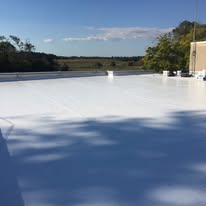
A TPO recover is a fantastic way to extend the life of your building and improve your energy efficiency (thanks to that highly reflective white surface). But remember:
Never go direct over mineral-surfaced BUR.
Always use a separator or cover board when required.
Slit the old membrane if you are doing a TPO-on-TPO recover.
Choose the right attachment method for your specific wind zone.
If you’re wondering if your commercial building is a candidate for a recover, don’t leave it to chance. Check out our guide on 2026 commercial roof costs or learn about why even metal roofs can have hidden issues.
Ready for a roof that actually protects your bottom line? Give us a call at Peninsula Roofing Company, Inc. We’ve been keeping Delmarva dry since 1947, and we’re ready to help you with your next commercial project.
Comments