TPO vs. White EPDM: A Honest Comparison for Commercial Property Owners
- sean fahey
- Jan 28
- 6 min read

If you're a commercial property owner in Salisbury, MD or anywhere on the Delmarva Peninsula, you've probably heard these three letters thrown around: TPO. And if you've done any research on flat roofing, you've likely come across EPDM too. Both are excellent single-ply roofing systems, and both come in energy-saving white options. So which one is actually better for your building?
Here's the truth: there's no universal "winner." The right choice depends on your building, your budget, and what you're trying to accomplish. With over 75 years of experience installing both systems across Delmarva, we've seen firsthand where each one shines: and where each one falls short.
Let's break it down honestly.
What Exactly Are We Comparing?
Before we dive into the pros and cons, let's make sure we're on the same page about what these materials actually are.
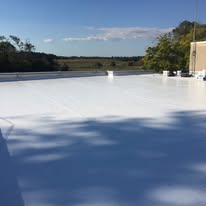
TPO (Thermoplastic Polyolefin) is the newer kid on the block. It's a single-ply membrane that's heat-welded at the seams, creating an extremely strong, watertight bond. TPO is naturally white and highly reflective, which is why it's become so popular for energy-conscious building owners.
White EPDM (Ethylene Propylene Diene Monomer) is synthetic rubber that's been around for decades. It's known for incredible flexibility and durability. EPDM traditionally comes in black, but white-coated versions are now widely available. The big difference? EPDM seams are taped or glued together rather than welded.
Both are considered "cool roofs" when you go with the white option, meaning they reflect sunlight and help reduce your cooling costs. But that's where the similarities start to diverge.
The Seam Situation: TPO's Biggest Advantage
Let's talk about seams, because this is where TPO really pulls ahead.
TPO's heat-welded seams are nearly four times stronger than EPDM's adhesive or tape seams. When our crews weld TPO, the material essentially fuses together, creating a monolithic membrane that's incredibly resistant to moisture penetration. In the Salisbury area, where we deal with coastal storms, heavy rain, and high humidity, that seam strength matters a lot.
EPDM counters this with larger sheet sizes. Because EPDM comes in massive rolls (some up to 50 feet wide), you end up with fewer seams overall. Fewer seams means fewer potential failure points. It's a different approach to the same problem.
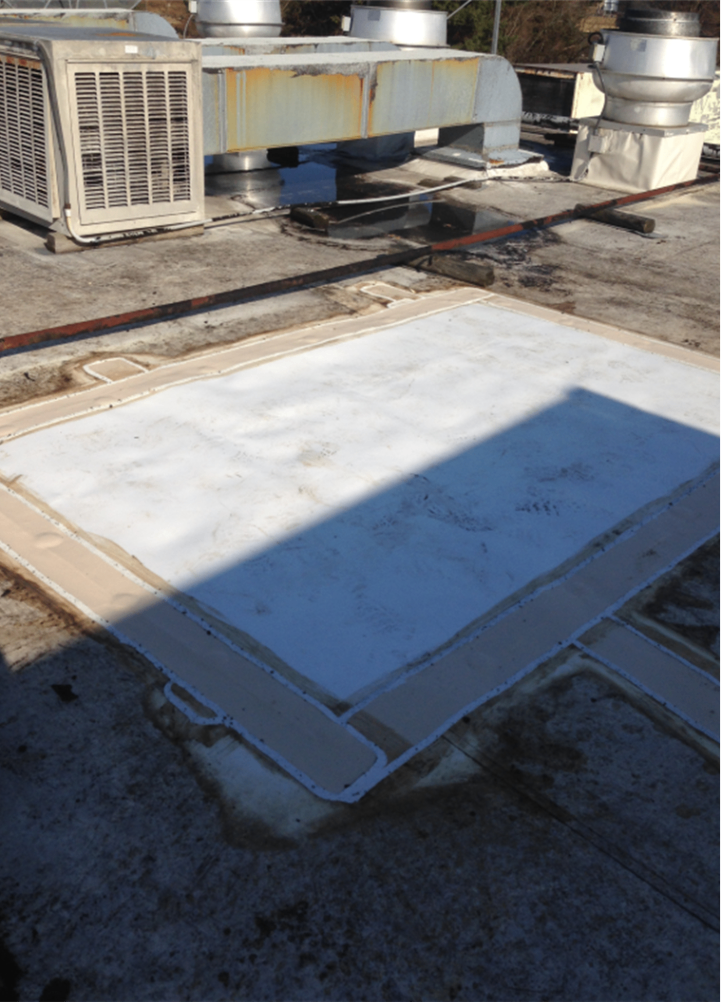
The bottom line: If your building has a lot of penetrations (HVAC units, vents, skylights), TPO's welded seams give you more confidence at those critical junction points. If you have a large, relatively simple roof with minimal penetrations, EPDM's fewer seams can work just fine.
Durability: A Tale of Two Strengths
This is where the comparison gets interesting, because both materials are durable: just in different ways.
TPO excels at:
Puncture and tear resistance (thanks in part to its reinforcing mesh)
Chemical resistance (including oils and grease)
UV resistance
Standing up to foot traffic
White EPDM excels at:
Flexibility in extreme temperature swings
Hail resistance
Long-term weathering
Proven track record (it's been around longer)
One honest note on “white EPDM”: it’s rarely used these days compared to TPO, largely because it doesn’t have the same reinforcing mesh that TPO does. That reinforcement is a big reason many manufacturers prefer TPO installations: in the real world, they tend to generate far fewer repair calls.
For Delmarva specifically, both materials handle our climate well. We get hot, humid summers and the occasional nor'easter, plus the salt air from the coast. TPO's chemical resistance makes it a standout choice for restaurants and food processing facilities where grease and cooking oils end up on the roof. EPDM's flexibility makes it forgiving when buildings expand and contract with temperature changes.
Energy Efficiency: Both Are Winners (But TPO Edges Ahead)
Here's some good news: both white TPO and white EPDM will save you money on cooling costs compared to traditional dark roofing materials.
TPO is slightly more reflective, bouncing back up to 80% of solar radiation. This can translate to 10% to 30% energy savings during our brutal Delmarva summers. White EPDM isn't far behind, especially modern formulations with improved reflective coatings.
If energy efficiency is your primary concern, TPO has a slight edge. But honestly? Both options will make a noticeable difference on your utility bills compared to what you're probably dealing with now.
Lifespan: EPDM Takes the Long View
When it comes to raw longevity, EPDM typically wins.
A well-installed EPDM roof can last 25 to 30 years. TPO averages 20 to 25 years. That's not a knock on TPO: it's still an excellent lifespan for a commercial roof. But if you're planning to own your building for the next three decades and want to minimize the number of times you deal with a roof replacement, EPDM's track record is hard to argue with.
That said, TPO's superior seam strength and puncture resistance often mean lower maintenance costs over its lifetime. You might replace an EPDM roof less often, but you might also spend more on seam repairs along the way.
Cost: What's the Real Number?
Let's talk money, because that's usually what it comes down to.
Upfront costs: This has shifted. White EPDM often costs more than TPO now, which surprises a lot of property owners who remember EPDM as the “budget” option. Between current material pricing and the fact that TPO has become the dominant system in the market, TPO is frequently the more cost-effective choice upfront: even before we talk about performance.
Long-term costs: TPO's stronger seams, reinforcing mesh, and better puncture resistance often translate to fewer repairs over time. And it’s not just our opinion: many manufacturers prefer TPO installations because they tend to result in far fewer repair calls. Combined with strong reflectivity, TPO can also cost less over a 20-year period when you factor in maintenance and utility savings.
At Peninsula Roofing, we believe in budget-appropriate solutions. That means we're not going to push you toward the most expensive option just because it's "the best." We'll look at your specific situation: your building, your budget, your timeline: and recommend what actually makes sense for you. Most of the time, that honest conversation leads us to TPO: not because it’s trendy, but because it typically delivers fewer headaches for the property owner.
Which One Is Right for Your Delmarva Building?
After installing both systems for over seven decades across Salisbury and the Eastern Shore, here's our honest recommendation:
Choose TPO if:
Your building is a restaurant, commercial kitchen, or food processing facility (grease resistance is huge)
You have a lot of rooftop equipment and penetrations
Energy efficiency is a top priority
You expect regular foot traffic on the roof for maintenance
You want the strongest possible seams for coastal storm protection
Choose White EPDM if:
You're working with a tighter upfront budget
Your roof is large and relatively simple with few penetrations
Maximum lifespan is your primary goal
Your building experiences significant thermal movement
You prefer a material with a longer proven track record
The Local Factor: Why Delmarva Climate Matters
Roofing isn't a one-size-fits-all situation, especially here on the Eastern Shore. Our combination of humidity, salt air, coastal storms, and summer heat creates unique challenges that roofing companies in Salisbury, MD deal with every day.
Both TPO and white EPDM can handle our climate when installed correctly. The key word there is "correctly." A perfectly good material installed by an inexperienced crew will fail faster than an average material installed by professionals who know what they're doing.
That's why choosing your roofer matters just as much as choosing your roofing material. With 75+ years serving Salisbury and the surrounding area, we've seen what works and what doesn't on Delmarva buildings.
Ready to Make a Decision?
Still not sure which direction to go? That's completely normal. Every commercial building is different, and the "right" answer depends on factors that are hard to evaluate without seeing your roof in person.
We're happy to take a look at your building, discuss your goals and budget, and give you an honest recommendation: even if that recommendation is to stick with what you have for now. No pressure, no sales pitch, just straight talk from roofers in Salisbury, MD who've been doing this since 1947.
Contact us today to schedule a consultation, or learn more about our commercial roofing services. We'll help you find the budget-appropriate solution that makes sense for your building.
Comments