Victorian vs. Rancher: Why Your Neighbor's Quote Isn't a Good Yardstick for Your Roof
- sean fahey
- Feb 10
- 7 min read

We get this question at least once a week at Peninsula Roofing: "My neighbor just got their roof done for $8,000. Why is mine $18,000?"
The short answer? Your neighbor has a one-story rancher built in 1985. You have a three-story Victorian built when Teddy Roosevelt was president.
Comparing roofing quotes between these two home styles is like comparing the cost of an oil change to rebuilding an engine. Sure, they both involve cars, but that's where the similarity ends. After 75+ years in the roofing business here in Delmarva, we've learned that homeowners deserve to understand why their roof costs what it does, not just get handed a number and a shrug.
Let's break down the real reasons why your beautiful old Victorian comes with a bigger price tag than your neighbor's modest rancher.
The "Steep" Factor: When Gravity Becomes Your Enemy
Walk up to a typical rancher and you'll see a roof with a gentle slope, maybe a 4/12 or 5/12 pitch. Our crew can walk around up there almost like they're on flat ground. We move fast, we're efficient, and we can knock out a simple rancher in a day or two.
Now look at your Victorian. That roof probably has sections with an 8/12, 10/12, or even 12/12 pitch. At that angle, walking isn't really an option anymore. We're talking full harness systems, roof jacks (those metal brackets that create temporary footholds), and safety protocols that slow everything down to a crawl.
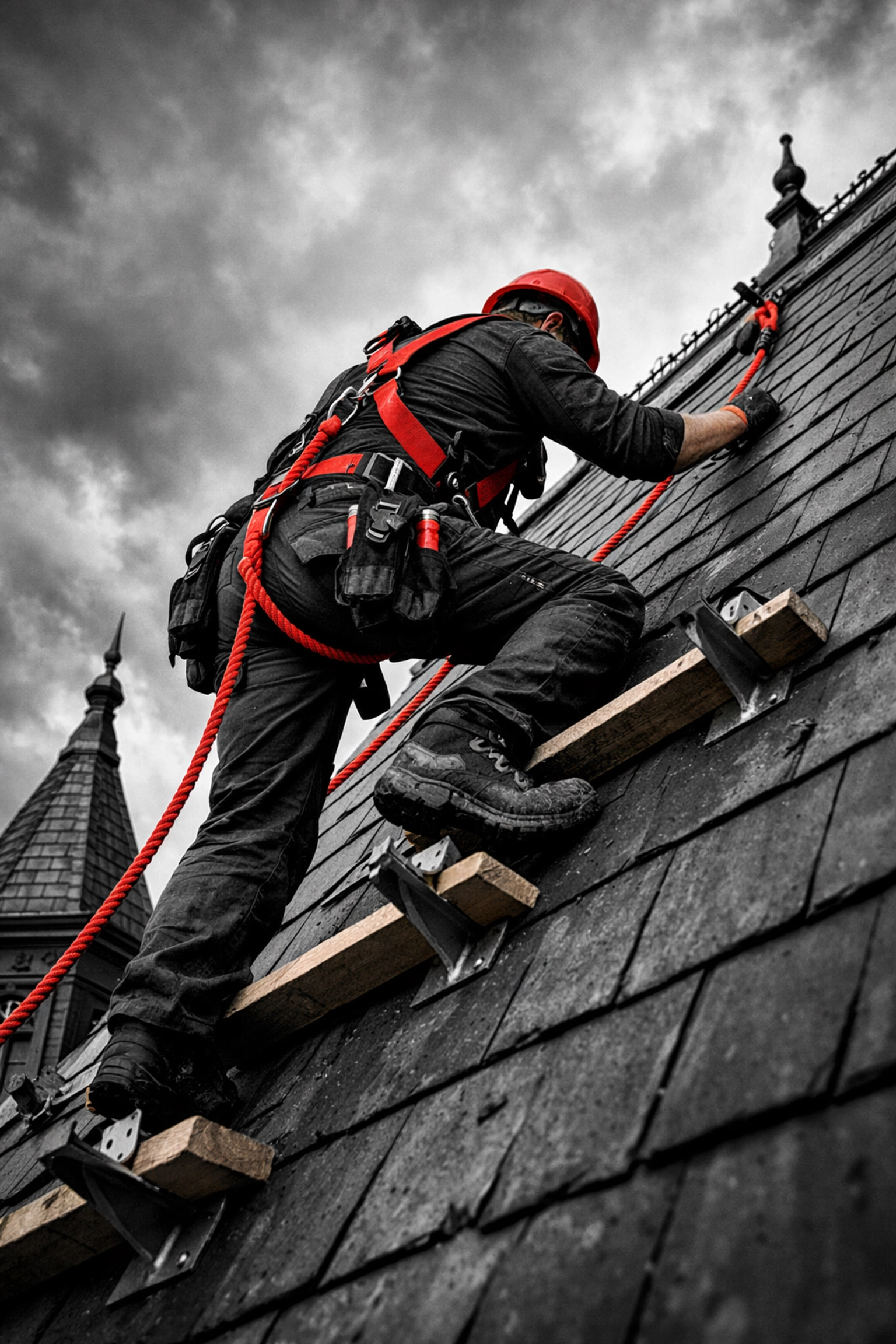
When you're working on a steep roof, everything takes longer. Moving materials up the slope. Positioning each shingle. Even just standing in one spot requires extra equipment and caution. What might take 10 minutes on a rancher could take 30 minutes on a steep Victorian: and that labor cost adds up fast across an entire roof.
This isn't us padding the bill. It's physics, safety regulations, and the reality of working at dangerous angles.
Architectural Complexity: Every Fancy Detail Costs Money
Here's where Victorians really separate themselves from the pack. A rancher is basically a rectangle with a couple of roof planes. Simple. Clean. Efficient.
Your Victorian? It's an architectural showpiece with:
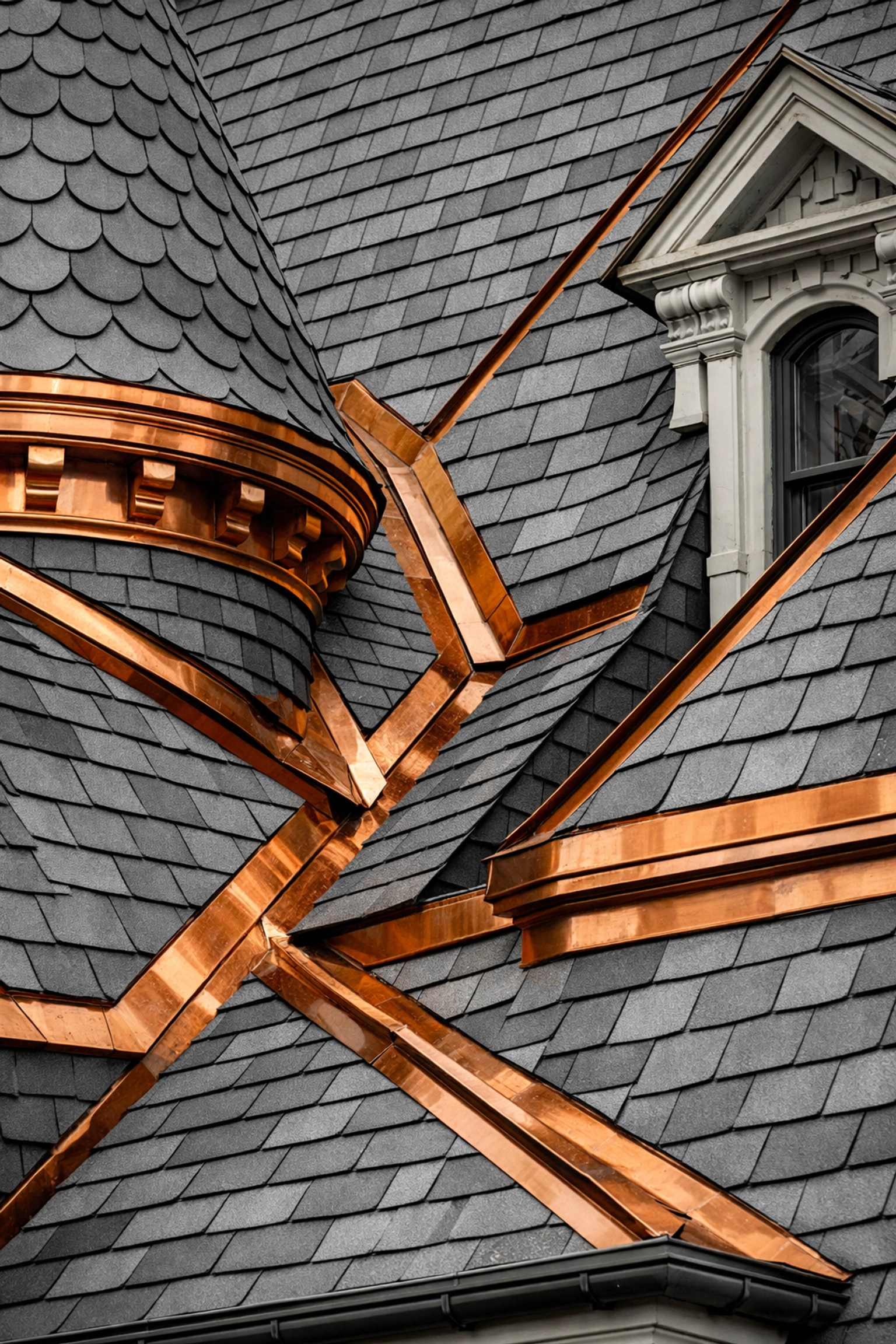
Turrets and towers (those charming cone-shaped roof sections)
Multiple dormers poking out at different angles
Valleys everywhere (where two roof planes meet and create a drainage channel)
Decorative gables with intricate trim work
Complex flashing around chimneys, skylights, and transitions
Every single one of those features requires custom cutting, custom flashing, and a roofer who actually knows what they're doing. You can't just slap shingles on a turret and call it a day. Each valley needs to be properly sealed and shingled to prevent leaks. Each dormer needs careful attention to how water flows around it.
When experienced roofers in Salisbury MD like our crew tackle a Victorian, we're not just installing a roof: we're solving dozens of little architectural puzzles to make sure water goes down and not in.
Height and Logistics: Getting Materials Three Stories Up
Your neighbor's rancher? We back the truck up to the house, set up a basic ladder system or conveyor belt, and start moving bundles of shingles onto the roof. Takes an hour, maybe two.
Your Victorian is a different beast entirely. We're often looking at:
Three stories of vertical lift just to get materials to the work area
Crane rentals or high-reach boom lifts to safely deliver shingles and tools to upper sections
Tighter timelines because crane rentals are scheduled by the hour
More careful planning around mature trees, power lines, and neighboring properties
All of that equipment costs money to rent and operate. And when you're working at height, you need more crew members dedicated to safety and logistics instead of actual roofing. It's not uncommon for a Victorian roof to require twice the crew size of a comparable rancher: not because we're inefficient, but because safety and access demand it.
What's Underneath: The Decking Surprise
Here's where a lot of homeowners get sticker shock, and honestly, it's the part of the estimate we wish we didn't have to include. But when you're dealing with a 100-year-old home, the roof decking underneath those old shingles is rarely up to modern standards.
Most ranchers built after 1970 have solid plywood or OSB (oriented strand board) sheathing. It's uniform, it's code-compliant, and it's ready to accept new shingles with minimal prep work.
Victorian-era homes? They were built with gap-board or plank decking: individual boards laid side-by-side with small gaps between them. It was perfectly fine for the roofing technology of 1920, but it doesn't meet today's building codes or manufacturer warranty requirements.
When we pull off your old shingles and find plank decking, we often have to install a layer of plywood over the entire roof before we can even start the new roof installation. That's material cost, labor cost, and structural work that simply doesn't exist on newer homes.
The good news? Once it's done, you'll have a roof deck that'll last another 100 years. The bad news? It adds a significant line item to your estimate that your neighbor with the 1980s rancher never had to deal with.
Layers Upon Layers: The Hidden Weight Problem
This is the big one that catches people off guard, and it's something many roofing companies in Salisbury MD don't fully explain upfront.
Building codes used to allow homeowners to install a new roof on top of the old one. It was faster, cheaper, and kept shingles out of the landfill. So many older homes: especially those built before 1990: have two or even three layers of shingles stacked up like a geological record of past roof replacements.
Your neighbor's rancher from 1985? Probably has one layer, maybe two max.
Your Victorian from 1920? We've seen some with three full layers of roofing material, plus the original cedar shakes underneath. That's literally hundreds of pounds of extra debris that has to come off before we can start fresh.
Here's why that matters to your wallet:
Labor Time: Tearing off one layer of shingles might take a crew half a day. Tearing off three layers can take two full days of hard, physical work. Every extra layer multiplies the time and effort required.
Disposal Costs: Roofing debris is charged by weight at the landfill. One layer from a rancher might fill a small dumpster. Three layers from a Victorian might require two or three large dumpsters: and those aren't free. We're talking hundreds of dollars in disposal fees alone.
Structural Stress: Multiple layers also mean we need to inspect the roof deck more carefully once we finally get down to it. All that weight may have caused sagging or damage that needs repair before the new roof goes on.
When we quote a Victorian with multiple layers, we're not trying to inflate the price: we're being honest about the reality of what's up there and what it takes to remove it properly.
Salisbury-Specific Challenge: Camden Ave’s Hidden Layers (And Why They Cost More)
Salisbury has its own quirks, and one we run into more than you’d think: homes (especially around the Camden Ave area) that have modern shingles on top, but older layers underneath that aren’t just “more shingles.”
It’s not uncommon to tear back roofing and find asbestos tile layered over original cedar shakes. That creates a few big problems at once:
Extra Weight: Asbestos tile plus cedar shakes plus modern shingles is a lot of material sitting on your roof structure. That extra load can contribute to sagging or decking issues that have to be addressed before a new system goes on.
More Labor (Slower Tear-Off): These layers don’t come off like a normal shingle roof. It typically takes more time, more care, and more steps to remove and protect the areas around the home.
Professional Remediation Requirements: If asbestos-containing material is present, you can’t treat it like regular construction debris. It often requires professional remediation and proper disposal, which adds significant cost compared to a standard tear-off and dumpster haul.
If your home is in Salisbury and you’re wondering why your estimate jumped after an inspection, this is one of the most common reasons. It’s not “upselling”: it’s the real cost of doing the job safely and correctly.
The Experience Factor: Not Every Roofer Can Handle a Victorian
Here's something they don't advertise: a lot of roofing companies Salisbury MD homeowners call won't even bid on historic homes. They know their limitations, and they stick to straightforward ranchers and colonials where the margins are predictable.
Victorian homes require a different level of craftsmanship. You need roofers who understand historical architecture, who've worked with unusual roof angles and decorative elements, and who won't cut corners just to finish faster. You're paying for expertise that took decades to develop.
At Peninsula Roofing, we've been working on Delmarva homes since 1947. We've seen every weird roof configuration, every vintage decking system, and every "previous owner special" repair job imaginable. When you hire experienced Salisbury roofers who specialize in challenging projects, you're paying for the peace of mind that comes with true expertise.
The Bottom Line: Your Roof Is Unique
Your neighbor's $8,000 roof quote is accurate: for their home. But it has zero bearing on what your roof should cost.
When you compare a Victorian to a rancher, you're comparing:
Steep, complex roof planes vs. simple, walkable slopes
Architectural details that require custom work vs. straightforward rectangular sections
Multi-story logistics and equipment vs. ground-level convenience
Century-old decking that needs upgrading vs. modern plywood
Multiple layers of old roofing vs. a single layer
Specialized craftsmanship vs. basic installation
Every one of those differences is legitimate, measurable, and backed by real costs in labor, materials, and expertise.
If you're a Victorian homeowner getting estimates and feeling discouraged by the numbers, don't let your neighbor's quote mess with your head. You own a piece of architectural history, and maintaining it properly costs more than maintaining a basic rancher. That's not a rip-off: that's reality.
Ready for an Honest Estimate?
At Peninsula Roofing, we don't play games with pricing. When we give you an estimate for your Victorian, we'll walk you through every line item so you understand exactly what you're paying for: whether that's additional labor for steepness, the cost of re-decking, or the disposal fees for those three layers of old shingles we found.
We've been serving Delmarva homeowners since 1947 because we believe in transparency, quality work, and treating every home: rancher or Victorian: with the respect it deserves.
Ready to talk about your unique roof? Let's schedule a time to take a look and give you a quote that actually makes sense for your home, not your neighbor's.
Comments