Why Your Attic Needs to Breathe: A Guide to Proper Ventilation on Delmarva
- sean fahey
- Jan 29
- 5 min read

Here's something most homeowners don't think about until there's a problem: your attic needs to breathe. And if you live here on Delmarva, where our winters are humid and our summers are downright swampy, proper attic ventilation isn't just a nice-to-have, it's essential.
At Peninsula Roofing Company, we've been working on roofs in Salisbury and across the Eastern Shore for over 75 years. In that time, we've seen what happens when attics don't get the airflow they need: rotted decking, mold growth, sky-high energy bills, and shingles that fail way before their time. The good news? Most of these problems are preventable with the right ventilation setup.
Let's break down everything you need to know about attic ventilation, what the code requires, how it actually works, and why that humidistat on your attic fan matters more than you might think.
How Attic Ventilation Actually Works
Think of your attic like a pair of lungs. It needs to inhale fresh air and exhale stale, moisture-laden air to stay healthy. This happens through a balanced system of intake and exhaust vents.
Intake vents (usually soffit vents along your eaves) let cooler, drier outside air enter the lower part of your attic. Exhaust vents (like ridge vents at the peak of your roof) let hot, humid air escape out the top. When both are working together, you get continuous airflow that sweeps through your entire attic space.
This airflow does two critical jobs:
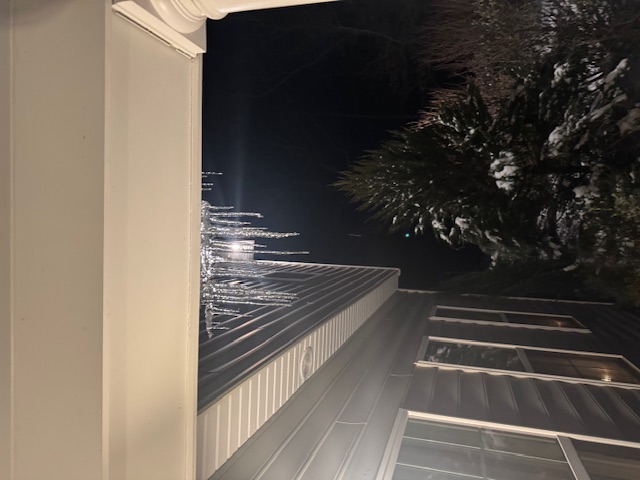
Icicles like these are a warning sign. They often indicate poor attic ventilation that's allowing heat to escape and melt snow unevenly on your roof.
What the Building Code Requires
Let's talk numbers. The building code uses two ratios to determine how much ventilation your attic needs:
The 1/150 Rule: For every 150 square feet of attic floor space, you need at least 1 square foot of net free vent area. So if your attic is 1,500 square feet, you need 10 square feet of total ventilation.
The 1/300 Rule: You can cut that requirement in half (1 square foot per 300 square feet of attic) IF you have a balanced system, meaning your intake and exhaust vents are roughly equal, AND you have a vapor barrier on the warm side of your ceiling insulation.
Most homes shoot for the 1/300 ratio with balanced ventilation because it's more practical and still very effective. The key is that balance: you want about 50% intake and 50% exhaust. Too much of one without the other, and you're just spinning your wheels.
Products Used for Attic Ventilation
There's no one-size-fits-all solution when it comes to vent products. The right choice depends on your roof design, attic size, and specific challenges. Here's a rundown of what's available:
Soffit Vents (Intake)
These are installed in the soffit, the underside of your roof overhang. They can be continuous strips or individual vents spaced along the eaves. Soffit vents are the workhorses of intake ventilation, and without them, nothing else works properly.
Ridge Vents (Exhaust)
Ridge vents run along the peak of your roof and are usually covered by a cap shingle so they blend right in. They're the gold standard for exhaust ventilation because hot air naturally rises to the highest point of your attic. When paired with adequate soffit vents, they create that ideal passive airflow we talked about.
Box Vents / Static Vents (Exhaust)
These are the individual vents you see poking up from roofs, usually square or round. They work on the same principle as ridge vents (hot air rises and escapes) but cover less area. You typically need several of them to match the exhaust capacity of a ridge vent.
Gable Vents (Intake or Exhaust)
Located on the triangular wall sections at the ends of your attic, gable vents can help, but they're not as effective as a ridge-and-soffit system. They work better for cross-ventilation in certain attic configurations.
Power Attic Fans (Exhaust)
These are electric fans that actively pull air out of your attic. They're a great option when passive ventilation isn't cutting it, more on these in a minute.
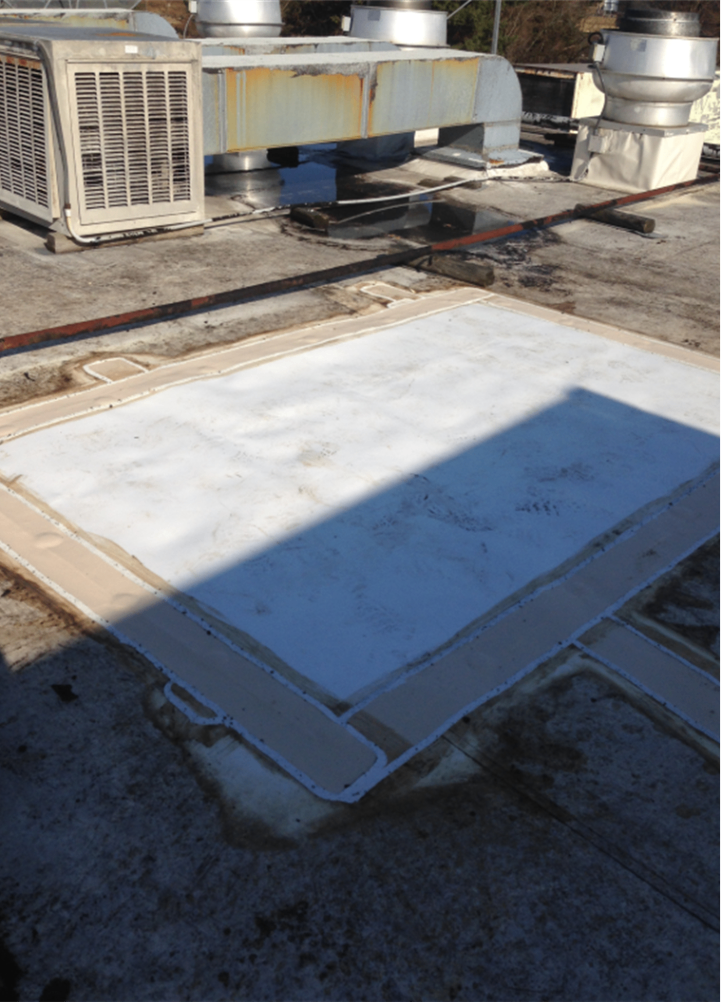
Proper ventilation matters on commercial roofs too. This flat roof features multiple exhaust fans to keep air moving and prevent moisture buildup.
When a Ridge Vent Isn't the Answer
Ridge vents are fantastic, when they work. But here's the thing: they only work if you have enough ridge length to provide adequate exhaust AND enough soffit intake to feed them.
We see plenty of homes around Salisbury where ridge vents just aren't practical:
Hip roofs with short ridge lines don't have enough length for adequate exhaust
Complex rooflines with multiple peaks and valleys can create dead spots
Homes with blocked or insufficient soffit vents won't benefit from ridge vents because there's no intake air to exhaust
In these cases, box vents, power fans, or a combination approach often makes more sense. As roofers in Salisbury MD who've seen every roof configuration imaginable, we always assess the whole picture before recommending a ventilation strategy.
The Delmarva Factor: Why Humidistats Matter Here
Okay, here's where things get specific to our region. If you're considering a power attic fan: and they can be excellent solutions: make sure it has both a thermostat AND a humidistat.
Most attic fans come with just a thermostat. They kick on when the attic hits a certain temperature (usually around 90-100°F) and shut off when it cools down. That's great for summer.
But what about our Delmarva winters?
We don't get the brutal cold that places up north do, but we DO get humid winters. That moisture has to go somewhere, and a lot of it ends up in your attic. A thermostat-only fan won't run in winter because temperatures never get high enough to trigger it. Meanwhile, humidity is building up, condensing on your roof decking, and creating the perfect conditions for mold, mildew, and wood rot.
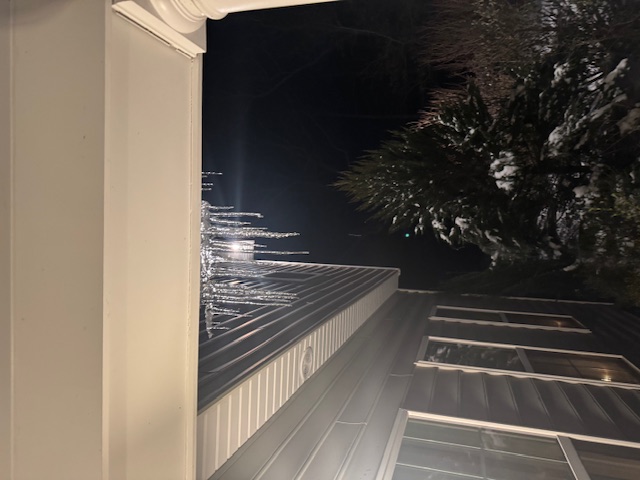
Winter moisture problems often show up as ice dams and icicles. A humidistat-equipped attic fan helps prevent the conditions that cause these issues.
A humidistat solves this problem. It monitors moisture levels and kicks the fan on when humidity gets too high: regardless of temperature. For our climate, this is a game-changer. We typically recommend setting the humidistat to trigger around 60-70% relative humidity.
This one upgrade can prevent:
Mold and mildew growth on attic surfaces
Rotted roof decking that requires expensive replacement
Ice dams caused by uneven roof temperatures
Premature failure of your roofing materials
Don't Forget the Basics
Even the best ventilation system won't work if other issues are working against it:
Air sealing matters. Gaps around light fixtures, plumbing penetrations, and attic hatches let warm, moist air from your living space pour into the attic. Seal these up.
Insulation needs to be right. Good insulation keeps your living space comfortable and prevents heat from escaping into the attic. Just make sure it's not blocking your soffit vents: use baffles to keep air pathways clear.
Fix leaks promptly. A roof leak or plumbing issue can introduce moisture faster than any ventilation system can remove it.
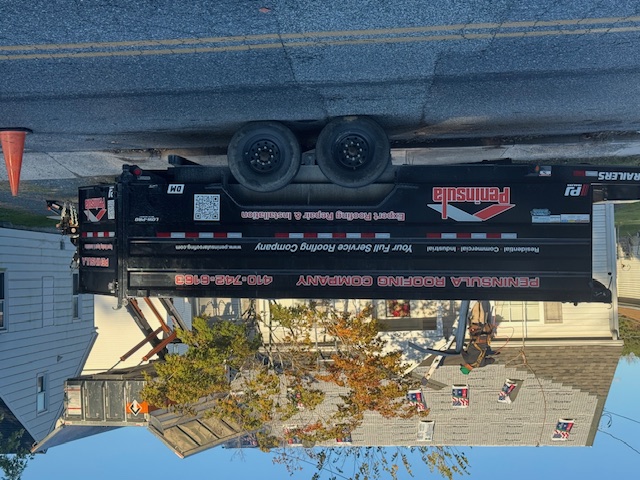
Our crew assessing a roof in Salisbury. Proper ventilation is part of every roofing project we take on.
Let's Talk About Your Attic
If you're not sure whether your attic ventilation is up to snuff, it's worth finding out. Signs of trouble include:
Excessive heat in your upper floors during summer
Visible mold or mildew in your attic
Rusty nails poking through the roof decking (a sign of condensation)
Ice dams forming in winter
Shingles that are curling or aging prematurely
As one of the most experienced roofing companies in Salisbury MD, we've been solving ventilation problems since 1947. We can assess your current setup, identify any issues, and recommend solutions that make sense for your home and budget.
Have questions about your attic ventilation? Give us a call or reach out: we're always happy to help Delmarva homeowners protect their biggest investment.
Comments