Will Your Roof Stay Put? The Science of Uplift & Pullout Testing
- sean fahey
- Feb 3
- 5 min read

Ever wonder what actually keeps your roof attached to your house during a big storm? It's not just nails and hope, there's actual science behind it. And here on the Delmarva Peninsula, where we get our fair share of coastal storms and nor'easters, understanding how your roof handles wind forces isn't just interesting trivia. It could be the difference between a roof that stays put and one that ends up in your neighbor's yard.
Let's talk about wind uplift, testing methods, and why roofing companies in Salisbury MD like Peninsula Roofing actually test roof systems before and during installation.
What the Heck is Wind Uplift?
Wind uplift is basically Mother Nature trying to rip your roof off your building. Sounds dramatic, but that's literally what's happening.
Here's the science: when wind hits your building, it doesn't just push against it, it creates a pressure difference. The wind flowing over and around your roof creates lower pressure on top of the roof surface while higher pressure builds up underneath (inside your building). It's the same principle that lets airplanes fly, but in this case, your roof is trying to become the airplane.
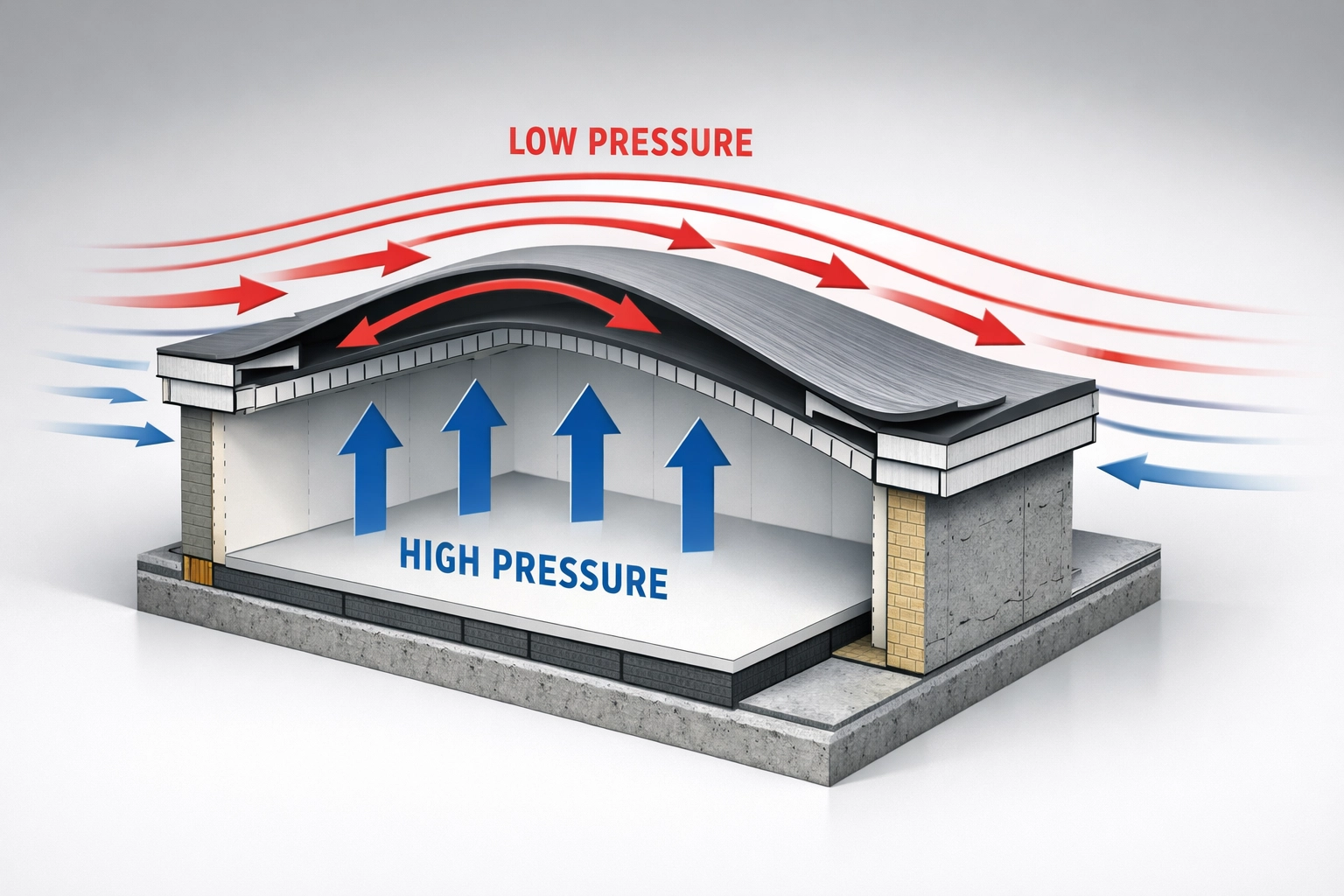
Think of it like holding a piece of paper flat and blowing across the top. The paper lifts up. Your roof wants to do the same thing during high winds, and the only thing stopping it is how well it's fastened down.
On flat commercial roofs, which are everywhere in Salisbury and across the Delmarva Peninsula, this uplift force is even more significant because there's more surface area for the wind to work against. A storm with 90 mph winds can create uplift forces of several hundred pounds per square foot. That's why proper attachment matters so much.
Why Delmarva Storms Are No Joke
If you've lived on the Eastern Shore for any length of time, you know our weather isn't exactly gentle. We get:
Coastal storms rolling in off the Atlantic
Nor'easters that stall out and pound us for days
The occasional hurricane or tropical system
Summer thunderstorms with straight-line winds that rival tornadoes
All of these create serious wind loads on roofs. And because we're dealing with coastal conditions, the building codes here require roofs to withstand higher wind speeds than in, say, central Pennsylvania.
That's why any reputable roofer in Salisbury should be testing roof systems to make sure they meet or exceed code requirements. Not all do, but the good ones absolutely do.
Enter the Pullout Test
So how do we actually know if a roof can handle these forces? We test it. And one of the primary methods is called a pullout test.
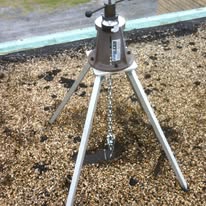
A pullout test uses specialized equipment, typically a tripod-like device (like you see in the photo above on a gravel-surfaced roof), to measure how much force it takes to pull a fastener out of the roof deck. This simulates the uplift forces that wind creates during storms.
Here's how it works:
The Setup: We install fasteners in the roof deck exactly how they'll be installed in the actual roofing system, same fastener type, same spacing, same substrate.
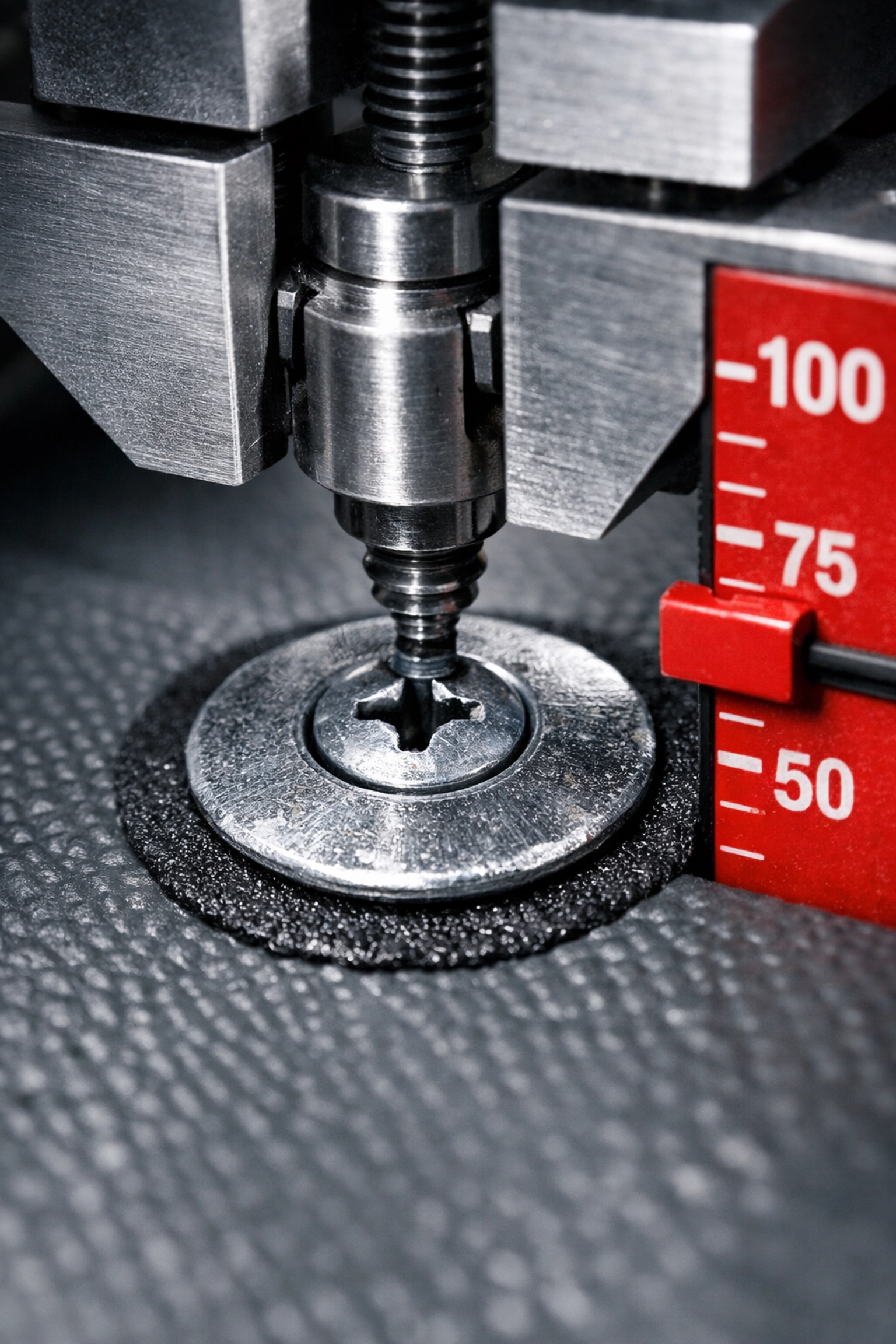
The Test: The pullout tester is positioned over a fastener, and we apply increasing upward force using a hydraulic or mechanical system. We're basically trying to yank that fastener right out of the deck.
The Measurement: We measure the maximum force (in pounds) that the fastener can handle before it either pulls out or fails. This is called the Fastener Pull Resistance (FPR).
The Standard: Building codes require specific FPR values depending on your roof type, building height, and wind zone. For our area, requirements are pretty stringent.
Industry standards like UL 1897 and FM Global Data Sheet 1-52 spell out exactly how these tests should be conducted. Tests typically start at around 15 pounds per square foot and increase in increments until failure occurs. This gives us a complete picture of how the fastening system will perform under increasing wind loads.
The Spade Test Alternative
While pullout tests are great for fastener strength, there's another testing method called a spade test (or field adhesion test) that's used primarily on fully-adhered roofing systems like single-ply membranes.
The concept is simpler: a technician uses a flat spade-like tool to try to peel the membrane away from the substrate. We're measuring the adhesive bond strength rather than mechanical fastener strength.
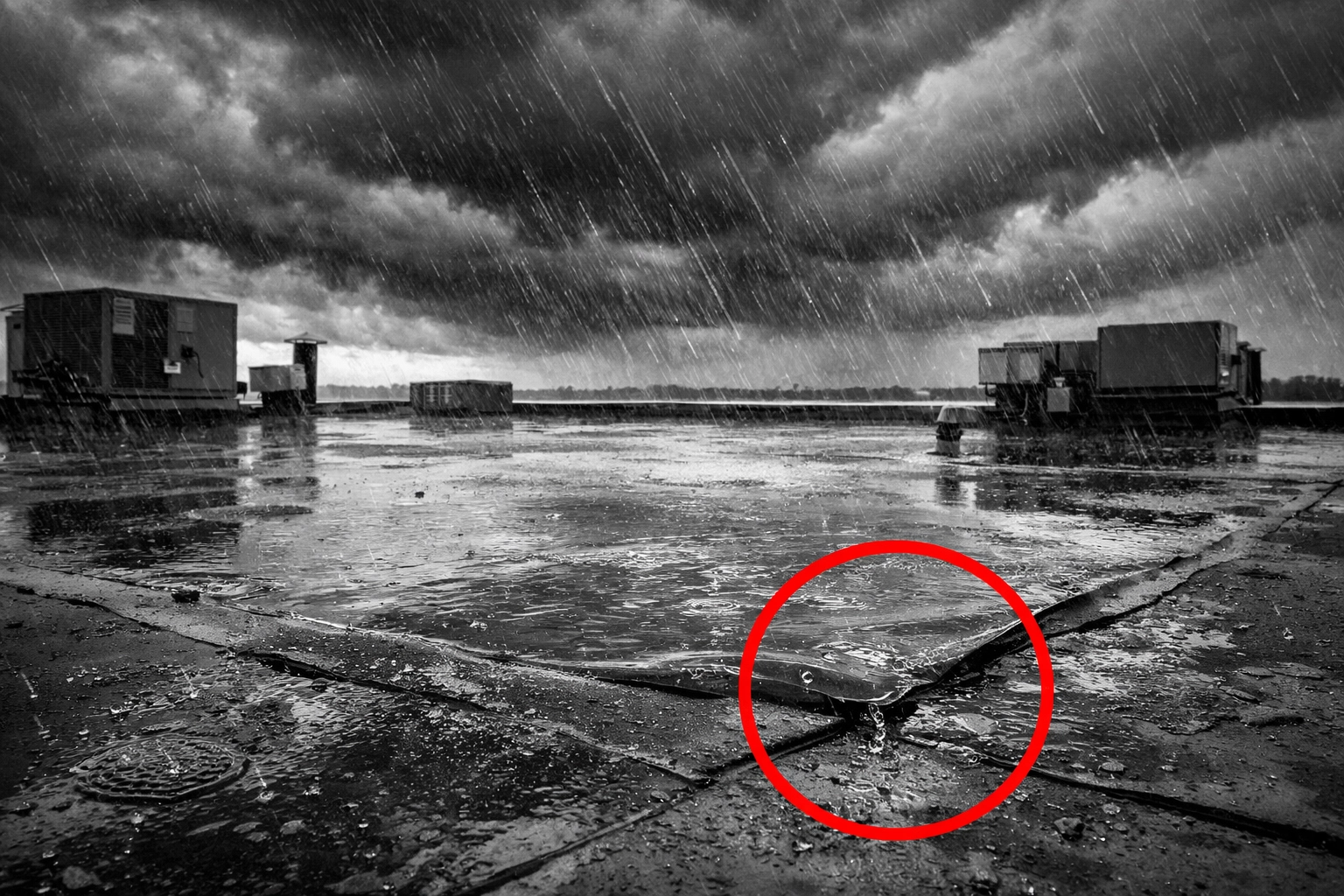
For adhered systems, this bond strength is critical. If the adhesive fails, the membrane can balloon up under wind pressure, and once that starts, the whole system can unzip pretty quickly.
The spade test involves:
Cutting a small section of the membrane
Using the tool to peel it back at a consistent angle
Measuring the force required to separate the membrane from the substrate
Comparing results to manufacturer specifications and code requirements
Both methods, pullout testing and spade testing, give us data. And data tells us whether your roof will perform when the weather gets nasty.
What We're Looking For
When roofing companies in Salisbury MD conduct these tests, we're checking several things:
Adequate Safety Factor: We want fasteners or adhesion that exceeds minimum requirements by a comfortable margin. Meeting the bare minimum code isn't good enough, we want your roof to have a safety buffer.
Consistency: One fastener might test great, but if the next one fails, we've got a problem. We're looking for consistent performance across the entire roof system.
Proper Installation: These tests also verify that our crews are installing fasteners correctly, right depth, right angle, right spacing. It's quality control in real-time.
Substrate Conditions: Sometimes testing reveals issues with the roof deck itself, rotted wood, deteriorated insulation, or structural problems that need addressing before we go further.
Why This Should Matter to You
If you're shopping for roofing services, you should absolutely ask whether your contractor performs pullout or adhesion testing. Not all do. Some companies slap roofs up and hope for the best.
But companies that test are companies that care about performance. We're verifying that what we're installing will actually work when you need it to.
Here's what you should ask any roofing contractor:
"Do you perform pullout or adhesion testing on your installations?"
"Can I see test results from similar projects?"
"What standards do you test to?"
"What happens if a test fails?"
A good contractor will have clear answers. A sketchy one will give you blank stares or change the subject.
When Things Go Wrong
What happens if a section of roof fails testing?
First, we figure out why. Common culprits include:
Fasteners not driven to proper depth
Wrong fastener type for the substrate
Deteriorated deck material that can't hold fasteners
Adhesive applied in poor conditions (wrong temperature, contaminated surface)
Improper spacing or pattern
Then we fix it. That might mean removing and reinstalling a section with different fasteners, repairing substrate, or switching installation methods entirely. Yes, it costs time and money, but it's infinitely cheaper than a roof failure during a storm.
The whole point of testing is to catch problems before they become catastrophes.
The Bottom Line
Your roof's ability to handle wind uplift isn't guesswork: it's engineering backed up by testing. When storms roll through Salisbury and the wider Delmarva region, you want to know your roof has been properly installed and verified to handle the forces involved.
At Peninsula Roofing Company, we've been doing this since 1947. That's 79 years of experience with Eastern Shore weather, and we've learned that testing isn't optional: it's essential. Whether it's a commercial flat roof or a residential project, if wind uplift matters (and it always does), we test it.
If you're considering a new roof or concerned about your existing roof's performance, contact us to discuss testing options. We're happy to explain our process, show you equipment, and help you understand exactly what's keeping your roof where it belongs: on top of your building, not sailing across the parking lot.
Because when the next big storm hits, you shouldn't have to wonder if your roof will stay put. You should already know.
Comments