Wind, Water, and Weight: Why "Good Enough" Roofs Fail in Delmarva Storms (and How to Fix Yours)
- sean fahey
- May 15
- 5 min read

If you’ve lived in Salisbury, MD, or anywhere across the Delmarva Peninsula for more than a single season, you know the drill. We get a bit of everything. One week it’s a humid heatwave, the next it’s a Nor’easter pushing Atlantic moisture across the coast, and every few years, we’re staring down the barrel of a hurricane.
For many building owners and homeowners, the roof is an "out of sight, out of mind" asset. As long as there isn’t a puddle on the floor, the roof is doing its job, right? Well, not exactly. In the roofing world, there is a dangerous middle ground we call the "good enough" roof. It’s the roof that hasn't leaked yet, but it’s essentially a ticking time bomb.
When a major weather event hits, your roof isn't just dealing with rain. It’s battling a triad of forces: Wind, Water, and Weight. If your roof is aging or wasn't installed with Delmarva’s specific climate in mind, those three forces will find every single weakness you didn't know you had.
1. Wind: The Invisible Thief
Wind damage is rarely about a single gust blowing a house down. It’s about uplift. High winds moving over a roof create a pressure differential, basically, the wind tries to suck the roof off the building.
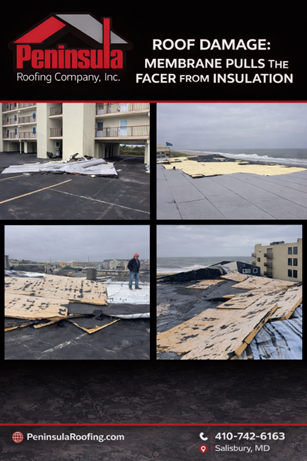
On many commercial buildings in Salisbury, we see "good enough" roofs where the edge metal or the fasteners have started to fatigue. If the perimeter of the roof isn't locked down tight, the wind gets underneath the membrane. Once that happens, it’s like a parachute opening up.
The Fastener Failure
A common issue we run into involves specialized roof decks, like gypsum or tectum. These aren't your standard wood or steel decks. They require very specific fasteners. We’ve seen cases where a roof was installed just a few years ago using standard fasteners that simply don't have the "bite" required for a gypsum deck.
When the wind picks up, those fasteners start to back out. The only thing keeping the roof on at that point is gravity: and luck. If your roofer didn't account for the specific pull-out resistance required for your deck type, your "newish" roof might be one stiff breeze away from a total blow-off.
2. Water: The Relentless Invader
Most people think of a leak as a hole in the roof. While that’s true, during a storm, water acts differently. It’s under pressure. Driven by high winds, rain can travel horizontally and even upward.
Tiny gaps in flashing, dried-out caulking around a vent pipe, or a slightly loose shingle might not leak during a summer sunshower. But when a Nor'easter is slamming 60 mph winds against your building for twelve hours, that water is being pushed into places it shouldn't go.
The Problem with Pressure
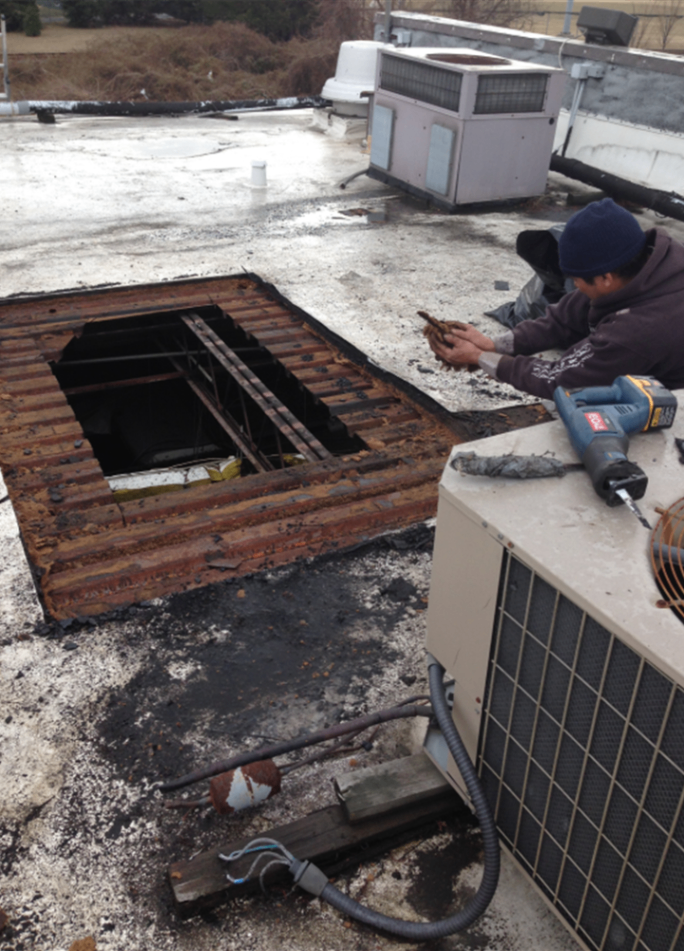
Once water finds a way in, it follows the path of least resistance. It might travel ten feet down a rafter before it finally drips onto your ceiling. By the time you see a brown spot on the drywall, the insulation is already soaked, and the structural wood may be starting to rot.
At Peninsula Roofing Company, Inc., we focus heavily on the "weak points": the chimneys, the HVAC curbs, and the valleys. Using proper techniques, like custom copper flashing for residential chimneys, ensures that even when the wind is driving rain sideways, the seal remains watertight.
3. Weight: The Silent Killer
This is where things get ironic. Sometimes, the only thing keeping a failing roof from blowing away is the very thing that will eventually cause it to collapse: Weight.
In the industry, we occasionally see roofs that have "failed" internally: the fasteners have pulled out, and the membrane is loose. However, because the roof has poor drainage, it has developed massive ponds of water. That water is incredibly heavy. One inch of ponding water weighs approximately 5.2 pounds per square foot. On a 10,000-square-foot commercial roof, just one inch of water adds over 25 tons of weight to the structure.
Ponding and Snow Loads
The weight of ponding water stresses the deck and the joists. Over time, that weight causes the deck to deflect (sag) even more, which collects more water. It’s a vicious cycle.
Then, consider what happens when a Delmarva winter hits. We aren't strangers to heavy, wet snow. If your roof is already struggling with the weight of ponding water or a saturated substrate, a sudden 6-inch snowstorm can be the breaking point.
Older roofs, especially those on commercial buildings in downtown Salisbury or the surrounding industrial parks, weren't always designed for the modern equipment weights or the accumulated stress of decades of "good enough" repairs.
Why "Good Enough" Fails
So, why do these roofs fail when others don't? It usually comes down to three things:
Aging Materials: Roofing membranes and shingles have a lifespan. As they age, they lose their flexibility. When the wind shakes them or the sun beats down on them, they crack instead of flexing.
Improper Initial Installation: As mentioned with the gypsum decks, if the original contractor didn't understand the technical requirements of the building, the roof was doomed from day one.
Lack of Maintenance: Small problems: a loose piece of metal, a clogged gutter, a cracked seal: stay small until a storm turns them into catastrophes.
How We Fix It (And How You Can Prepare)
At Peninsula Roofing, we’ve been serving the Delmarva area since 1947. That’s over 75 years of seeing exactly what our local weather can do to a building. Because we’ve been around so long, we’ve developed a "repair first" mentality. We don't believe in selling you a whole new roof if your current one has life left in it: provided it’s actually safe.
The Inspection
The first step to storm readiness is knowing what you're standing on. We offer comprehensive inspections for both residential and commercial properties. We look for the subtle signs that a storm will exploit:
Fasteners that are starting to "tent" or back out.
Flashings that have separated from the wall.
Ponding water areas that suggest deck deflection.
Clogged drainage systems that will overflow during a downpour.
Proactive Maintenance
Sometimes, "fixing" your roof before a storm is as simple as clearing the gutters and reinforcing a few edge details. Other times, it might involve a roof coating system to restore waterproofing without the cost of a full tear-off.
If we find that your roof truly is a "failure holding a failure in place," we’ll be honest with you. Our goal is to make sure that when the next hurricane warning is issued, you aren't worried about your roof. You should be able to focus on your family or your business, knowing that your "hat" is secured.
Don't Wait for the Drip
The worst time to find out your roof is "good enough" is at 2:00 AM on a Tuesday while a Nor'easter is howling outside and water is dripping onto your computer or your bed.
Whether you have a flat commercial deck in Salisbury or a shingle home in Ocean City, the pressure is coming. Storm readiness isn't just about plywood on the windows; it’s about the structural integrity of the one thing protecting everything else you own.
If you’re unsure about the state of your roof, or if it’s been more than a few years since a pro took a look, give us a shout. We’re local, we’re casual, but we take the science of roofing very seriously.
Ready to get ahead of the next storm? Contact us today for an inspection. Let’s make sure your roof is more than just "good enough."
Comments