Gutter Guards: Worth It or a Waste? What Salisbury Homeowners Should Know Before Buying

If you have trees around your home in Salisbury, MD, you have probably seen advertisements promising that gutter guards will eliminate gutter cleaning forever. The idea sounds appealing: install a cover over your gutters, keep leaves out, and forget about climbing a ladder.
But gutter guards do not make roof debris disappear. They change where the debris collects.
At Peninsula Roofing Company, we do not recommend gutter guards for most Salisbury homeowners. Our concern is that leaves, pine needles, shingle grit, pollen, seeds, and other organic material that would normally wash into the gutter can instead remain on top of the guard at the roof’s eave line. When that material stays wet against the shingles, fascia, and soffit, it can create conditions that contribute to rot, moisture damage, and premature deterioration.
Gutter guards may reduce how often you clean your gutters, but the tradeoff is not always worth it: especially in Delmarva’s leafy, humid, coastal, and freeze-thaw climate.
What Are Gutter Guards Supposed to Do?
Gutter guards are screens, mesh panels, foam inserts, brushes, or covers installed over an existing gutter system. Their purpose is to allow rainwater into the gutter while keeping larger debris out.
Different products use different designs:
Screen guards have larger openings that block leaves and sticks but may allow pine needles and fine debris through.
Micro-mesh guards use smaller openings to filter out more debris, including some seeds and shingle grit.
Foam inserts sit inside the gutter and allow water to pass through the porous material.
Brush guards use bristles to catch leaves above the gutter.
Reverse-curve or hood-style guards direct water around a curved surface and into the gutter.
The right product may reduce the amount of large debris that enters the gutter channel. However, no gutter guard eliminates maintenance entirely. Fine particles still accumulate, and larger debris can collect on top of the system.
That is where our primary concern begins.
Gutter Guards Do Not Eliminate Debris: They Create a Debris Shelf
Without a gutter guard, leaves and organic material generally fall into the gutter. Some of that material may clog the channel or downspout, which is why regular gutter cleaning matters.
With a guard installed, much of that material lands on top of the guard instead. Leaves can mat together, pine needles can become lodged in the mesh, and shingle grit can combine with pollen, dirt, and moisture to form a heavy sludge.
This creates a debris shelf directly beside one of the most important parts of the roof: the eave.
The eave is the lower roof edge where the shingle system, underlayment, flashing, fascia, soffit, and gutter work together to direct water away from the building. This area needs to dry properly between storms. When wet debris remains pressed against the roof edge, it can hold moisture against roofing materials and wood components.
Over time, trapped moisture may contribute to:
Rot at the roof eave
Deterioration of fascia boards
Soffit damage
Premature shingle wear
Algae, moss, or organic growth
Water intrusion at vulnerable roof-edge details
This does not mean every gutter guard installation will cause rot. Product design, roof slope, debris type, ventilation, installation quality, and maintenance all matter. But it does mean that adding a permanent debris-collecting surface at the roof edge can be counterproductive.
The goal of a gutter system is to move water away from the roof and structure. A wet layer of debris sitting at the eave can work against that goal.
The “Maintenance-Free” Promise Is Misleading
One legitimate advantage of gutter guards is that they may reduce the frequency of full gutter cleanings. For homeowners who have steep roofs, multiple stories, or limited ladder access, fewer cleanings can also mean fewer dangerous ladder trips.
However, reduced maintenance is not the same as no maintenance.
Homeowners with gutter guards still need to inspect the system and remove debris from the top. Depending on the guard style and roof design, cleaning can be more difficult than cleaning an open gutter. Sections may need to be lifted or removed to reach sediment underneath.
Common debris problems include:
Pine Needles and Seeds
Pine needles can become trapped in screen openings or lie across the top of mesh. Seeds and small organic material may pass through and collect in the gutter or begin to grow in damp sediment.
Shingle Grit
As asphalt shingles age, they shed granules. Those granules wash down toward the eaves and can collect on top of or beneath gutter guards. Mixed with pollen and dirt, they can form a dense sludge that is difficult to remove.
Leaves and Organic Matter
Wet leaves can mat together and hold moisture for long periods. Even if water continues to flow through part of the guard, the damp debris can remain at the roof edge.
Added Weight
A heavy layer of wet debris can add stress to the gutter and its fasteners. If the gutter begins to sag, water may stop draining properly, increasing the risk of standing water and overflow.
Gutter Guards Can Create Winter Problems in Delmarva
Salisbury and the surrounding Delmarva region do not experience the same winter conditions as northern New England, but freeze-thaw cycles, snow, freezing rain, and occasional nor’easters still affect local roofs and gutters.
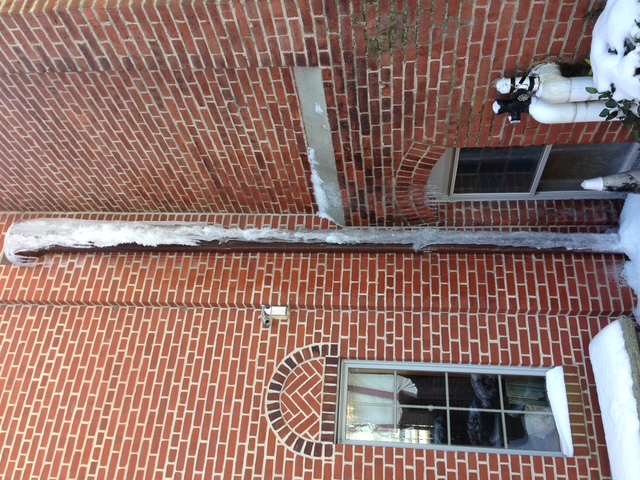
Some gutter guard designs can create a shelf where snow and ice collect near the roof edge. Meltwater may pool, then refreeze when temperatures fall. This can contribute to icicles and ice buildup, and in the wrong conditions, it may increase the risk of ice damming.
Flat, foam, and reverse-curve products can be especially concerning when they slow drainage or hold frozen material near the eave. A reverse-curve cover may also cause water to overshoot the gutter during heavy rain if the roof pitch, rainfall intensity, or installation is not properly accounted for.
Ice buildup is not just a gutter concern. It can place stress on the gutter system, damage roof-edge materials, and direct water where it does not belong.
Improper Installation Can Cause Additional Problems
Even a product that performs well in one situation may cause problems when installed incorrectly.
A gutter guard should not be attached in a way that damages shingles, disturbs flashing, restricts drainage, or interferes with the roof manufacturer’s installation requirements. Poor installation may also affect roofing warranties, particularly when fasteners or panels are placed improperly at the roof edge.
Other installation-related problems include:
Gutter guards installed over rotted fascia
Guards attached to sagging or poorly pitched gutters
Water flowing behind the gutter instead of into it
Rainwater overshooting the gutter during storms
Damage to shingles or underlayment
Difficult access for future roof repairs
Existing drainage problems being covered instead of corrected
Before adding any product to a roof system, the roof edge, fascia, soffit, gutters, downspouts, and flashing should be inspected first. A guard cannot repair wood rot, improve a failing gutter slope, or correct a roof leak.
Are Gutter Guards Ever Worth Considering?
There are situations in which a homeowner may still decide that gutter guards are worth the cost. They may be worth considering when:
The home is surrounded by heavy tree cover
Gutter cleaning is unusually dangerous
The property has recurring overflow problems
The homeowner has mobility or access limitations
A qualified professional has confirmed that the roof edge and gutters are sound
The homeowner understands that periodic cleaning is still necessary
Even in those cases, choosing a product should involve more than comparing marketing claims. Consider the type of debris around your home, the roof pitch, the gutter design, the amount of winter exposure, and how the system will be cleaned.
An honest evaluation may determine that regular gutter maintenance is the better long-term option.
The Better Alternative: Keep the Gutters Clear
For most Salisbury homeowners, we believe regular gutter cleaning and inspection is the more straightforward approach. Open gutters are easier to see, easier to clean, and easier to inspect for standing water, sediment, sagging, and damage.
A maintenance visit should include more than removing leaves. It should also check:
Gutter slope and attachment points
Downspout flow
Fascia and soffit condition
Roof-edge shingle deterioration
Flashing near eaves and wall intersections
Granule accumulation
Signs of overflow or water staining
Early rot or moisture damage
Peninsula Roofing Company has served Delmarva since 1947. Our roofing services include inspections, repairs, maintenance, residential roofing, commercial roofing, and storm response. Gutter cleaning and maintenance are part of responsible roof care because the gutter system and roof edge work together to protect your home.

Final Verdict: Gutter Guards Are Not a Universal Solution
Gutter guards offer one clear benefit: they can reduce the frequency of gutter cleaning and ladder use. But they do not eliminate debris or maintenance.
In Salisbury, MD, leaves, pine needles, pollen, seeds, and shingle grit can still collect on top of the guard or accumulate beneath it. When that material remains damp at the eave, it may contribute to roof-edge, fascia, and soffit deterioration. Winter ice buildup and poor installation can create additional concerns.
For these reasons, Peninsula Roofing does not recommend gutter guards for most properties. Regular inspection and cleaning may be less convenient, but it keeps the system visible, accessible, and easier to maintain before a small issue becomes rot or a roof leak.
If you are comparing roofing companies in Salisbury, MD, look for a contractor willing to explain both the benefits and drawbacks of a proposed solution. A qualified roofer Salisbury homeowners trust should inspect the existing roof and gutter system before recommending an add-on product.
Need to know whether your gutters, eaves, or roof need attention? Contact Peninsula Roofing Company for a roof and gutter assessment, or call 410-742-6163. We can help determine whether maintenance, a targeted repair, or a larger roofing solution is appropriate for your home.
Comments