How to Clear Your Gutters and Valleys Before the First Freeze

For homeowners in Salisbury, MD, and across Delmarva, November 11 is a useful deadline for one last round of fall roof drainage maintenance. Most trees have dropped their leaves, the ground is generally still workable, and the first sustained freeze may be close. A nor’easter is forecast to arrive Thursday, November 12, and continue into Friday. Wind and rain can push more leaves and needles into gutters that are still open.
The timing matters: clean too early and trees may refill the gutters; wait until debris freezes in place and a straightforward cleanup can turn into a winter drainage problem. If your gutters are already clear, you’re done for now. If they’re not, work only in dry, calm conditions, or wait until after the storm.
Why clear gutters and roof valleys before a freeze?
Gutters and roof valleys collect and direct water. When leaves, needles, or grit block those paths, water can back up at the roof edge or pool in a valley.
At the eaves, backed-up water may work beneath the shingles and show up inside as a ceiling stain that looks like a roof leak. In a roof valley, a pile of debris can hold water where wind-driven rain may push it beneath shingle edges. Wet leaves also keep moisture against the fascia and roof edge, encouraging deterioration.
That risk deserves attention on Delmarva. Coastal humidity and salt air can shorten roofing-material life compared with inland estimates, so trapped moisture can take a toll sooner than homeowners expect. Our roof inspection guide explains why a roof-edge and attic check can help distinguish a drainage issue from other causes of moisture.
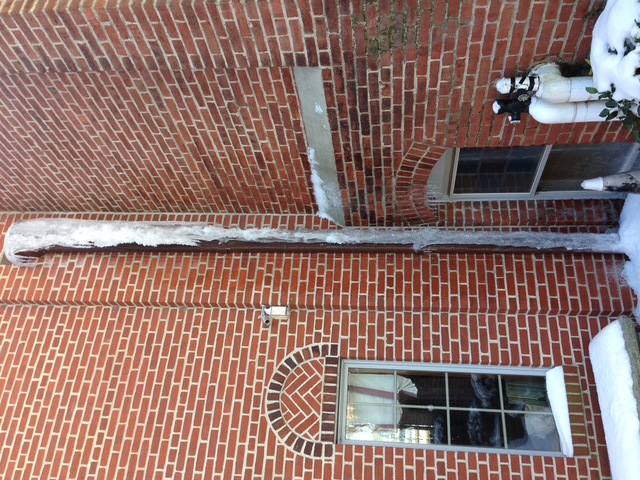
Once water trapped in a blocked gutter freezes, it expands. That can stress seams and end caps and contribute to ice buildup along the eaves. Ice dams are primarily an attic insulation and ventilation issue: warm air escaping into the attic can melt roof snow, and meltwater can refreeze at the colder eaves. A clear gutter won’t solve an insulation or ventilation problem, but free-flowing drainage removes one potential source of ice buildup. The National Weather Service’s overview of ice dams explains the process.
A practical pre-freeze gutter and valley checklist
1. Choose the right time, and plan for a second pass if needed
Clean after most leaves have fallen but before the first sustained freeze. On Delmarva, the first half of November is often the practical window. If your home is under heavy oak or sycamore canopy, or near pines that shed needles over time, you may need another pass later in November, if conditions are safe.
This year, the window is especially short. Check the National Weather Service forecast for Salisbury before starting.
2. Remove debris by hand before flushing
Scoop out leaves, pine needles, small twigs, and grit first. Wear gloves and place the debris in a bucket or bag. Flushing a gutter full of leaves can push the material into the downspout and create a blockage there instead.

3. Flush every downspout and confirm strong flow
After clearing the gutter, run a hose through it toward each downspout. Check that water exits at the bottom in a full, steady flow, not just a trickle. A weak flow may mean the outlet or downspout is still blocked. Clear the obstruction carefully; forcing a tool through can separate joints or damage the pipe.
4. Check the hangers and gutter slope
Look for loose or missing hangers and sections that sag. A low spot can hold standing water, which is more likely to freeze than water that drains freely. Gutters should slope slightly toward their downspouts. If a run is visibly drooping or holding water, it may need rehanging rather than a quick patch.
5. Inspect seams and end caps
Check sectional joints and end caps for gaps, separation, or signs of leaking. A leak at a joint can wet the fascia and siding even when the rest of the gutter is clear. If you spot a loose section or damage, note its location rather than reaching or leaning over the gutter to fix it from the ladder.
6. Check roof valleys, but don’t climb onto the roof
Leaves and pine needles can collect where two roof slopes meet, forming a debris dam that blocks drainage. This is easy to miss from the ground, and a valley blockage may not become obvious until water appears inside.
Do not walk on the roof or scrape shingles with a hard tool. Abrasive cleaning can damage shingles, and roof surfaces can be slippery even before freezing weather arrives. If a valley needs attention, have a qualified roofer assess it. Never seal across a valley channel: water needs a clear path down the roof.
7. Make sure downspouts discharge away from the foundation
Check where each downspout ends. Extensions should carry water 4–6 feet from the foundation so storm runoff and spring melt don’t collect beside the house and head toward a basement or crawlspace.
8. Look over the fascia and soffit
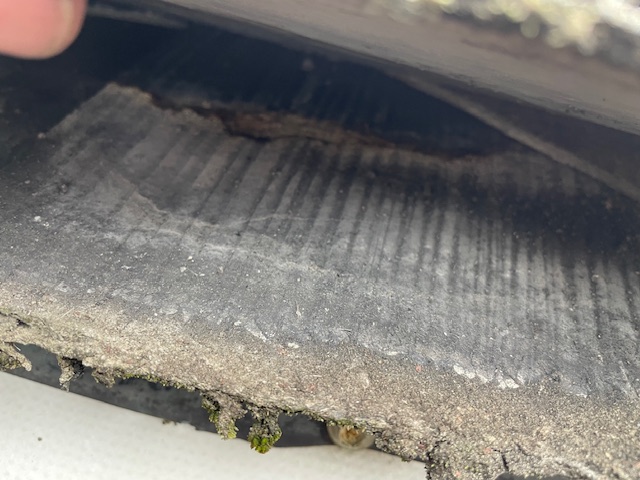
While checking the gutter from a safe position, look for peeling paint, staining, sagging, soft-looking wood, or other signs of deterioration along the fascia and soffit. Wet debris can keep the roof edge damp, and those areas may show damage before it becomes obvious inside.
9. Put safety ahead of the deadline
A ladder on wet ground the day before a storm is a serious risk. Never clean gutters in rain or wind, and don’t climb onto the roof. If the ground or ladder is wet, it’s getting dark, the forecast is turning, or the work requires stretching sideways, stop and reschedule. For high gutters, steep roofs, or roof valleys, call a professional instead of rushing.
What to do about Thursday’s nor’easter
If your gutters and downspouts are already clear, you’re prepared on the drainage front. If they’re blocked, clean them today only if the conditions are dry, calm, and safe. Otherwise, wait for the first calm day after the storm. Don’t try to squeeze ladder work into Thursday’s wind or rain.
A half-full gutter going into one storm isn’t necessarily a disaster. The bigger concern is leaving a fully blocked gutter to freeze in place. For more ways to check your property before the weather arrives, see 5 Steps to Prep Your Roof for Thursday’s Nor’easter.
When to get help
If you see water stains, a sagging gutter, soft or deteriorating roof-edge materials, or debris in a roof valley you can’t safely reach, get the condition assessed rather than guessing at the cause. A proper inspection can help determine whether the issue needs gutter, fascia, soffit, or roof repair.
Peninsula Roofing Company has served Delmarva since 1947. Our team handles gutter-edge, fascia, and soffit repairs as part of the roofing system and provides free in-person inspections, no drone-only checks. If you’re comparing roofing companies in Salisbury, MD, ask whether an inspection includes the roof edge and drainage, not just the shingles. A local roofer in Salisbury should be able to explain what needs attention and whether a targeted repair may be enough.
If you’d rather not climb a ladder in November, schedule gutter and roof-edge work with Peninsula Roofing. And if tomorrow’s storm leaves roof damage, our team is answering the phone 24/7 at 410-742-6163.
Comments