What the New 15-Year Roof Rule Means for Maryland Homeowners in 2027

A new FORTIFIED program rule is putting a specific age limit on asphalt-shingle roofs, but it does not say that every 15-year-old roof needs to be replaced.
Starting January 1, 2027, the Insurance Institute for Business & Home Safety (IBHS) will limit FORTIFIED re-designation eligibility for homes with asphalt shingles to 15 years from the initial designation date or, in some cases, the roof’s documented installation date. The distinction matters: this is a rule about maintaining a FORTIFIED designation, not a ruling on whether an individual roof is safe, serviceable, or insurable.
For homeowners in Salisbury, MD, and across Delmarva, the practical question is what the change may mean for insurance and renewal paperwork, and what steps are sensible before the rule takes effect.
What the 15-year rule actually changes
FORTIFIED is a voluntary resilient-building program. A designation indicates that a home meets program requirements intended to reduce storm damage. Designations generally need to be renewed through a re-designation process, which checks whether the home continues to meet applicable requirements.
Under IBHS’s September 2026 technical bulletin, applications submitted on or after January 1, 2027, for homes with required roof areas covered entirely or partly in asphalt shingles will be subject to the 15-year eligibility limit.
The date used to count those 15 years depends on the roof’s history:
If asphalt shingles were newly installed as part of the home’s initial FORTIFIED designation, the period runs from the initial designation date.
If the roof was already in place and its installation date is known and documented, the period runs from that installation date.
If an existing roof’s installation date is unknown, the bulletin allows a single initial designation term of up to five years, but not re-designation until the asphalt-shingle covering is replaced.
The rule applies to FORTIFIED Roof, Silver, and Gold designations. It does not shorten a designation term issued before January 1, 2027. However, future applications submitted on or after that date must meet the new eligibility requirements.
What IBHS says, and why ARMA disagrees
IBHS says the cutoff concerns eligibility for continued FORTIFIED designation, not the useful life of every asphalt-shingle roof. Its reasoning draws on a broader body of research, testing, and post-storm observations suggesting that roof age and weather exposure can affect wind performance. IBHS also says roof performance varies, and that the 15-year point is a practical boundary for the program, not a claim that all roofs fail at the same age.
The study's own numbers are less dramatic than the headline. Average uplift resistance rose over the first five years of aging, declined between years five and ten, and still finished above the lab baseline on average. Fred Malik, who leads FORTIFIED at IBHS, told Roofing Contractor that fewer than 50 homes will reach the 15-year limit in the next three years.
The Asphalt Roofing Manufacturers Association (ARMA), which represents shingle manufacturers, disputes whether the research supports a broad age limit. In its technical review, ARMA criticizes the testing methods and argues that the study’s sample size and product sampling are too limited to support sweeping conclusions. It also points to differences in individual product results and warns that age-based standards could encourage insurers to impose broad or arbitrary restrictions on older roofs.
IBHS and ARMA have different roles and interests: IBHS develops resilience research and standards, while ARMA represents manufacturers. In a report on the dispute, Roofing Contractor noted IBHS’s position that sensitivity testing found greater variability with one testing method, but no systematic bias that would artificially lower median resistance. Read the industry report.
This is an active disagreement. The safe takeaway is not that one organization has settled the question of how long shingles last. It is that IBHS has set a program eligibility limit, while ARMA challenges the technical basis and cautions against using it as a proxy for the condition of every roof.
What could it mean for Maryland insurance?
IBHS does not set an individual homeowner’s insurance policy. Whether a FORTIFIED designation affects your premium, renewal, or underwriting depends on your carrier and policy.
In some coastal states, a FORTIFIED designation can be recognized for insurance credits and may matter at renewal. Maryland homeowners should ask their insurer whether it recognizes FORTIFIED, or another mitigation program, and whether a current designation is required to receive any available benefit. The Maryland Insurance Administration’s homeowners guide explains that insurers must offer discounts for documented qualifying mitigation actions or improvements, subject to inspection and verification. Ask your carrier how that requirement applies to your specific roof and policy.
The 15-year cutoff may also sound familiar because some insurers already scrutinize roof age when deciding coverage terms. That does not mean Maryland has a universal rule requiring replacement at 15 years. It does mean the industry is paying increasing attention to roof age, sometimes as a screening measure even though age alone cannot describe a roof’s present condition.
Only a handful of states have written rules limiting how insurers can use roof age on renewals. Florida bars carriers from refusing to renew a policy solely because a roof is under 15 years old, and Texas and Virginia have narrower provisions. Maryland is not among them, which is why ARMA is asking carriers directly not to turn the FORTIFIED bulletin into a broader underwriting limit. That request is voluntary, not binding. The thing to watch is whether a state insurance department or a carrier cites the study in a rate or underwriting filing, because that is the point where a program eligibility rule starts to affect coverage.
Local exposure adds another consideration. Coastal humidity and salt air can be hard on roofing materials. As a practical Delmarva context, Peninsula Roofing estimates that these conditions can shorten material lifespans by 15–25% compared with inland estimates, but that is not a prediction for every home. Installation quality, ventilation, maintenance, storm exposure, and the specific materials all matter. For local homeowners, keeping clear records of installation and repairs can help put the roof’s actual condition into context.
What homeowners should do now
A practical next step for Delmarva homeowners
The 15-year rule is newsworthy, but it is not a reason to panic-replace a roof. The more useful takeaway is that the industry is converging on 15 years as a meaningful program or underwriting line, whether or not that line describes an individual roof’s true condition. Dates, inspection reports, maintenance records, and policy details matter.
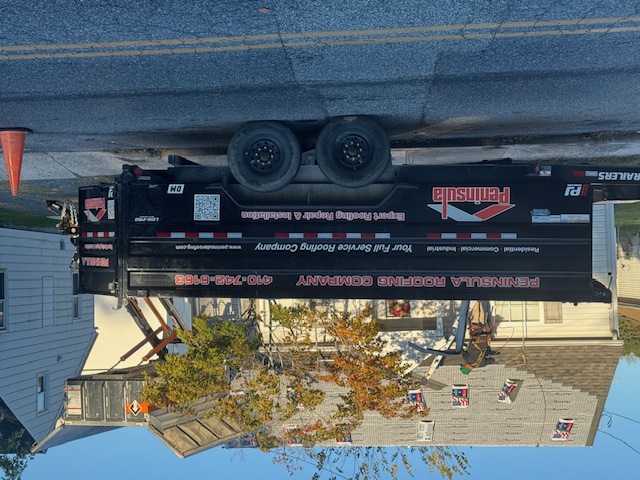
Peninsula Roofing Company has served Delmarva since 1947. Our team provides free in-person inspections and written documentation, and we recommend repairs when repairs are sufficient, not replacement based on age alone. If replacement is appropriate, we can discuss financing and handle the permit process.
If you’re reviewing a roof in Salisbury, MD, or elsewhere on Delmarva, schedule a free inspection before renewal season and the January 1, 2027, effective date. Contact Peninsula Roofing to document your roof’s condition and understand your options.
Comments