The Forever Shingle: What Every Salisbury Homeowner Should Know About Asbestos Tiles
- sean fahey
- Feb 20
- 6 min read

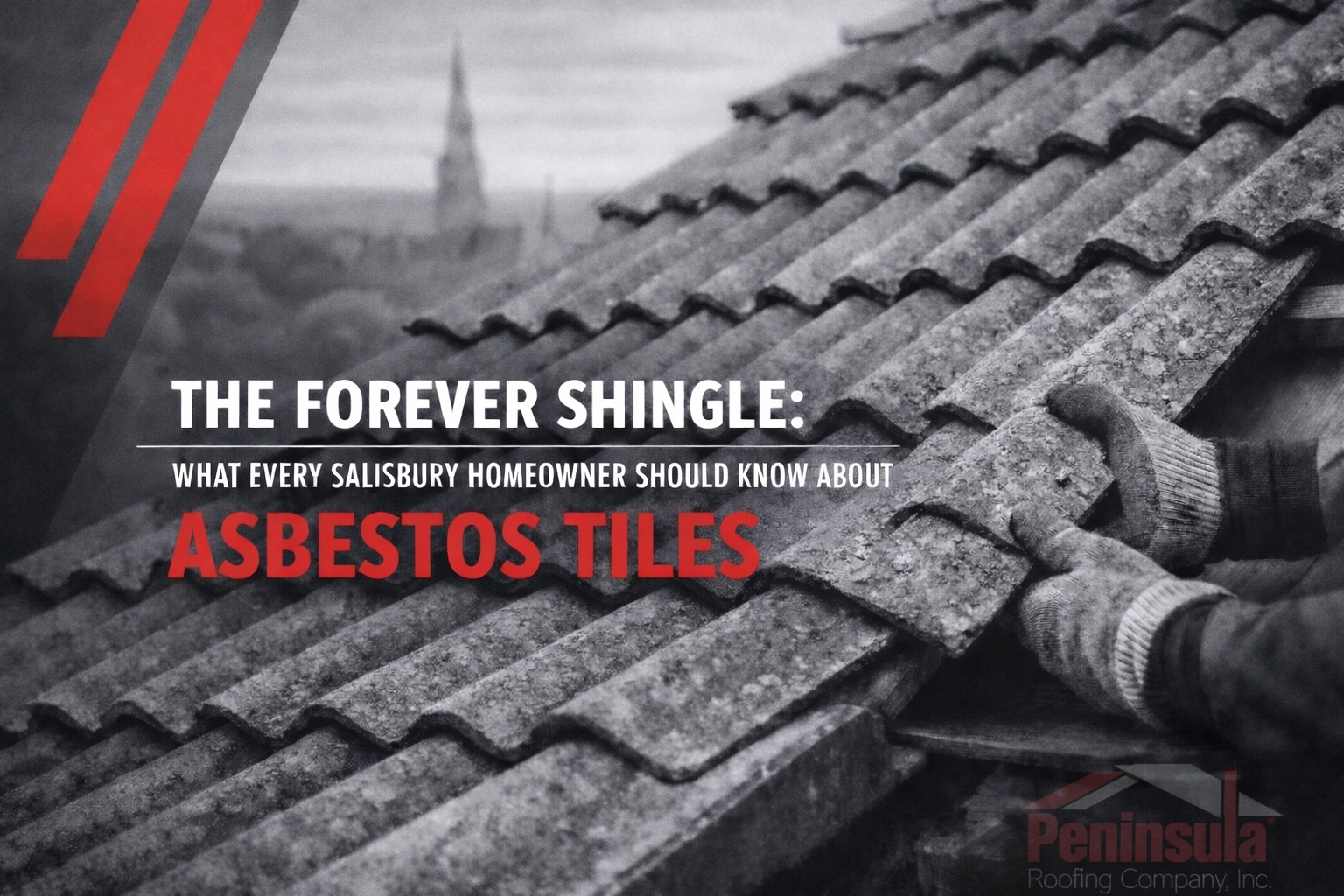
If you've got an older home in Salisbury and your roof shingles look like slate but aren't quite slate, you might be living under one of the most durable: and controversial: roofing materials ever made. We're talking about asbestos-cement shingles, often sold under the brand name "Transite," and nicknamed "The Forever Shingle" for good reason.
They're still up there on thousands of Delmarva homes, quietly doing their job after 70+ years. But there's a reason why every roofer in Salisbury treats them like they're handling nitroglycerin, and it's not just because we're being overly cautious.
What Exactly Are Asbestos Shingles?
Asbestos-cement shingles are a composite material: think of them as the original "engineered shingle." They're made from hydraulic cement mixed with about 15–30% asbestos fibers. The result? A shingle that's fireproof, bug-proof, rot-proof, and so durable that many of them have outlasted three or four presidents.
Back in the day, they came in a variety of styles. Some mimicked traditional slate, others had a wood-shake texture, and you could even get them in custom colors. From a distance, they look classy. Up close, though, any experienced roofing company in Salisbury MD can spot them immediately: they have a distinct texture and weight that's hard to miss.
The Golden Age: Why Everyone Wanted Them
Let's rewind to the 1920s. If you were building or re-roofing a house, your options were limited. Wood shingles? They rot and catch fire. Metal? Expensive and noisy. Slate? Gorgeous, but also expensive and heavy enough to require beefed-up framing.
Enter asbestos shingles.
Ludwig Hatscheck, an Austrian engineer, had patented asbestos cement back in 1901 and called it "Eternit" (from the Latin word for "everlasting"). By the 1920s, American manufacturers like Johns-Manville and Carey were cranking them out by the millions. Homeowners loved them because:
They were fireproof. Insurance companies actually gave discounts if you had them.
They lasted forever. We're talking 70–100 years with minimal maintenance.
They were cheaper than slate. You got the slate look without the slate price tag.
They were lighter. Easier to ship, easier to install, and you didn't need to reinforce your roof deck.
By the 1950s and 60s, these shingles were everywhere: especially on mid-century homes and commercial buildings across Salisbury and the surrounding areas.
The Big Difference: Friable vs. Non-Friable
Here's where things get interesting. Not all asbestos is created equal.
When most people hear "asbestos," they think of the fluffy, crumbly stuff: like the popcorn ceilings from the 70s, or the white insulation wrapped around old pipes. That's what we call friable asbestos, meaning it can be crushed into dust with your bare hands. When it crumbles, it releases microscopic fibers into the air, and that's when things get dangerous.
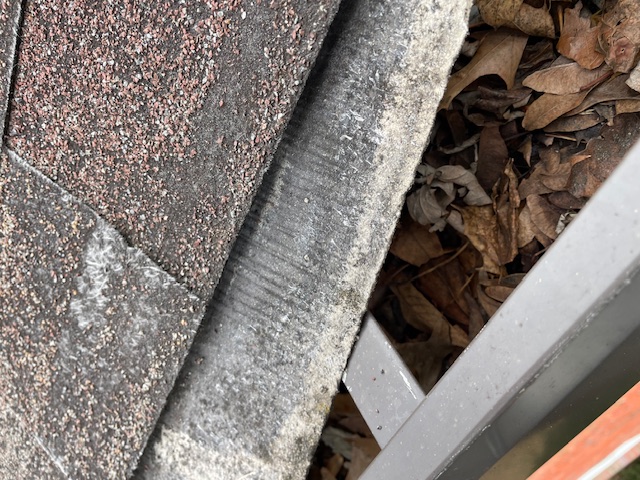
Asbestos shingles, on the other hand, are non-friable. The asbestos fibers are locked inside the cement matrix. As long as the shingles are intact and just sitting there doing their job, they're not releasing fibers. You could technically live under them for decades without issue: and plenty of Salisbury homeowners have.
So if they're "safe" when left alone, why all the fuss?
The "Hammer Problem": Why Remediation Is Still Necessary
Here's the catch: The moment you start messing with them, all bets are off.
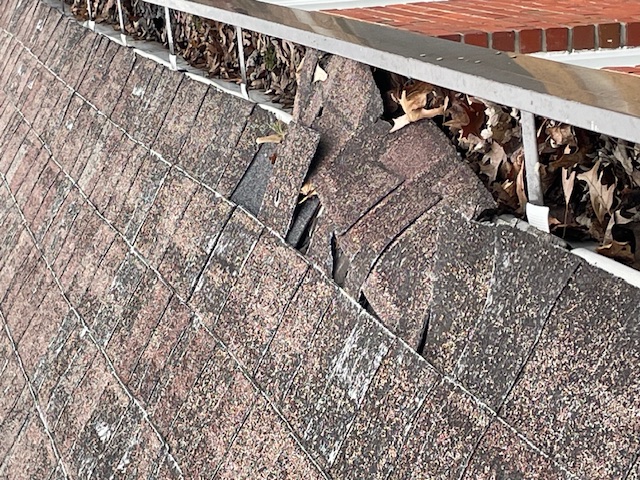
When roofing companies in Salisbury MD start tearing off an old asbestos roof, or when a shingle cracks during a storm, it releases those fibers. Suddenly, that "non-friable" material becomes a health hazard. The fibers are microscopic: about 1,200 times thinner than a human hair: and once they're airborne, they can be inhaled deep into the lungs.
Long-term exposure to asbestos fibers is linked to:
Lung cancer
Mesothelioma (a rare and aggressive cancer)
Asbestosis (chronic scarring of the lungs)
The scary part? These diseases can take 20–50 years to show up. Factory workers who made these shingles back in the 1930s and 40s started getting sick in the 1960s and 70s, which is when the alarm bells finally went off.
That's why, even though your shingles aren't "actively" dangerous just sitting on your roof, any Salisbury roofer worth their salt is going to treat removal like a hazmat operation.
The Disposal Dilemma
You can't just rip off asbestos shingles and toss them in the dumpster with the rest of your construction debris. Here's why:
EPA Regulations: The federal government classifies asbestos as a hazardous material. Removal and disposal are governed by strict rules.
Wet Methods Required: To prevent fibers from going airborne, shingles need to be kept wet during removal. Think of it like demolishing a concrete wall: you spray it down constantly to keep the dust at bay.
Special Landfills: Not every landfill in Maryland accepts asbestos. It has to go to a licensed hazardous waste facility, which means extra transportation costs and special packaging.
Documentation: There's paperwork involved. Lots of it. Disposal manifests, contractor certifications, the whole nine yards.
All of this adds up. A typical asbestos shingle removal in Salisbury can cost 25–50% more than a standard tear-off, and that's before you even start installing the new roof.
The Insurance and Resale Problem
Even if your asbestos shingles are in great shape, they can still cause headaches when it comes to insurance and selling your home.
Insurance Issues
Many insurance companies in Maryland have started refusing to write policies: or are charging significantly higher premiums: for homes with asbestos shingles. Why? Liability. If a storm damages your roof and releases fibers, or if a contractor gets sick years later, the insurance company could be on the hook.
Some insurers will cover the home but require you to replace the roof within a certain timeframe (usually 1–2 years). Others simply won't touch it.
Selling Your Home
If you're trying to sell a home with asbestos shingles, expect the inspection report to flag it. Buyers will either:
Walk away entirely
Ask for a hefty price reduction to cover removal costs
Require you to replace the roof before closing
In today's market, most roofing companies in Salisbury MD recommend proactively replacing the roof before listing, if possible. It eliminates the negotiation headache and makes your home far more attractive to buyers.
What Should Salisbury Homeowners Do?
If you suspect your home has asbestos shingles (especially if it was built between the 1920s and 1980s), here's the smart play:
1. Get a Professional Assessment
Don't assume. Have a licensed Salisbury roofer come out and inspect. We can usually identify asbestos shingles on sight, but if there's any doubt, we'll recommend lab testing.
2. Don't DIY This One
Seriously. We've seen well-meaning homeowners try to tackle this themselves, and it never ends well. Not only is it dangerous, but it's also illegal in most cases to remove asbestos without proper certification.
3. Get Multiple Quotes
Asbestos removal and replacement isn't cheap, so it pays to shop around. Look for roofing companies in Salisbury MD that are licensed for asbestos abatement or work with certified subcontractors.
4. Consider Timing
If your shingles are in good shape and you're not selling or refinancing, you might be able to wait. But if you're seeing cracks, storm damage, or insurance pressure, it's time to act.
5. Plan for the Upgrade
The silver lining? Once those old shingles are gone, you're getting a brand-new, modern roof with better energy efficiency, improved warranties, and zero health concerns. Many Salisbury homeowners are opting for architectural shingles or even metal roofing as replacements.
The Bottom Line
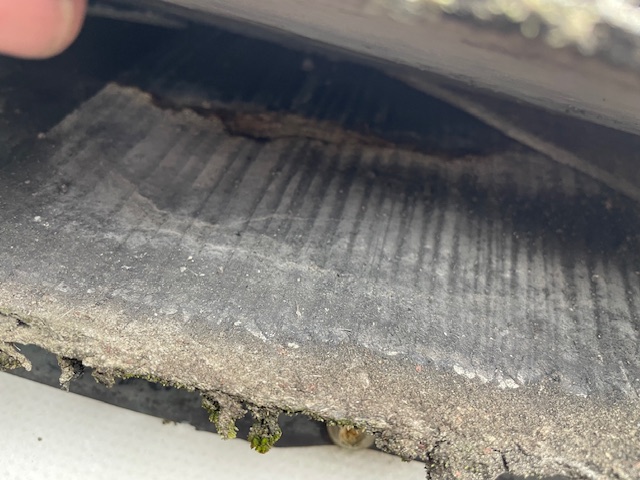
Asbestos shingles earned their "Forever Shingle" nickname fair and square: they're tough, durable, and have kept Delmarva homes dry for generations. But "forever" is a long time to live with a material that requires hazmat protocols when it finally comes down.
If you've got them on your roof, you're not in immediate danger. But when the time comes for replacement: whether it's storm damage, insurance requirements, or you're just ready for an upgrade: make sure you're working with a roofing company in Salisbury MD that knows how to handle them safely and legally.
At Peninsula Roofing Company, we've been dealing with every type of roof Delmarva can throw at us since 1947. Asbestos shingles? We've seen thousands. If you're not sure what you've got up there, or if you're ready to make the switch to something safer and more modern, give us a call. We'll walk you through your options: no sales pressure, no guesswork, just straight talk from folks who've been doing this for nearly 80 years.
Because while those old shingles might last forever, you shouldn't have to worry about them forever.
Comments