What to Look For as Fall Approaches: 8 Roof Warning Signs Salisbury Homeowners Miss

Your roof has been trying to tell you something all summer. The problem is that many of its warnings are easy to miss from the ground: or mistaken for ordinary wear and tear.
As fall approaches in Salisbury, MD, and throughout Delmarva, heat, humidity, summer storms, falling leaves, and pine needles can expose weaknesses that become much more serious once the weather turns colder and wetter. A small flashing gap can become a leak. A clogged gutter can push water beneath the shingles. Condensation in an under-ventilated attic can look like a roof failure even when the shingles are still serviceable.
This is not a general fall maintenance checklist. It is a guide to reading the signs and understanding what they mean.
You can safely perform a ground-level survey with binoculars, but do not climb onto the roof. If you see a warning sign, a professional inspection can determine whether the right solution is a targeted repair, ventilation work, or replacement.
1. You See Missing, Curled, Buckled, or Cracked Shingles
What you see
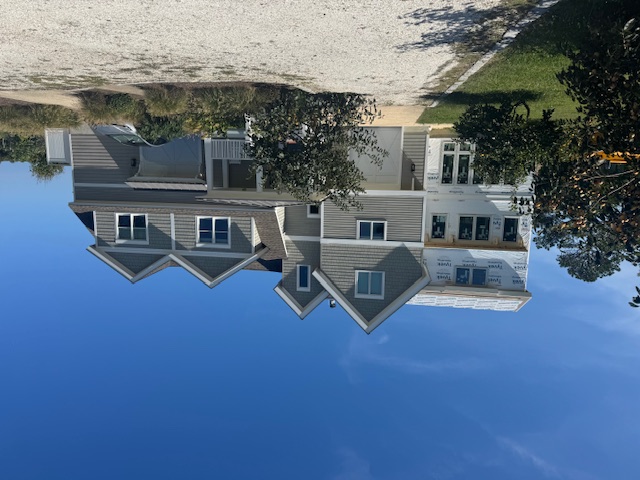
From the ground, look for shingles that are:
Missing entirely
Curled at the edges
Buckled or wavy
Cracked across the surface
Lifted around their edges
Different in color from the surrounding shingles
What it means
Summer heat causes roofing materials to expand and contract repeatedly. Over time, that thermal movement can weaken the shingle surface and loosen the bonds that hold shingles together. Coastal humidity and strong Delmarva storms add more stress.
A few damaged shingles may be repairable, especially if the rest of the roof is in good condition. However, widespread curling, cracking, or buckling can indicate that the roof is aging faster than expected. Missing shingles are especially urgent because they leave the underlayment and roof deck more exposed to fall rain.
2. You Find Granules in the Gutters or at Downspouts
What you see
Granules look like coarse dark sand. Some loss is normal as a roof ages, but a noticeable buildup in gutters, downspouts, or at the base of the home deserves attention.
What it means
Granules protect asphalt shingles from ultraviolet light and weather. When shingles begin shedding them rapidly, the exposed areas can deteriorate more quickly under continued sun and rain.
Granule loss does not automatically mean you need a new roof. It does mean the roof should be evaluated in context with its age, shingle condition, flashing, and attic ventilation. A local roofer can often distinguish normal aging from accelerated deterioration.
3. You See Rust, Gaps, or Lifted Edges Around Flashing
What you see
Inspect roof areas visible from the ground, including the edges around:
Chimneys
Plumbing vents
Skylights
Dormers
Wall transitions
Roof valleys
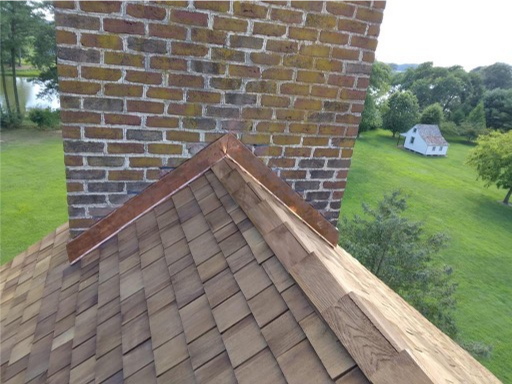
Look for rusted metal, cracked sealant, gaps, or flashing that appears lifted or separated from the roof surface.
What it means
Flashing is designed to direct water away from the places where the roof meets another surface. Those transitions are among the most common leak entry points, and small defects can become much more troublesome when freeze-thaw cycles begin.
A flashing problem may be localized and repairable. It should not automatically lead to a full roof replacement recommendation. The important step is finding the actual entry point before water reaches the roof deck, insulation, ceilings, and wall cavities.
Peninsula Roofing’s crews inspect flashing and roof penetrations as part of an in-person assessment rather than relying only on an aerial image.
4. Your Gutters Are Rusted, Sagging, or Overflowing
What you see
Watch what happens during or shortly after rain. Warning signs include:
Water spilling over the front edge
Gutters pulling away from the fascia
Rust holes or separated joints
Sagging sections
Water running behind the gutter
Leaves and pine needles packed into the channel
What it means
Falling leaves and pine needles are a leading autumn cause of roof trouble in Delmarva. They trap moisture at the roof edge and clog the drainage path. That backed-up water can work beneath shingles and contribute to leaks, fascia rot, wood decay, and mold.
Do not assume overflow is only a gutter problem. It may also point to poor slope, undersized drainage, blocked downspouts, or water already moving into areas where it should not.
A note about gutter guards
Peninsula Roofing generally advises against gutter guards. They can allow debris to accumulate along the roof eaves, trap moisture, and contribute to rot while still requiring maintenance. Open, accessible gutters that can be inspected and cleaned are often easier to keep functioning properly.
5. The Roofline or Ridge Looks Uneven
What you see
Stand across the street or at the end of the driveway and look at the roof’s overall shape. Pay attention to:
Sagging sections
Dips between rafters
An uneven ridge
Areas that appear bowed or depressed
Roof planes that do not look straight
What it means
A sagging roofline can indicate a structural problem involving the roof deck, framing, long-term moisture damage, or excessive weight. This is different from a few worn shingles and should not be treated as a cosmetic issue.
If you see a noticeable sag, keep people away from the affected area and contact a professional promptly. Do not climb onto the roof to investigate it yourself.
6. You See Dark Staining, Algae, or Moss
What you see
Dark streaks, green growth, or moss may appear on shaded roof sections, particularly where moisture remains after rain.
What it means
Algae and moss hold moisture against the roofing surface. In Delmarva’s humid coastal climate, that persistent dampness can speed up shingle deterioration and conceal damaged areas.
Dark streaking does not always mean the roof is leaking or must be replaced. It does mean moisture is remaining on the roof long enough to affect the materials. A professional can determine whether the issue involves surface growth, drainage, shading, ventilation, or underlying roof damage.
7. The Attic or Ceiling Shows Evidence of Moisture
What you see
The attic is one of the earliest places to find roof trouble. Look for:
Water stains on roof decking or rafters
Damp or compressed insulation
Mold or mildew
Musty odors
Pinpoints of daylight through the roof deck
Inside the home, watch for:
Brown or yellow ceiling stains
Peeling or bubbling paint
Damp drywall
Musty smells upstairs
New staining after heavy late-September or early-October rain
What it means
These signs can indicate an active roof leak, a gap in the roof deck, or moisture entering around flashing or penetrations. Ceiling damage is often a late warning: by the time water is visible in the living space, it may already have traveled through insulation and framing.
Do not assume the location of a ceiling stain identifies the exact leak location. Water can move along rafters and roof decking before appearing indoors.
8. The Attic Has Poor Airflow or Exhaust Fans Vent Into It
What you see
Look for blocked soffit vents, insulation pushed tightly against the roof deck, or bathroom and kitchen exhaust fans that terminate inside the attic instead of outdoors. Excessive heat, dampness, or condensation on nails and roof decking are also warning signs.
What it means
Poor attic ventilation allows heat and moisture to remain trapped. During colder weather, warm indoor air can condense against cooler roof surfaces. That condensation can look similar to a roof leak and may create mold, wood deterioration, and wet insulation even when the shingles are not the primary problem.
In this situation, the correct fix may be ventilation and moisture control: not a new roof. That is why a proper inspection should consider both the exterior roof system and the attic conditions.
Blocked soffit vents and poorly routed exhaust fans can also contribute to ice dams and winter moisture problems. Correcting the source before cold weather arrives is generally more reliable than waiting until damage appears.
Why September and October Are Better Than December
If you find a warning sign, schedule an evaluation before temperatures regularly fall below approximately 40–50°F. Many roofing sealants, adhesives, and repair materials have minimum application temperatures. Cold weather can slow curing, reduce adhesion, and make the same repair more difficult and less dependable.
A repair completed in September or October is often more practical and reliable than an emergency repair in December. Fall scheduling also gives you time to understand the findings and compare repair-versus-replacement options without making a rushed decision.
Get a Free Fall Roof Inspection in Salisbury, MD
Peninsula Roofing Company has served Delmarva since 1947, with more than 75 years of experience working on residential and commercial roofing systems. Our inspectors perform real, in-person assessments: not drone-only reviews: and examine the roof surface, flashing, drainage, roof deck, and attic ventilation.
We believe homeowners deserve honest guidance about whether a repair can solve the problem or whether replacement is the more responsible long-term option. Our team also provides 24/7 storm response when a leak or severe weather damage cannot wait.
Whether you are comparing roofing companies in Salisbury, MD, searching for “roofer Salisbury,” or looking for experienced Salisbury roofing professionals, start by having the warning signs properly diagnosed.
Contact Peninsula Roofing Company to schedule a free fall roof inspection or call 410-742-6163. You can also learn more about our residential roofing, repairs, inspections, and storm response services.
Comments