Salisbury Roofing Emergency? Here's Your 5-Step Action Plan Before the Roofer Arrives
- sean fahey
- Nov 4, 2025
- 6 min read

When severe weather hits Salisbury, Maryland, your roof takes the brunt of the damage. Whether it's a sudden hailstorm, high winds, or heavy snow, roofing emergencies don't wait for convenient timing. The moments after you discover roof damage are critical: what you do next can mean the difference between a manageable repair and thousands of dollars in additional water damage.
As someone who's been helping Salisbury homeowners through roofing emergencies for decades, I've seen too many situations where panic led to poor decisions. The good news? You can protect your home and family by following these five essential steps before the professional roofer arrives.
Step 1: Safety First – Your Life is Worth More Than Your Roof
The absolute first thing you need to do is ensure everyone in your household is safe. I can't stress this enough: no roof repair is worth risking your life or the safety of your family.
If you're dealing with severe structural damage, active water leaks, or any visible sagging in your roof, immediately move everyone away from the affected areas. Don't think twice about it. Water-damaged ceilings can collapse without warning, and compromised roof structures are unpredictable.
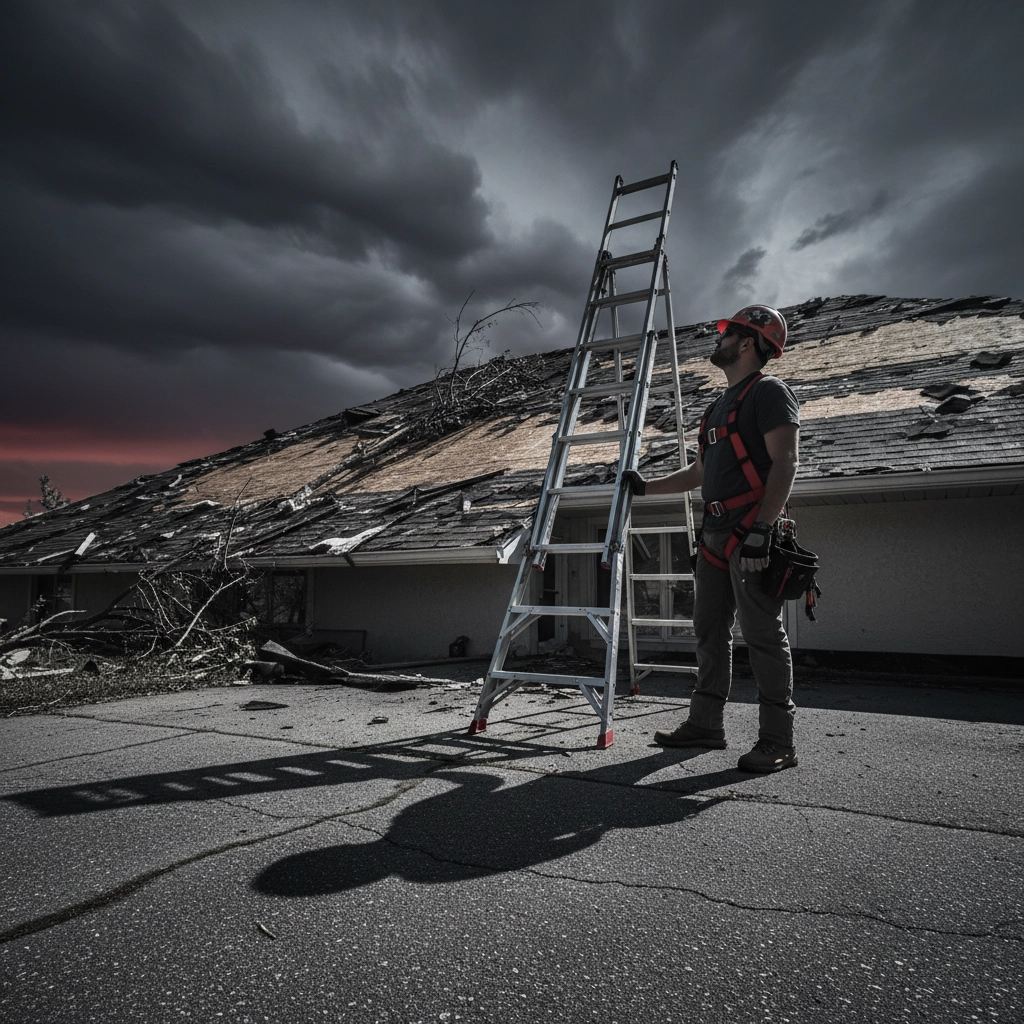
Never, and I mean never, climb onto a damaged roof yourself. I've seen too many homeowners get seriously injured trying to "just take a quick look" or attempt temporary repairs. Your roof may look stable from the ground, but storm damage can create hidden weak spots that could give way under your weight.
Instead, conduct your initial assessment from ground level or through upper-floor windows. If you absolutely must get a closer look, use binoculars from a safe distance. Remember, professional roofers have the proper safety equipment and training to work on damaged roofs safely.
Step 2: Assess the Damage Like a Detective
Once everyone is safe, it's time to become a detective. You need to understand what you're dealing with so you can communicate effectively with your insurance company and roofing contractor.
From the ground, look for these telltale signs of serious damage:
Missing or damaged shingles – Look for bare spots on your roof or shingles scattered around your property. Even a few missing shingles can lead to significant water damage if not addressed quickly.
Visible holes or punctures – Hail, fallen branches, or flying debris can create openings that allow water to pour directly into your home.
Sagging areas – Any section of your roof that appears to be dipping or sagging indicates potential structural damage that needs immediate professional attention.
Damaged flashing – The metal strips around chimneys, vents, and roof edges are common failure points during storms.
Interior water damage – Check your attic and upper floors for signs of water infiltration like wet insulation, water stains, or active drips.
Take mental notes (or better yet, write them down) about the location and extent of each problem area. This information will be invaluable when you call your roofer and insurance company. The more specific you can be about what you're seeing, the better they can prioritize your case and come prepared with the right materials.
Step 3: Stop the Bleeding – Minimize Interior Damage
While you're waiting for professional help, you can take several steps to limit water damage inside your home. Think of this as applying first aid to your house.
Move everything valuable out of harm's way. Water doesn't discriminate: it will damage electronics, furniture, family photos, and important documents with equal efficiency. Clear out anything you can't afford to lose from areas where water is entering or might spread.
Set up a water collection system. Place buckets, pots, or any large containers under active leaks. But don't just set them and forget them: water can accumulate quickly, and overflowing containers can cause more damage. Check them regularly and empty them as needed.
Create barriers to control water flow. If water is spreading across your floors, use towels or plastic sheeting to direct it toward drains or outside doors. Every gallon you keep from soaking into your flooring or walls saves you money later.
If you can safely access your attic, look for ways to redirect water away from insulation and ceiling joists. Sometimes a well-placed tarp or plastic sheet can channel water toward a less damaging exit point.

Pro tip: If you're dealing with electrical outlets or fixtures in areas where water is present, turn off the power to those circuits at your breaker box. Water and electricity don't mix, and your safety is more important than keeping the lights on.
Step 4: Document Everything – Your Camera is Your Best Friend
This step might feel less urgent than the others, but it's absolutely crucial for your insurance claim and ensuring you get the repairs you need.
Take photos and videos of everything. Document the damage from multiple angles and distances. Get wide shots that show the overall scope of the problem, and close-ups that reveal specific details. If there's interior damage, photograph that too: water stains, damaged belongings, and any structural issues you can see.
Time-stamp your documentation. Most smartphones automatically add time stamps to photos, but make sure this feature is enabled. This helps establish when the damage occurred, which can be important for insurance claims.
Create a written inventory. Along with photos, write down what you're seeing. Describe the location, size, and nature of each damaged area. Note any personal property that's been affected. This written record will help you communicate clearly with insurance adjusters and contractors.
Don't clean up yet. I know it's tempting to start cleaning up water and debris immediately, but wait until after your insurance adjuster has seen the damage. Premature cleanup can sometimes hurt your claim by making the damage appear less severe than it actually was.
Keep receipts for emergency expenses. If you need to buy tarps, buckets, or other emergency supplies, save those receipts. Many insurance policies will reimburse you for reasonable emergency mitigation expenses.

Step 5: Call the Cavalry – Get Professional Help Fast
Now it's time to bring in the professionals. But not just any professionals: you need experienced emergency roofers who can respond quickly and work effectively with your insurance company.
Call a trusted local roofing contractor immediately. Don't wait until morning or after the weekend. Many reputable Salisbury-area roofing companies offer 24/7 emergency services specifically because roof damage can't wait. When you call, have your damage assessment ready. Tell them exactly where the damage is located, what type of damage you're seeing, and whether you have active water intrusion.
Contact your insurance company. Most insurance companies have 24-hour claim reporting hotlines. The sooner you file your claim, the sooner an adjuster can assess your damage. Be honest and thorough in describing what happened and what you're seeing.
Ask about emergency tarping services. A good emergency roofing contractor can often provide temporary protection for your roof within hours of your call. Emergency tarping won't fix your roof, but it can prevent additional water damage while you wait for permanent repairs.
Get everything in writing. Whether you're talking to your insurance company or roofing contractor, keep detailed notes about what was discussed, when, and with whom. Follow up important conversations with emails that summarize what was agreed upon.
Be wary of door-to-door solicitors. Unfortunately, roofing emergencies often bring out storm chasers and unscrupulous contractors who go door-to-door after severe weather. Stick with established local companies that have a proven track record in your community.
Planning Ahead Makes All the Difference
The best time to prepare for a roofing emergency is before one happens. Keep contact information for a reputable local Salisbury roofer and your insurance company somewhere easily accessible: not just saved in your phone, but written down somewhere you can find it even if your phone is damaged or dead.
Consider having basic emergency supplies on hand: tarps, buckets, flashlights, and a camera. You don't need to become a prepper, but having a few basics ready can make a stressful situation much more manageable.
Most importantly, don't try to handle a roofing emergency alone. The steps outlined here will help you protect your property and prepare for professional repairs, but they're not a substitute for experienced roofing contractors who have the knowledge, tools, and materials to restore your roof properly.
At Peninsula Roofing Company, we've been helping Salisbury homeowners through roofing emergencies for over 75 years. We understand how overwhelming roof damage can be, and we're here to guide you through every step of the process: from emergency response to final repairs.
Remember, roofing emergencies are exactly that: emergencies. Don't wait, don't second-guess yourself, and don't try to tough it out. Follow these five steps, contact professional help, and protect what matters most: your family's safety and your home's integrity.
Comments